p.17 抽出テキスト
with AF.72,73 Patients with AF also have an increased risk of cognitive impairment (adjusted hazard ratio [HR], 1.39; 95% CI, 1.25–1.53)74 and dementia (OR, 1.6; 95% CI, 1.3–2.0).75–77 It should be noted that most of the observational studies on adverse events have a mix of patients taking and not taking OAC. When carefully controlling for the confounding effects of stroke, comorbidities, and OAC, AF exposure was still significantly associated with vascular dementia (HR, 1.68; 95% CI, 1.33–2.12; P < .001), but not Alzheimer’s disease (HR, 0.85; 95% CI, 0.70–1.03; P = .09).78 Hospital admission rates due to AF vary widely depending on the population studied, and may be skewed by selection bias. In a Dutch RCT including first-diagnosed AF patients (mean age 64 years), cardiovascular hospitalization rates were 7.0% to 9.4% per year.79 An Australian study identified 473 501 hospitalizations for AF during 15 years of follow-up (300 million person-years), with a relative increase in AF hospitalizations of 203% over the study period, in contrast to an increase for all hospitalizations of 71%. The age-specific incidence of hospital admission increased particularly in the older age groups.80 Atrial fibrillation is also associated with increased mortality. In 2017, AF contributed to over 250 000 deaths globally, with an age-standardized mortality rate of 4.0 per 100 000 people (95% uncertainty interval 3.9–4.2).81 The most frequent cause of death in patients with AF is heart failure related,70 with complex relationships to cardiovascular and non-cardiovascular disease.82 There is up to a two-fold increased risk of all-cause mortality (RR, 1.95; 95% CI, 1.50–2.54),68 and cardiovascular mortality (RR, 2.03; 95% CI, 1.79– 2.30)69 in AF compared with sinus rhythm. Even in the absence of major thromboembolic risk factors, the incidence of death is 15.5 per 1000 person-years in those with AF exposure, compared with 9.4 per 1000 person-years without (adjusted HR, 1.44; 95% CI, 1.38–1.50; P < .001).78 Patients with OAC-related bleeding have higher mortality, including both minor and major bleeding (as defined by the International Society on Thrombosis and Haemostasis scale).83 Despite OAC, patients with AF remain at high residual risk of death, highlighting the importance of attention to concomitant disease.84

3.6 Atrial flutter

Atrial flutter (AFL) is the among the most common atrial tachyarrhythmias, with an overall incidence rate of 88 per 100 000 person-years, rising to 317 per 100 000 person-years in people over 50 years of age.85 Risk factors for AFL and AF are similar, and more than half of all patients with AFL will develop AF.85 Observational studies suggest that thromboembolic risk is elevated in AFL.86 In direct comparison of AFL with AF, some studies suggest a similar risk of stroke and others a lower risk in AFL,87–90 possibly due to different comorbidity burdens and the impact of confounders such as AFL/AF ablation and anticoagulation (more frequently stopped in AFL).91

4 Patient pathways and

management of AF

4.1 Patient-centred, multidisciplinary AF

management 4.1.1. The patient at the heart of care A patient-centred and integrated approach to AF management means working with a model of care that respects the patient’s experience, values, needs, and preferences for planning, co-ordination, and delivery of care. A central component of this model is the therapeutic relationship between the patient and the multidisciplinary team of healthcare professionals (Figure 2). In patient-centred AF management, patients are seen not as passive recipients of health services, but as active participants who work as partners alongside healthcare professionals. Patientcentred AF management requires integration of all aspects of AF management. This includes symptom control, lifestyle recommendations, psychosocial support, and management of comorbidities, alongside optimal medical treatment consisting of pharmacotherapy, cardioversion, and interventional or surgical ablation (Table 9). Services should be designed to ensure that all patients have access to an organized model of AF management, including tertiary care specialist services when indicated (see Supplementary data online, Table S1, Evidence Table 4 and Additional Evidence Table S3). It is equally important to maintain pathways for patients to promptly re-engage with specialist services when their condition alters.

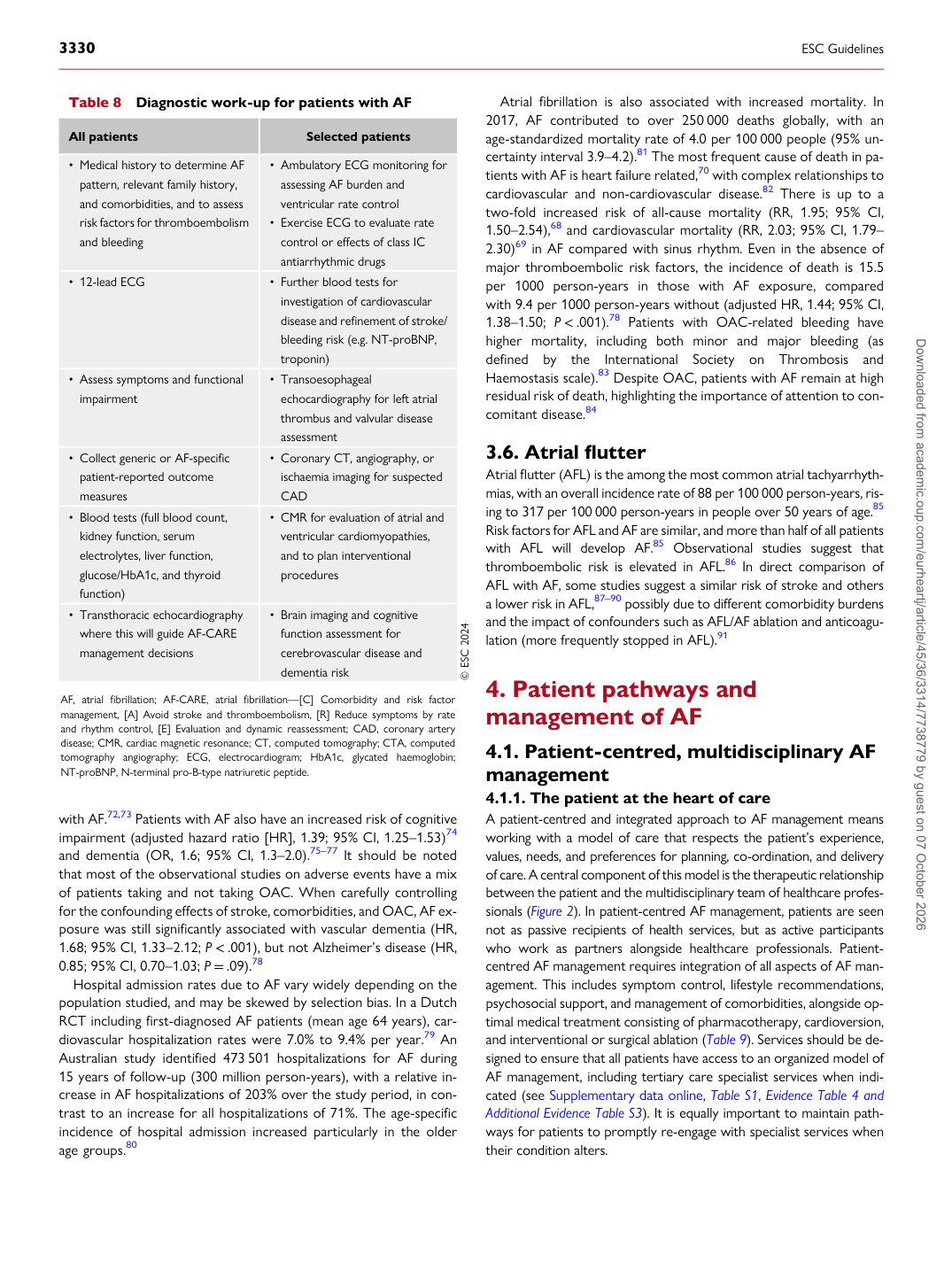
Table 8 Diagnostic work-up for patients with AF

All patients Selected patients

• Medical history to determine AF pattern, relevant family history,

and comorbidities, and to assess risk factors for thromboembolism and bleeding • Ambulatory ECG monitoring for assessing AF burden and

ventricular rate control • Exercise ECG to evaluate rate control or effects of class IC

antiarrhythmic drugs

• 12-lead ECG • Further blood tests for

investigation of cardiovascular disease and refinement of stroke/ bleeding risk (e.g. NT-proBNP, troponin)

• Assess symptoms and functional

impairment • Transoesophageal

echocardiography for left atrial thrombus and valvular disease assessment

• Collect generic or AF-specific patient-reported outcome

measures • Coronary CT, angiography, or ischaemia imaging for suspected

CAD

• Blood tests (full blood count,

kidney function, serum electrolytes, liver function, glucose/HbA1c, and thyroid function) • CMR for evaluation of atrial and

ventricular cardiomyopathies, and to plan interventional procedures

• Transthoracic echocardiography

where this will guide AF-CARE management decisions • Brain imaging and cognitive

function assessment for cerebrovascular disease and dementia risk © ESC 2024

AF, atrial fibrillation; AF-CARE, atrial fibrillation—[C] Comorbidity and risk factor management, [A] Avoid stroke and thromboembolism, [R] Reduce symptoms by rate and rhythm control, [E] Evaluation and dynamic reassessment; CAD, coronary artery disease; CMR, cardiac magnetic resonance; CT, computed tomography; CTA, computed tomography angiography; ECG, electrocardiogram; HbA1c, glycated haemoglobin; NT-proBNP, N-terminal pro-B-type natriuretic peptide. Downloaded from academic.oup.com/eurheartj/article/45/36/3314/7738779 by guest on 07 October 2026