p.14 抽出テキスト
3.2 Diagnostic criteria for AF

In many patients, the diagnosis of AF is straightforward, e.g. typical symptoms associated with characteristic features on a standard 12-lead ECG that indicate the need for AF management. Diagnosis becomes more challenging in the context of asymptomatic episodes or AF detected on longer-term monitoring devices, particularly those that do

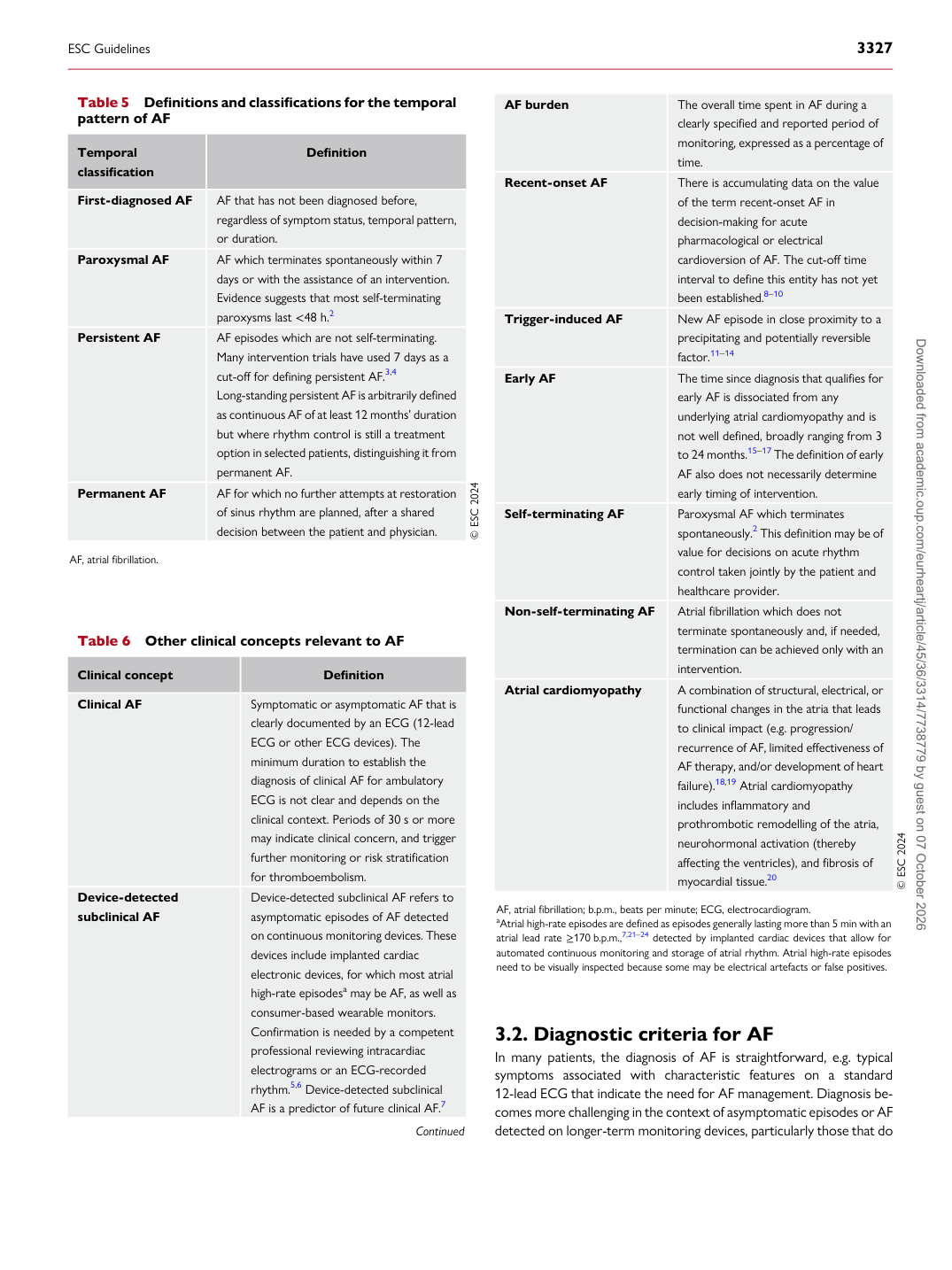
Table 6 Other clinical concepts relevant to AF

Clinical concept Definition

Clinical AF Symptomatic or asymptomatic AF that is clearly documented by an ECG (12-lead

ECG or other ECG devices). The minimum duration to establish the diagnosis of clinical AF for ambulatory ECG is not clear and depends on the clinical context. Periods of 30 s or more may indicate clinical concern, and trigger further monitoring or risk stratification for thromboembolism.

Device-detected subclinical AF Device-detected subclinical AF refers to

asymptomatic episodes of AF detected on continuous monitoring devices. These devices include implanted cardiac electronic devices, for which most atrial high-rate episodesa may be AF, as well as consumer-based wearable monitors. Confirmation is needed by a competent professional reviewing intracardiac electrograms or an ECG-recorded rhythm.5,6 Device-detected subclinical AF is a predictor of future clinical AF.7

Continued

Table 5 Definitions and classifications for the temporal pattern of AF

Temporal classification Definition

First-diagnosed AF AF that has not been diagnosed before, regardless of symptom status, temporal pattern,

or duration.

Paroxysmal AF AF which terminates spontaneously within 7

days or with the assistance of an intervention. Evidence suggests that most self-terminating paroxysms last <48 h.2

Persistent AF AF episodes which are not self-terminating. Many intervention trials have used 7 days as a

cut-off for defining persistent AF.3,4 Long-standing persistent AF is arbitrarily defined as continuous AF of at least 12 months’ duration but where rhythm control is still a treatment option in selected patients, distinguishing it from permanent AF.

Permanent AF AF for which no further attempts at restoration of sinus rhythm are planned, after a shared

decision between the patient and physician. © ESC 2024

AF, atrial fibrillation. AF burden The overall time spent in AF during a

clearly specified and reported period of monitoring, expressed as a percentage of time.

Recent-onset AF There is accumulating data on the value of the term recent-onset AF in

decision-making for acute pharmacological or electrical cardioversion of AF. The cut-off time interval to define this entity has not yet been established.8–10

Trigger-induced AF New AF episode in close proximity to a

precipitating and potentially reversible factor.11–14

Early AF The time since diagnosis that qualifies for early AF is dissociated from any

underlying atrial cardiomyopathy and is not well defined, broadly ranging from 3 to 24 months.15–17 The definition of early AF also does not necessarily determine early timing of intervention.

Self-terminating AF Paroxysmal AF which terminates

spontaneously.2 This definition may be of value for decisions on acute rhythm control taken jointly by the patient and healthcare provider.

Non-self-terminating AF Atrial fibrillation which does not

terminate spontaneously and, if needed, termination can be achieved only with an intervention.

Atrial cardiomyopathy A combination of structural, electrical, or

functional changes in the atria that leads to clinical impact (e.g. progression/ recurrence of AF, limited effectiveness of AF therapy, and/or development of heart failure).18,19 Atrial cardiomyopathy includes inflammatory and prothrombotic remodelling of the atria, neurohormonal activation (thereby affecting the ventricles), and fibrosis of myocardial tissue.20 © ESC 2024

AF, atrial fibrillation; b.p.m., beats per minute; ECG, electrocardiogram. aAtrial high-rate episodes are defined as episodes generally lasting more than 5 min with an atrial lead rate ≥170 b.p.m.,7,21–24 detected by implanted cardiac devices that allow for automated continuous monitoring and storage of atrial rhythm. Atrial high-rate episodes need to be visually inspected because some may be electrical artefacts or false positives.

ESC Guidelines                                                                                                                                                                                          3327

Downloaded from academic.oup.com/eurheartj/article/45/36/3314/7738779 by guest on 07 October 2026