p.6 抽出テキスト
For those with HFmrEF, with LVEF between 41% and 49%, the Task Force made weak recommendations (COR IIb, LOE C) in the 2021 ESC HF Guidelines for the use of disease-modifying therapies that have class I evidence for use in HF with reduced ejection fraction (HFrEF). These were based on subgroup analyses of trials that were not specifically designed to focus on HFmrEF, including trials where the overall endpoints were statistically neutral. The Task Force made no recommendations for the use of sodium–glucose co-transporter 2 (SGLT2) inhibitors.1 For those with HFpEF, the Task Force made no recommendations for the use of disease-modifying HFrEF therapies as clinical trials with angiotensin-converting enzyme inhibitors (ACE-I), angiotensin receptor blockers (ARB), mineralocorticoid receptor antagonists (MRA), and angiotensin receptor–neprilysin inhibitors (ARNI) failed to meet their primary endpoints. There were no published trials with SGLT2 inhibitors to consider at the time.1 Since then, two trials have become available with the SGLT2 inhibitors empagliflozin and dapagliflozin, in patients with HF and LVEF >40%, that justify an update in the recommendations for both HFmrEF and HFpEF.6,8 The first trial to report was the EMPEROR-Preserved trial.8 It recruited 5988 patients with HF (New York Heart Association [NYHA] class II–IV) whose LVEF was >40% and who had raised plasma concentrations of N-terminal pro-B-type natriuretic peptide (NT-proBNP) (>300 pg/mL for those in sinus rhythm or >900 pg/mL for those in atrial fibrillation). They were randomized to empagliflozin (10 mg once daily) or placebo. The primary outcome was a composite of CV death or hospitalization for HF. At a median follow-up of 26.2 months, empagliflozin reduced the primary endpoint (hazard ratio [HR] 0.79, 95% confidence interval [CI] 0.69–0.90; P < .001). The effect was mainly driven by a reduction in HF hospitalizations with empagliflozin and there was no reduction in CV death. The effects were seen in patients with and without type 2 diabetes mellitus (T2DM).8 The majority of patients were on an ACE-I/ARB/ARNI (80%) and beta-blocker (86%) and 37% were on an MRA.19 A year later, the DELIVER trial reported on the effects of dapagliflozin (10 mg once daily) compared with placebo in 6263 patients with HF (NYHA class II–IV).6 Patients had to have an LVEF >40% at the time of recruitment, but those who previously had an LVEF ≤40% that had improved to >40% were also enrolled. Outpatients and inpatients hospitalized for HF were eligible. An elevated concentrations of natriuretic peptides were also a mandatory inclusion criterion (≥300 pg/mL in sinus rhythm or ≥600 pg/mL in atrial fibrillation).6,20,21

Dapagliflozin reduced the primary endpoint of CV death or worsening HF (HF hospitalization or urgent HF visit) (HR 0.82, 95% CI 0.73– 0.92; P < .001). Once again, the principal effect was due to a reduction in worsening HF and there was no reduction in CV death. Dapagliflozin also improved symptom burden. The effects were independent of T2DM status.6 The efficacy of dapagliflozin was consistent in those who remained symptomatic, despite improved LVEF, suggesting that these patients may also benefit from SGLT2 inhibition.6,22 The benefit of dapagliflozin was also consistent across the range of LVEF studied.6,23 The background use of therapies for concomitant CV disease was high: 77% were on a loop diuretic, 77% were on an ACE-I/ARB/ARNI, 83% were on a beta-blocker, and 43% were on an MRA.6 A subsequent aggregate data meta-analysis of the two trials confirmed a 20% reduction in the composite endpoint of CV death or first hospitalization for HF (HR 0.80, 95% CI 0.73–0.87; P < .001). CV death was not reduced significantly (HR 0.88, 95% CI 0.77–1.00; P = .052). HF hospitalization was reduced by 26% (HR 0.74, 95% CI 0.67–0.83; P < .001). There were consistent reductions in the primary endpoint across the LVEF range studied.24 Another individual patient data meta-analysis that incorporated data from DAPA-HF (Dapagliflozin And Prevention of Adverse outcomes in Heart Failure) in HFrEF with DELIVER confirmed that there was no evidence that the effect of dapagliflozin differed by ejection fraction.22 This also showed that dapagliflozin reduced the risk of death from CV causes (HR 0.86, 95% CI 0.76–0.97; P = .01).22 The Task Force discussed the results of these trials in depth, focusing particularly on the fact that they both met their primary endpoints, but they did so by a reduction in HF hospitalizations and not CV death. The Task Force decided to make recommendations on the primary endpoints. That is consistent with all the recommendations made in the 2021 ESC HF Guidelines. The Task Force did not specify NT-proBNP thresholds for treatment, consistent with recommendations for other therapies in the original 2021 ESC HF Guidelines. However, it should be noted that, in the diagnostic algorithm for HF in the 2021 ESC HF Guidelines, raised concentrations of natriuretic peptides are usually implicit to that diagnosis. Taking these two trials into account, the following recommendations have been made for HFmrEF and HFpEF (see Figs 1 and 2, respectively).

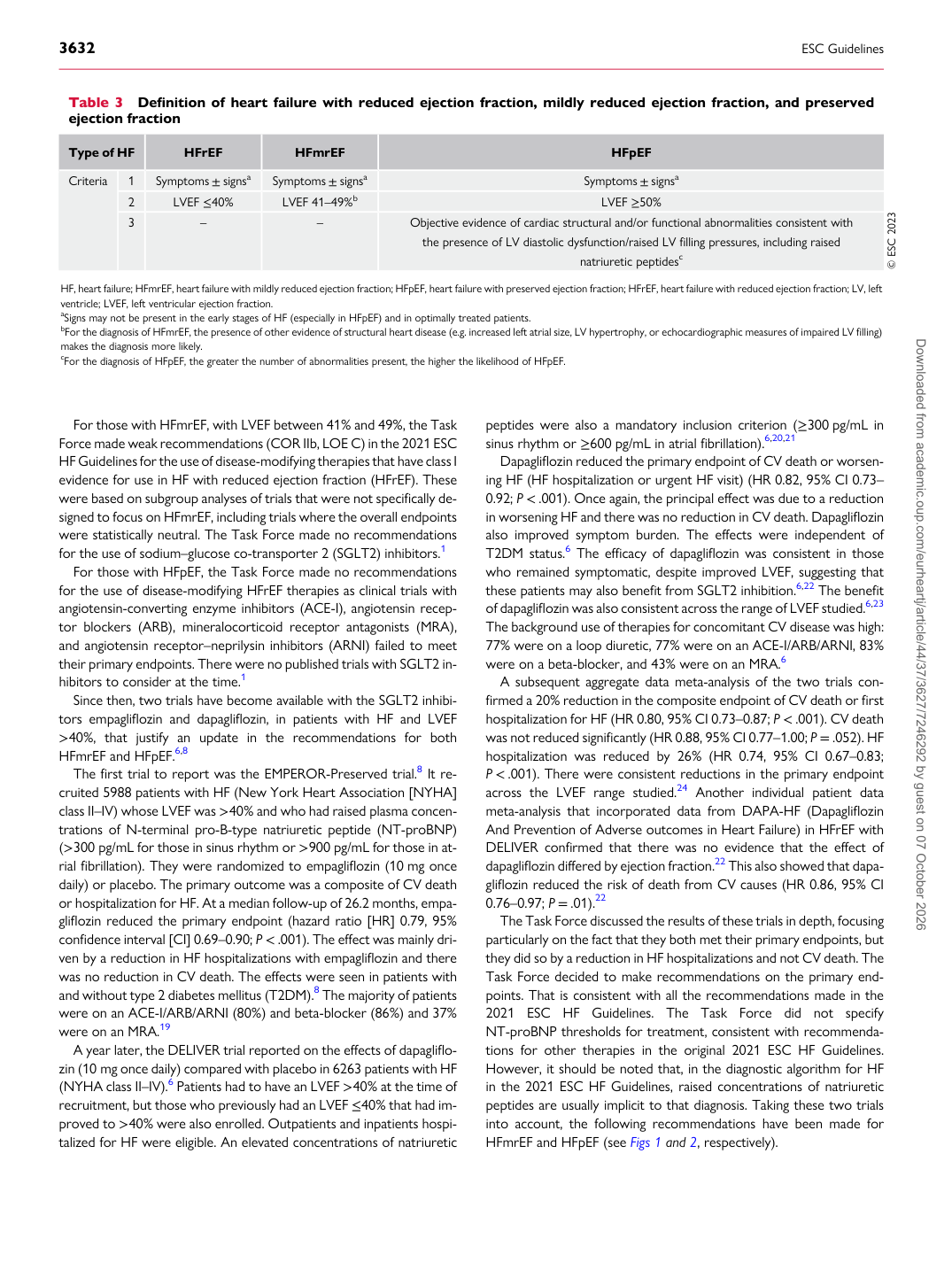
Table 3 Definition of heart failure with reduced ejection fraction, mildly reduced ejection fraction, and preserved ejection fraction

Type of HF HFrEF HFmrEF HFpEF Criteria 1 Symptoms ± signsa Symptoms ± signsa Symptoms ± signsa

2 LVEF ≤40% LVEF 41–49%b LVEF ≥50%

3 – – Objective evidence of cardiac structural and/or functional abnormalities consistent with

the presence of LV diastolic dysfunction/raised LV filling pressures, including raised

natriuretic peptidesc © ESC 2023

HF, heart failure; HFmrEF, heart failure with mildly reduced ejection fraction; HFpEF, heart failure with preserved ejection fraction; HFrEF, heart failure with reduced ejection fraction; LV, left ventricle; LVEF, left ventricular ejection fraction. aSigns may not be present in the early stages of HF (especially in HFpEF) and in optimally treated patients. bFor the diagnosis of HFmrEF, the presence of other evidence of structural heart disease (e.g. increased left atrial size, LV hypertrophy, or echocardiographic measures of impaired LV filling) makes the diagnosis more likely. cFor the diagnosis of HFpEF, the greater the number of abnormalities present, the higher the likelihood of HFpEF. Downloaded from academic.oup.com/eurheartj/article/44/37/3627/7246292 by guest on 07 October 2026