p.67 抽出テキスト
Other complications of infective endocarditis: • There is limited information on the safety and efficacy of mechanical thrombectomy in IE-related embolic strokes. • There are no prospective data on the timing and safety of splenectomy for splenic abscess, complicating IE in relation to surgical valve treatment.

Surgical therapy principles and methods: • There is a significant need for scores to predict futility of surgical management in very high-risk patients. • There is a lack of data on the most appropriate anticoagulation regimen in patients with PVE complicated by haemorrhagic stroke.

Outcome after discharge: follow-up and long-term prognosis: • Clinical trials are required to assess the efficacy of rehabilitation, including optimal timing, duration, methods, and components. • Data on patient-reported outcomes during short- and long-term follow-up are needed.

Management of specific situations: • Additional data on the incidence, characteristics, and outcomes of IE in patients treated with transcatheter valve therapies or left atrial appendage occluders are needed. • There is an unmet clinical question on the efficacy and safety of surgical treatment of IE in patients previously treated with transcatheter valve therapies. • Randomized data on the timing of CIED reimplantation after device removal after CIED infection are needed. • There is a lack of evidence on whether or not CIED removal should be routinely performed in patients with left-sided IE. • Randomized data on surgery in right-sided IE are required.

Patient-centred care and shared decision-making in infective endocarditis:

• As no disease-specific evidence exists, data on patient-centred care and shared decision-making in IE is needed. • Data on how patient-centred care and shared decision-making in patients with social and mental health vulnerabilities can improve their outcomes are lacking. • Data on the effect of patient-centred care and shared decisionmaking interventions are required to implement effective strategies.

Sex differences:

• Further data are required to determine why IE is less frequently observed, and why the outcomes are worse, in female patients. • The reasons for lower referral to surgery in female patients with IE as compared with male patients need to be determined and addressed.

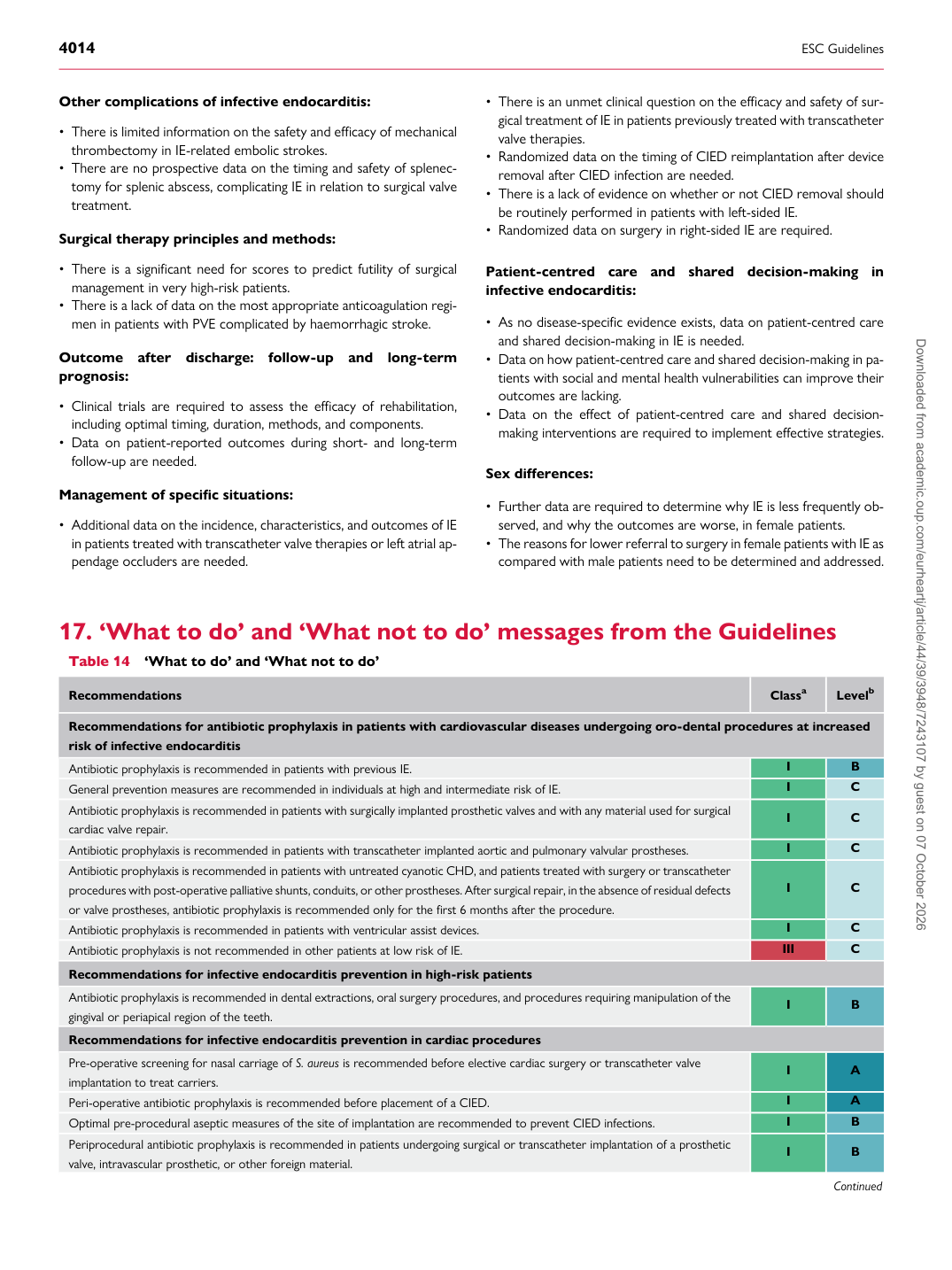
Table 14 ‘What to do’ and ‘What not to do’

Recommendations Classa Levelb

Recommendations for antibiotic prophylaxis in patients with cardiovascular diseases undergoing oro-dental procedures at increased risk of infective endocarditis Antibiotic prophylaxis is recommended in patients with previous IE. I B General prevention measures are recommended in individuals at high and intermediate risk of IE. I C Antibiotic prophylaxis is recommended in patients with surgically implanted prosthetic valves and with any material used for surgical cardiac valve repair. I C Antibiotic prophylaxis is recommended in patients with transcatheter implanted aortic and pulmonary valvular prostheses. I C Antibiotic prophylaxis is recommended in patients with untreated cyanotic CHD, and patients treated with surgery or transcatheter procedures with post-operative palliative shunts, conduits, or other prostheses. After surgical repair, in the absence of residual defects or valve prostheses, antibiotic prophylaxis is recommended only for the first 6 months after the procedure. I C Antibiotic prophylaxis is recommended in patients with ventricular assist devices. I C Antibiotic prophylaxis is not recommended in other patients at low risk of IE. III C Recommendations for infective endocarditis prevention in high-risk patients Antibiotic prophylaxis is recommended in dental extractions, oral surgery procedures, and procedures requiring manipulation of the gingival or periapical region of the teeth. I B Recommendations for infective endocarditis prevention in cardiac procedures Pre-operative screening for nasal carriage of S. aureus is recommended before elective cardiac surgery or transcatheter valve implantation to treat carriers. I A Peri-operative antibiotic prophylaxis is recommended before placement of a CIED. I A Optimal pre-procedural aseptic measures of the site of implantation are recommended to prevent CIED infections. I B Periprocedural antibiotic prophylaxis is recommended in patients undergoing surgical or transcatheter implantation of a prosthetic valve, intravascular prosthetic, or other foreign material. I B

Continued

17 ‘What to do’ and ‘What not to do’ messages from the Guidelines Downloaded from academic.oup.com/eurheartj/article/44/39/3948/7243107 by guest on 07 October 2026