p.29 抽出テキスト
(individual dose, frequency of dosing, mode of administration [oral or intravenous (i.v.)]).42

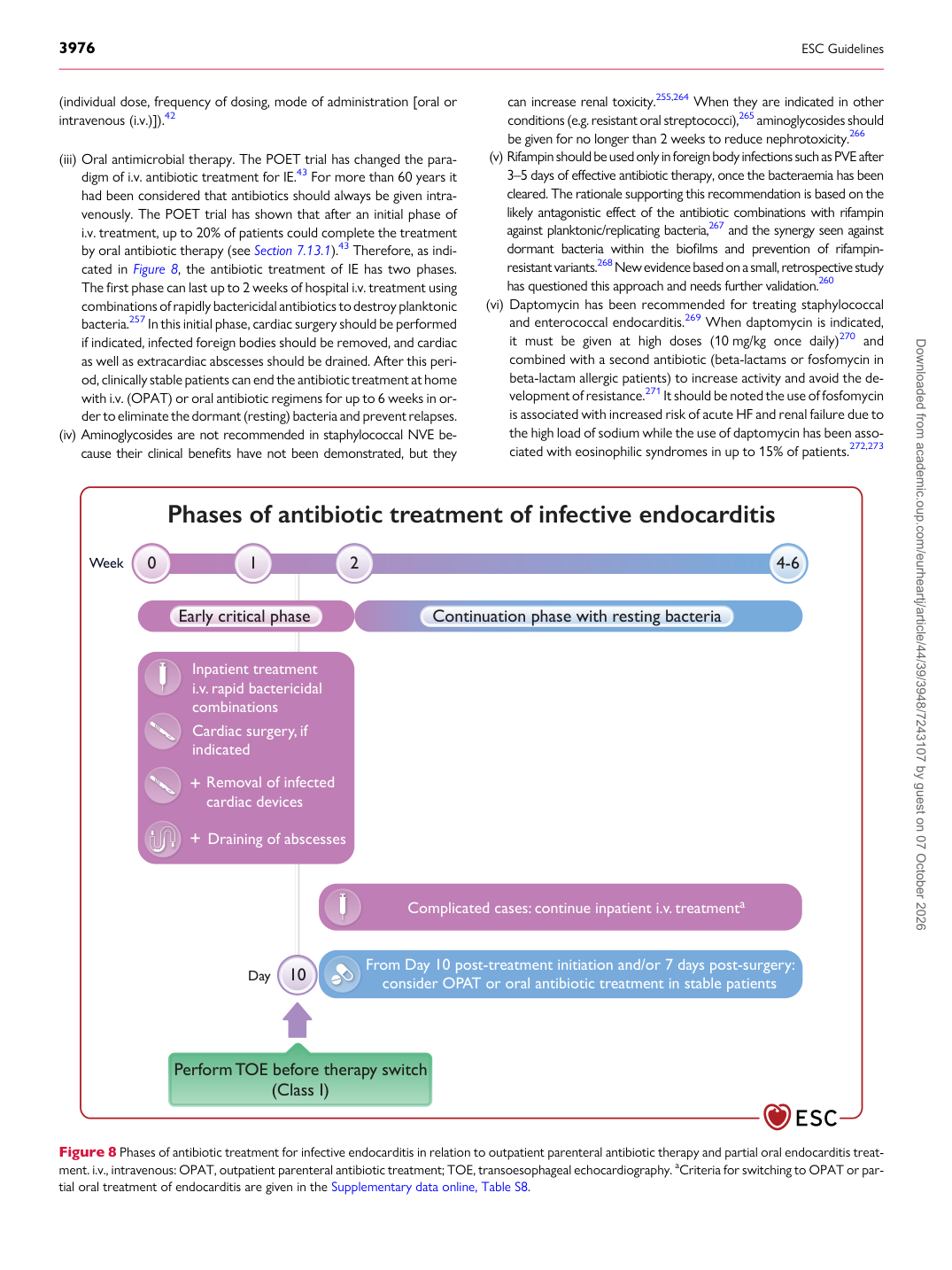
(iii) Oral antimicrobial therapy. The POET trial has changed the paradigm of i.v. antibiotic treatment for IE.43 For more than 60 years it had been considered that antibiotics should always be given intravenously. The POET trial has shown that after an initial phase of i.v. treatment, up to 20% of patients could complete the treatment by oral antibiotic therapy (see Section 7.13.1).43 Therefore, as indicated in Figure 8, the antibiotic treatment of IE has two phases. The first phase can last up to 2 weeks of hospital i.v. treatment using combinations of rapidly bactericidal antibiotics to destroy planktonic bacteria.257 In this initial phase, cardiac surgery should be performed if indicated, infected foreign bodies should be removed, and cardiac as well as extracardiac abscesses should be drained. After this period, clinically stable patients can end the antibiotic treatment at home with i.v. (OPAT) or oral antibiotic regimens for up to 6 weeks in order to eliminate the dormant (resting) bacteria and prevent relapses. (iv) Aminoglycosides are not recommended in staphylococcal NVE be-

cause their clinical benefits have not been demonstrated, but they can increase renal toxicity.255,264 When they are indicated in other conditions (e.g. resistant oral streptococci),265 aminoglycosides should be given for no longer than 2 weeks to reduce nephrotoxicity.266

(v) Rifampin should be used only in foreign body infections such as PVE after

3–5 days of effective antibiotic therapy, once the bacteraemia has been cleared. The rationale supporting this recommendation is based on the likely antagonistic effect of the antibiotic combinations with rifampin against planktonic/replicating bacteria,267 and the synergy seen against dormant bacteria within the biofilms and prevention of rifampinresistant variants.268 New evidence based on a small, retrospective study has questioned this approach and needs further validation.260 (vi) Daptomycin has been recommended for treating staphylococcal

and enterococcal endocarditis.269 When daptomycin is indicated, it must be given at high doses (10 mg/kg once daily)270 and combined with a second antibiotic (beta-lactams or fosfomycin in beta-lactam allergic patients) to increase activity and avoid the development of resistance.271 It should be noted the use of fosfomycin is associated with increased risk of acute HF and renal failure due to the high load of sodium while the use of daptomycin has been associated with eosinophilic syndromes in up to 15% of patients.272,273

Phases of antibiotic treatment of infective endocarditis

Complicated cases: continue inpatient i.v. treatmenta

From Day 10 post-treatment initiation and/or 7 days post-surgery:

consider OPAT or oral antibiotic treatment in stable patients

Inpatient treatment i.v. rapid bactericidal combinations

Removal of infected cardiac devices

0 Week

Early critical phase Continuation phase with resting bacteria

1 2 4-6

+

+

Cardiac surgery, if indicated

Draining of abscesses

10 Day

Perform TOE before therapy switch

(Class I)

Figure 8 Phases of antibiotic treatment for infective endocarditis in relation to outpatient parenteral antibiotic therapy and partial oral endocarditis treatment. i.v., intravenous: OPAT, outpatient parenteral antibiotic treatment; TOE, transoesophageal echocardiography. aCriteria for switching to OPAT or partial oral treatment of endocarditis are given in the Supplementary data online, Table S8. Downloaded from academic.oup.com/eurheartj/article/44/39/3948/7243107 by guest on 07 October 2026