p.71 抽出テキスト
strategies in T2DM, i.e. treatment with SGLT2 inhibitors or GLP-1 RAs. Although women are under-represented in clinical trials, there is no evidence for sex-specific recommendations for managing CVD in patients with diabetes. However, epidemiological and real-world data suggest that guideline-directed therapy in women is less likely to be applied compared with men.835–837 This should be explored in future studies. Therefore, we recommend implementing sex-balanced recruitment strategies for future CVOTs. In addition, pre-specified analyses addressing sex differences are needed. Most importantly, every effort should be made to ensure women receive equal healthcare opportunities in managing CVD in diabetes.

17 ‘What to do’ and ‘What not to do’ messages from the Guidelines

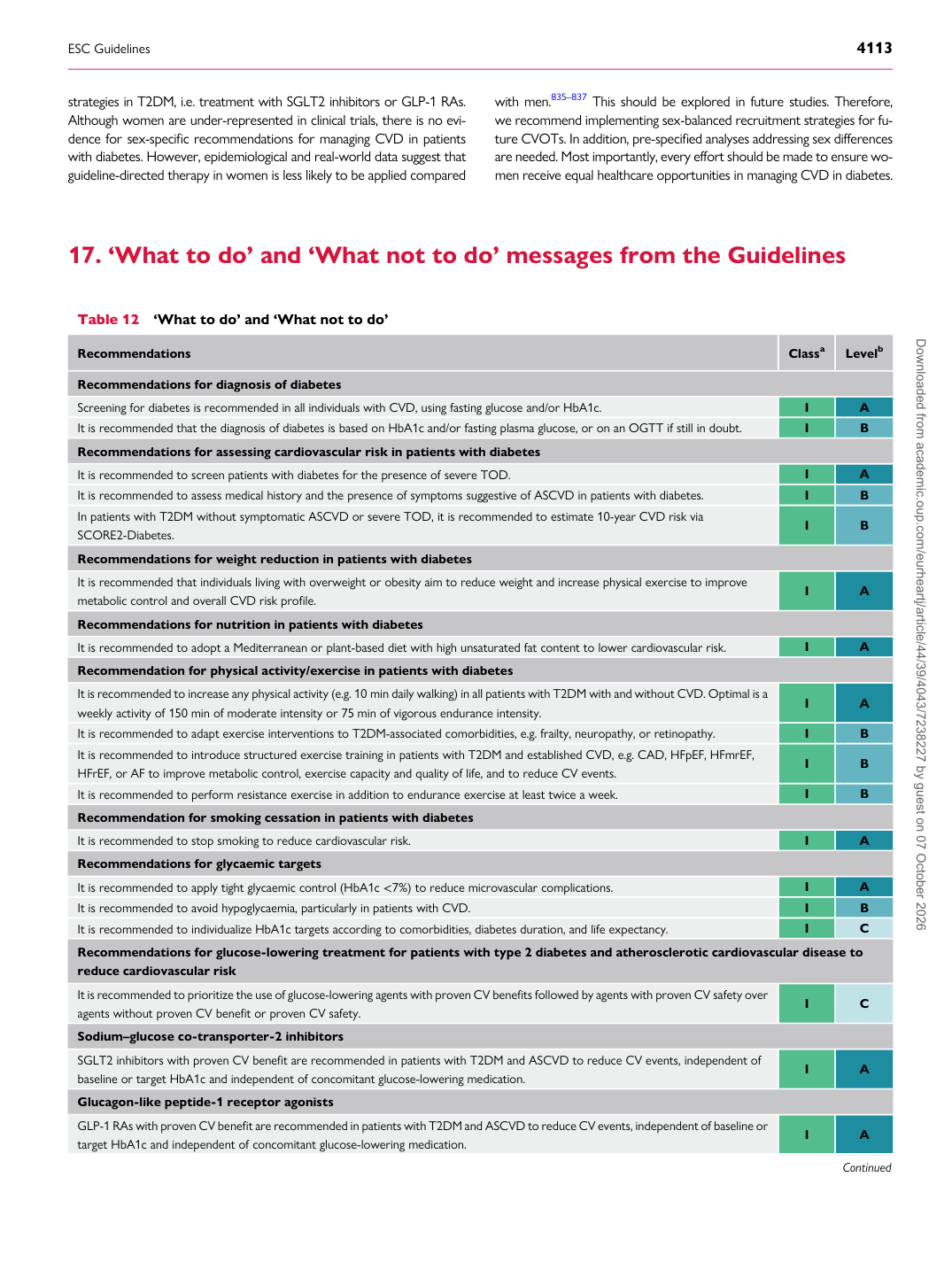
Table 12 ‘What to do’ and ‘What not to do’

Recommendations Classa Levelb

Recommendations for diagnosis of diabetes Screening for diabetes is recommended in all individuals with CVD, using fasting glucose and/or HbA1c. I A It is recommended that the diagnosis of diabetes is based on HbA1c and/or fasting plasma glucose, or on an OGTT if still in doubt. I B Recommendations for assessing cardiovascular risk in patients with diabetes It is recommended to screen patients with diabetes for the presence of severe TOD. I A It is recommended to assess medical history and the presence of symptoms suggestive of ASCVD in patients with diabetes. I B In patients with T2DM without symptomatic ASCVD or severe TOD, it is recommended to estimate 10-year CVD risk via SCORE2-Diabetes. I B Recommendations for weight reduction in patients with diabetes It is recommended that individuals living with overweight or obesity aim to reduce weight and increase physical exercise to improve metabolic control and overall CVD risk profile. I A Recommendations for nutrition in patients with diabetes It is recommended to adopt a Mediterranean or plant-based diet with high unsaturated fat content to lower cardiovascular risk. I A Recommendation for physical activity/exercise in patients with diabetes It is recommended to increase any physical activity (e.g. 10 min daily walking) in all patients with T2DM with and without CVD. Optimal is a weekly activity of 150 min of moderate intensity or 75 min of vigorous endurance intensity. I A It is recommended to adapt exercise interventions to T2DM-associated comorbidities, e.g. frailty, neuropathy, or retinopathy. I B It is recommended to introduce structured exercise training in patients with T2DM and established CVD, e.g. CAD, HFpEF, HFmrEF, HFrEF, or AF to improve metabolic control, exercise capacity and quality of life, and to reduce CV events. I B It is recommended to perform resistance exercise in addition to endurance exercise at least twice a week. I B Recommendation for smoking cessation in patients with diabetes It is recommended to stop smoking to reduce cardiovascular risk. I A Recommendations for glycaemic targets It is recommended to apply tight glycaemic control (HbA1c <7%) to reduce microvascular complications. I A It is recommended to avoid hypoglycaemia, particularly in patients with CVD. I B It is recommended to individualize HbA1c targets according to comorbidities, diabetes duration, and life expectancy. I C Recommendations for glucose-lowering treatment for patients with type 2 diabetes and atherosclerotic cardiovascular disease to reduce cardiovascular risk It is recommended to prioritize the use of glucose-lowering agents with proven CV benefits followed by agents with proven CV safety over agents without proven CV benefit or proven CV safety. I C Sodium–glucose co-transporter-2 inhibitors SGLT2 inhibitors with proven CV benefit are recommended in patients with T2DM and ASCVD to reduce CV events, independent of baseline or target HbA1c and independent of concomitant glucose-lowering medication. I A Glucagon-like peptide-1 receptor agonists GLP-1 RAs with proven CV benefit are recommended in patients with T2DM and ASCVD to reduce CV events, independent of baseline or target HbA1c and independent of concomitant glucose-lowering medication. I A

Continued

ESC Guidelines                                                                                                                                                                                          4113

Downloaded from academic.oup.com/eurheartj/article/44/39/4043/7238227 by guest on 07 October 2026