p.63 抽出テキスト
Ulcer or wound

Wound healing without revascularization likely LEAD LEAD

Intermittent claudication

Regular screening

Clinical examination ABI

(Additional MRA or CTAc)

Revascularization Regular screening Exercise trainingb

Limited daily practice despite exercise training

Regular screening / follow-up

Clinical symptoms for LEAD

Aetiology for LEAD

≤0.9 or >1.4

Wound managementb Search for other causes for limited walking distance

Wound healing

Clinical examination ABI (TBIa), TcPO2 Duplex sonography

WIfI score Clinical examination

ABI (TBIa) Duplex sonography

Treadmill test TBIa Duplex sonography

Treadmill test

Patients with diabetes

Y

Y Y Y Y

N

N

N N N

N

N Y

Y

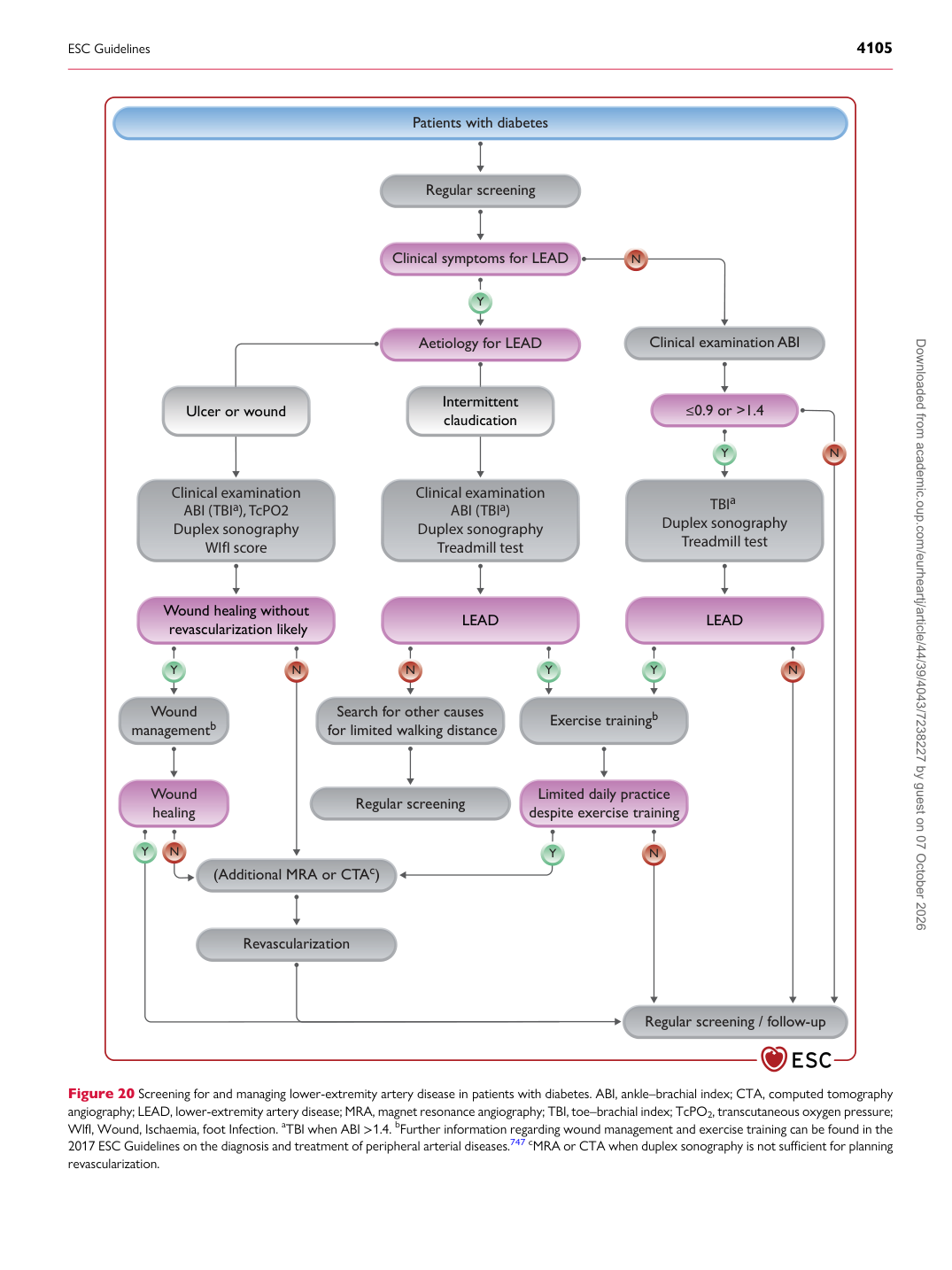
Figure 20 Screening for and managing lower-extremity artery disease in patients with diabetes. ABI, ankle–brachial index; CTA, computed tomography angiography; LEAD, lower-extremity artery disease; MRA, magnet resonance angiography; TBI, toe–brachial index; TcPO2, transcutaneous oxygen pressure; WlfI, Wound, Ischaemia, foot Infection. aTBI when ABI >1.4. bFurther information regarding wound management and exercise training can be found in the 2017 ESC Guidelines on the diagnosis and treatment of peripheral arterial diseases.747 cMRA or CTA when duplex sonography is not sufficient for planning revascularization.

ESC Guidelines                                                                                                                                                                                          4105

Downloaded from academic.oup.com/eurheartj/article/44/39/4043/7238227 by guest on 07 October 2026