p.50 抽出テキスト
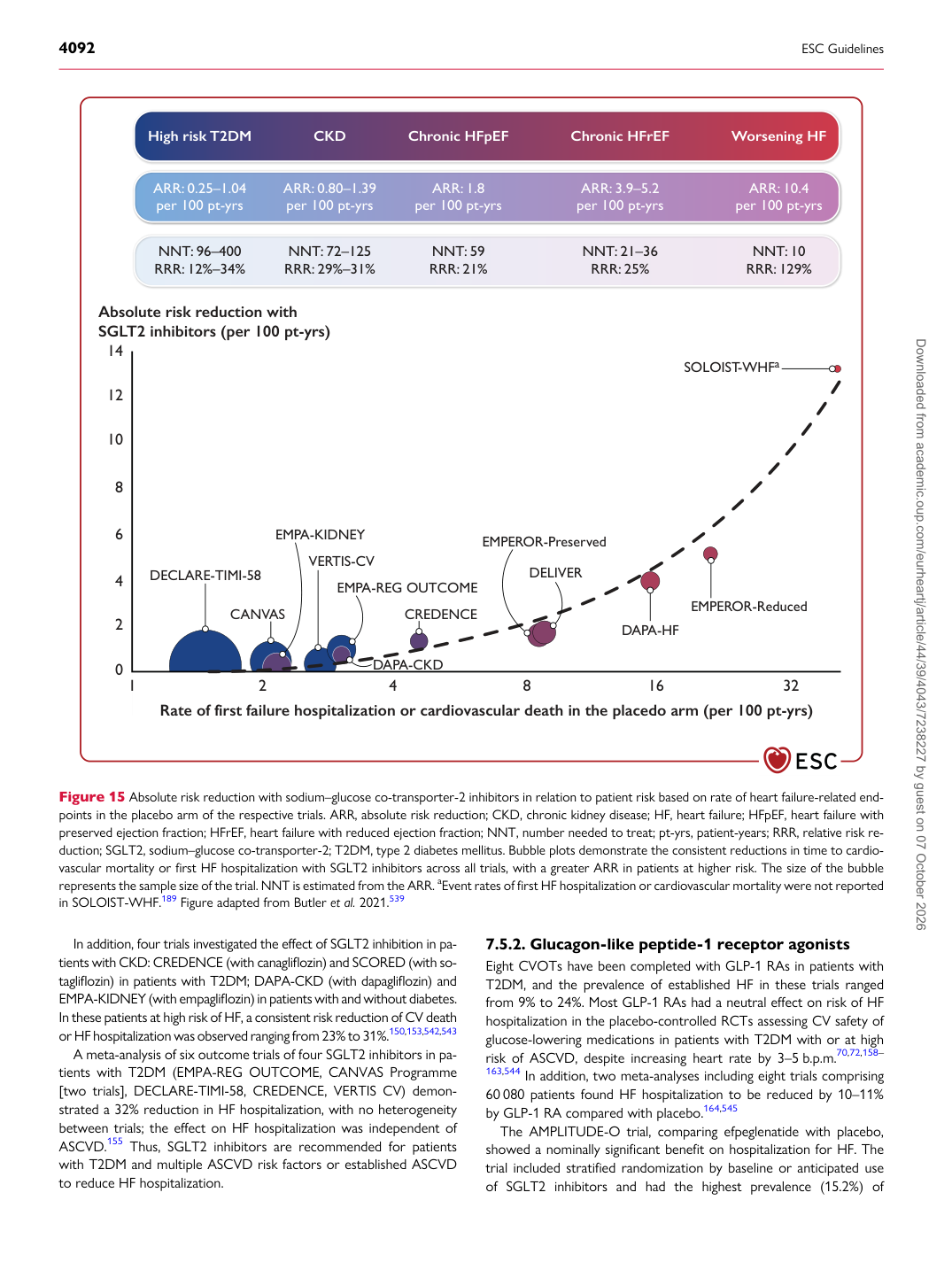
In addition, four trials investigated the effect of SGLT2 inhibition in patients with CKD: CREDENCE (with canagliflozin) and SCORED (with sotagliflozin) in patients with T2DM; DAPA-CKD (with dapagliflozin) and EMPA-KIDNEY (with empagliflozin) in patients with and without diabetes. In these patients at high risk of HF, a consistent risk reduction of CV death or HF hospitalization was observed ranging from 23% to 31%.150,153,542,543 A meta-analysis of six outcome trials of four SGLT2 inhibitors in patients with T2DM (EMPA-REG OUTCOME, CANVAS Programme [two trials], DECLARE-TIMI-58, CREDENCE, VERTIS CV) demonstrated a 32% reduction in HF hospitalization, with no heterogeneity between trials; the effect on HF hospitalization was independent of ASCVD.155 Thus, SGLT2 inhibitors are recommended for patients with T2DM and multiple ASCVD risk factors or established ASCVD to reduce HF hospitalization. 7.5.2 Glucagon-like peptide-1 receptor agonists

Eight CVOTs have been completed with GLP-1 RAs in patients with T2DM, and the prevalence of established HF in these trials ranged from 9% to 24%. Most GLP-1 RAs had a neutral effect on risk of HF hospitalization in the placebo-controlled RCTs assessing CV safety of glucose-lowering medications in patients with T2DM with or at high risk of ASCVD, despite increasing heart rate by 3–5 b.p.m.70,72,158– 163,544 In addition, two meta-analyses including eight trials comprising 60 080 patients found HF hospitalization to be reduced by 10–11% by GLP-1 RA compared with placebo.164,545 The AMPLITUDE-O trial, comparing efpeglenatide with placebo, showed a nominally significant benefit on hospitalization for HF. The trial included stratified randomization by baseline or anticipated use of SGLT2 inhibitors and had the highest prevalence (15.2%) of

14 12

10

8

6

4

2 0 1 2 4 8 16 32

Absolute risk reduction with SGLT2 inhibitors (per 100 pt-yrs)

DECLARE-TIMI-58

CANVAS

EMPA-KIDNEY

VERTIS-CV

EMPA-REG OUTCOME

CREDENCE DELIVER

EMPEROR-Preserved

DAPA-CKD

Rate of first failure hospitalization or cardiovascular death in the placedo arm (per 100 pt-yrs)

DAPA-HF EMPEROR-Reduced

SOLOIST-WHFa

NNT: 96–400 RRR: 12%–34% NNT: 72–125 RRR: 29%–31% NNT: 59 RRR: 21% NNT: 21–36

RRR: 25% NNT: 10 RRR: 129%

ARR: 0.25–1.04 per 100 pt-yrs ARR: 0.80–1.39

per 100 pt-yrs ARR: 1.8 per 100 pt-yrs ARR: 3.9–5.2 per 100 pt-yrs ARR: 10.4 per 100 pt-yrs

High risk T2DM CKD Chronic HFpEF Chronic HFrEF Worsening HF

Figure 15 Absolute risk reduction with sodium–glucose co-transporter-2 inhibitors in relation to patient risk based on rate of heart failure-related endpoints in the placebo arm of the respective trials. ARR, absolute risk reduction; CKD, chronic kidney disease; HF, heart failure; HFpEF, heart failure with preserved ejection fraction; HFrEF, heart failure with reduced ejection fraction; NNT, number needed to treat; pt-yrs, patient-years; RRR, relative risk reduction; SGLT2, sodium–glucose co-transporter-2; T2DM, type 2 diabetes mellitus. Bubble plots demonstrate the consistent reductions in time to cardiovascular mortality or first HF hospitalization with SGLT2 inhibitors across all trials, with a greater ARR in patients at higher risk. The size of the bubble represents the sample size of the trial. NNT is estimated from the ARR. aEvent rates of first HF hospitalization or cardiovascular mortality were not reported in SOLOIST-WHF.189 Figure adapted from Butler et al. 2021.539 Downloaded from academic.oup.com/eurheartj/article/44/39/4043/7238227 by guest on 07 October 2026