p.45 抽出テキスト
with HF patients without diabetes, regardless of HF phenotype.471,475–477 In patients with acute HF, for whom i.v. therapy (inotropes, vasodilators, or diuretics) was needed, diabetes was associated with higher risk of in-hospital death, 1 year all-cause death, and 1 year HF re-hospitalization.468,478

7.3 Screening and diagnosis

Patients with diabetes are at risk of HF but not all patients with diabetes will develop HF.479 Given that the prognosis of patients with both comorbidities is worse, it is of utmost importance to screen all patients with diabetes for HF to allow early implementation of life-saving therapies. To predict the HF risk among outpatients with T2DM, the WATCH-DM (Weight [BMI], Age, Hypertension, Creatinine, HDL-C, Diabetes control [fasting plasma glucose], QRS duration, MI, and CABG) risk score has been developed.480 Each increment of 1 unit in the risk score is associated with a 24% higher HF risk within 5 years. In addition, a biomarker-based risk score including high-sensitivity cardiac troponin T ≥6 ng/L, NT-proBNP ≥125 pg/mL, high-sensitivity C-reactive protein ≥3 mg/L, and LV hypertrophy by ECG (with one point for each abnormal parameter) demonstrated good discrimination and calibration for predicting 5and 10-year HF risk among patients with diabetes. The highest 5-year risk of HF was noted among those with scores ≥3.481 The Heart Failure Association of the ESC reviewed the clinical evidence and value of further biomarker testing and currently recommends no further testing.482

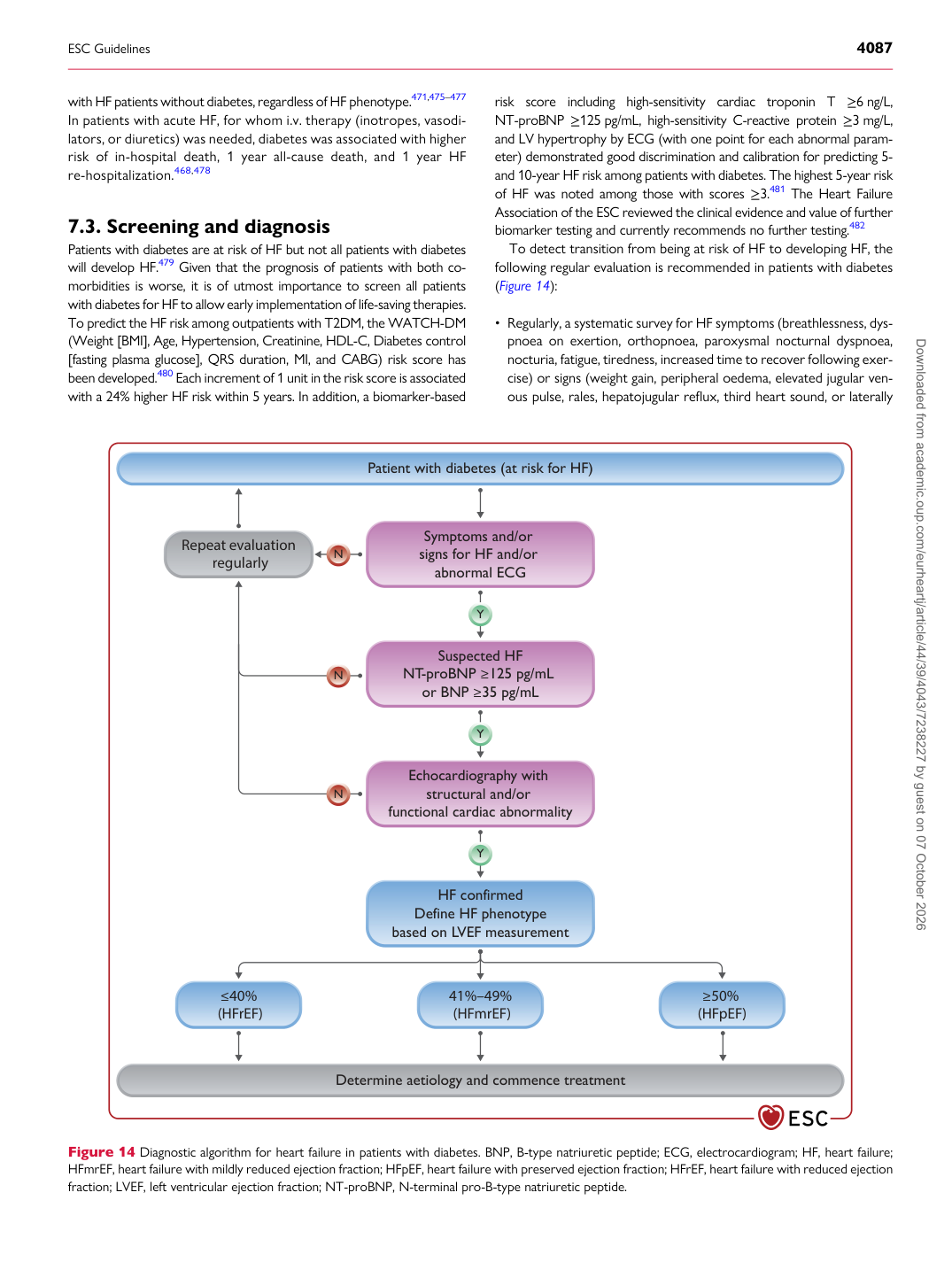
To detect transition from being at risk of HF to developing HF, the following regular evaluation is recommended in patients with diabetes (Figure 14):

• Regularly, a systematic survey for HF symptoms (breathlessness, dyspnoea on exertion, orthopnoea, paroxysmal nocturnal dyspnoea, nocturia, fatigue, tiredness, increased time to recover following exercise) or signs (weight gain, peripheral oedema, elevated jugular venous pulse, rales, hepatojugular reflux, third heart sound, or laterally

≤40% (HFrEF)

Repeat evaluation

regularly

41%–49% (HFmrEF) ≥50% (HFpEF)

Symptoms and/or signs for HF and/or

abnormal ECG

Patient with diabetes (at risk for HF)

Determine aetiology and commence treatment

Y

Suspected HF NT-proBNP ≥125 pg/mL

or BNP ≥35 pg/mL

Y

Echocardiography with structural and/or functional cardiac abnormality

Y

HF confirmed Define HF phenotype based on LVEF measurement

N

N

N

Figure 14 Diagnostic algorithm for heart failure in patients with diabetes. BNP, B-type natriuretic peptide; ECG, electrocardiogram; HF, heart failure; HFmrEF, heart failure with mildly reduced ejection fraction; HFpEF, heart failure with preserved ejection fraction; HFrEF, heart failure with reduced ejection fraction; LVEF, left ventricular ejection fraction; NT-proBNP, N-terminal pro-B-type natriuretic peptide.

ESC Guidelines                                                                                                                                                                                          4087

Downloaded from academic.oup.com/eurheartj/article/44/39/4043/7238227 by guest on 07 October 2026