p.33 抽出テキスト
5.5 Lipids and diabetes

A cluster of lipid and apolipoprotein abnormalities accompanies diabetes. The core components are moderately elevated plasma triglyceride (TG), TG-rich lipoprotein (TRL), and TRL cholesterol levels, normal-to-mildly elevated low-density lipoprotein-cholesterol (LDL-C), and low high-density lipoprotein-cholesterol (HDL-C). Other features comprise structure and function of lipoproteins, e.g. small dense LDL and HDL particles. The same abnormalities are also reported in patients with T1DM, whose long-lasting exposure to dyslipidaemia might induce atherosclerosis as early as in adolescence. In T1DM, high LDL-C values are seen in patients with uncontrolled glycaemia, while high levels of HDL-C might be pro-inflammatory and therefore atherogenic instead of protective.244 In well-controlled T1DM, HDL-C levels tend to be normal (or even slightly elevated), as are serum TGs.245

5.5.1 Treatment targets

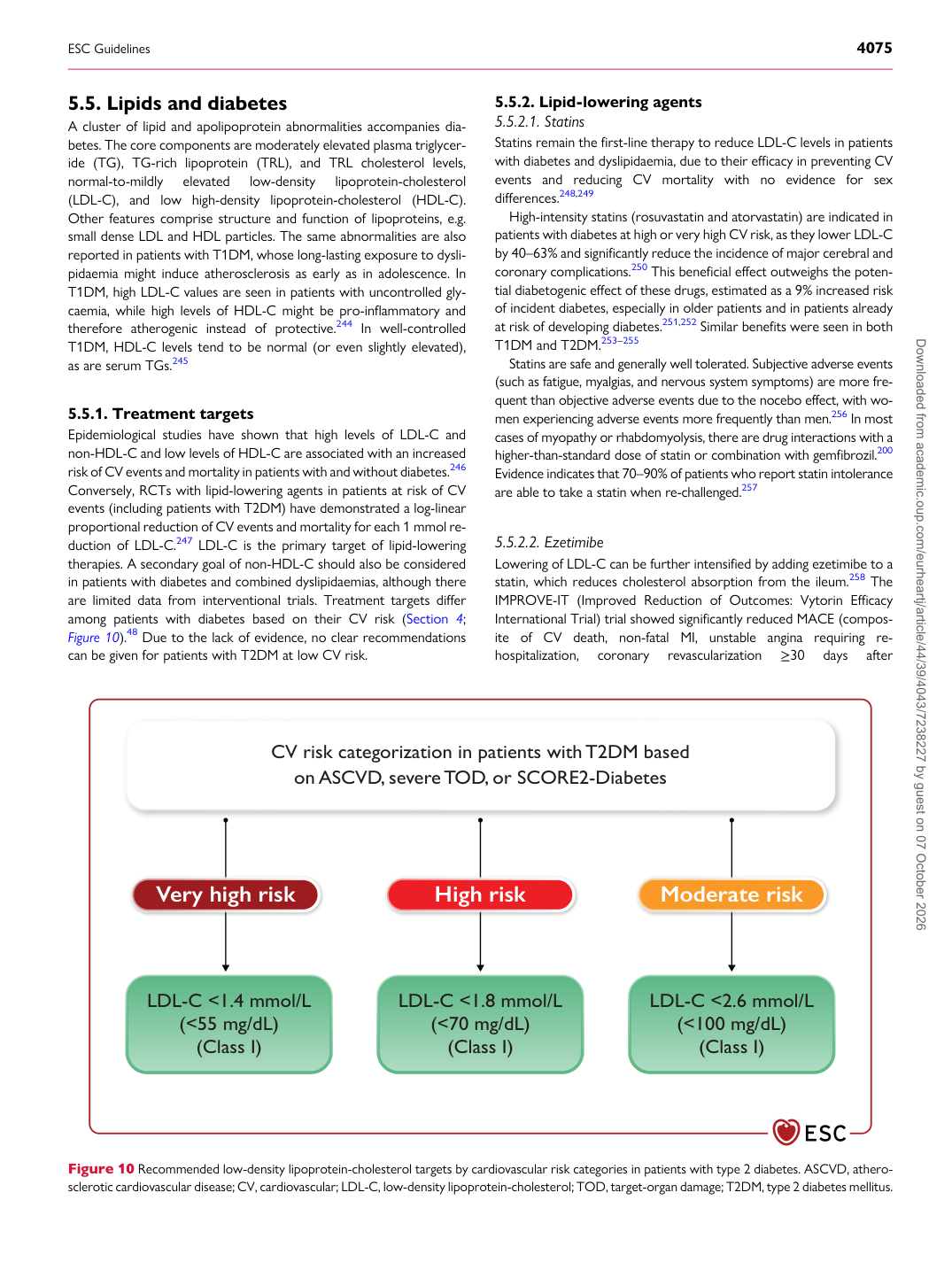
Epidemiological studies have shown that high levels of LDL-C and non-HDL-C and low levels of HDL-C are associated with an increased risk of CV events and mortality in patients with and without diabetes.246 Conversely, RCTs with lipid-lowering agents in patients at risk of CV events (including patients with T2DM) have demonstrated a log-linear proportional reduction of CV events and mortality for each 1 mmol reduction of LDL-C.247 LDL-C is the primary target of lipid-lowering therapies. A secondary goal of non-HDL-C should also be considered in patients with diabetes and combined dyslipidaemias, although there are limited data from interventional trials. Treatment targets differ among patients with diabetes based on their CV risk (Section 4; Figure 10).48 Due to the lack of evidence, no clear recommendations can be given for patients with T2DM at low CV risk. 5.5.2 Lipid-lowering agents

5.5.2.1. Statins Statins remain the first-line therapy to reduce LDL-C levels in patients with diabetes and dyslipidaemia, due to their efficacy in preventing CV events and reducing CV mortality with no evidence for sex differences.248,249 High-intensity statins (rosuvastatin and atorvastatin) are indicated in patients with diabetes at high or very high CV risk, as they lower LDL-C by 40–63% and significantly reduce the incidence of major cerebral and coronary complications.250 This beneficial effect outweighs the potential diabetogenic effect of these drugs, estimated as a 9% increased risk of incident diabetes, especially in older patients and in patients already at risk of developing diabetes.251,252 Similar benefits were seen in both T1DM and T2DM.253–255 Statins are safe and generally well tolerated. Subjective adverse events (such as fatigue, myalgias, and nervous system symptoms) are more frequent than objective adverse events due to the nocebo effect, with women experiencing adverse events more frequently than men.256 In most cases of myopathy or rhabdomyolysis, there are drug interactions with a higher-than-standard dose of statin or combination with gemfibrozil.200 Evidence indicates that 70–90% of patients who report statin intolerance are able to take a statin when re-challenged.257

5.5.2.2 Ezetimibe

Lowering of LDL-C can be further intensified by adding ezetimibe to a statin, which reduces cholesterol absorption from the ileum.258 The IMPROVE-IT (Improved Reduction of Outcomes: Vytorin Efficacy International Trial) trial showed significantly reduced MACE (composite of CV death, non-fatal MI, unstable angina requiring rehospitalization, coronary revascularization ≥30 days after

Very high risk High risk Moderate risk

LDL-C <1.4 mmol/L

(<55 mg/dL)

(Class I) LDL-C <1.8 mmol/L

(<70 mg/dL)

(Class I) LDL-C <2.6 mmol/L

(<100 mg/dL)

(Class I)

CV risk categorization in patients with T2DM based

on ASCVD, severe TOD, or SCORE2-Diabetes

Figure 10 Recommended low-density lipoprotein-cholesterol targets by cardiovascular risk categories in patients with type 2 diabetes. ASCVD, atherosclerotic cardiovascular disease; CV, cardiovascular; LDL-C, low-density lipoprotein-cholesterol; TOD, target-organ damage; T2DM, type 2 diabetes mellitus.

ESC Guidelines                                                                                                                                                                                          4075

Downloaded from academic.oup.com/eurheartj/article/44/39/4043/7238227 by guest on 07 October 2026