p.16 抽出テキスト
Following on, a random glucose ≥11.1 mmol/L (≥200 mg/dL) is also diagnostic of diabetes in the presence of symptoms. In the absence of symptoms, two random glucose levels ≥11.1 mmol/L (≥200 mg/dL) are required to diagnose diabetes. One-hour OGTT ≥8.6 mmol/L (≥155 mg/dL) has been suggested as a better predictor of diabetes than 2 h OGTT ≥11.1 mmol/L (≥200 mg/dL), and is associated with vascular complications and mortality.9 However, further validation is required before this new measure is widely adopted.

3.1.3 Glycated haemoglobin

Following high-quality epidemiological studies, it was suggested that HbA1c could be used to diagnose diabetes, and this was subsequently endorsed by international guidelines.10 It should be noted that epidemiological studies have relied on the adult population, though HbA1c is also used in younger individuals as a diagnostic test.11 Advantages of HbA1c include ease of measurement, limited within-individual variability, and the convenience of anytime testing without the need for fasting or a cumbersome OGTT. However, HbA1c is not accurate in specific groups where the relationship between HbA1c and glucose levels is altered for any reason (Supplementary data online, Table S1).12,13 Moreover, in cases of shorter diabetes duration, such as early type 1 diabetes mellitus (T1DM) or

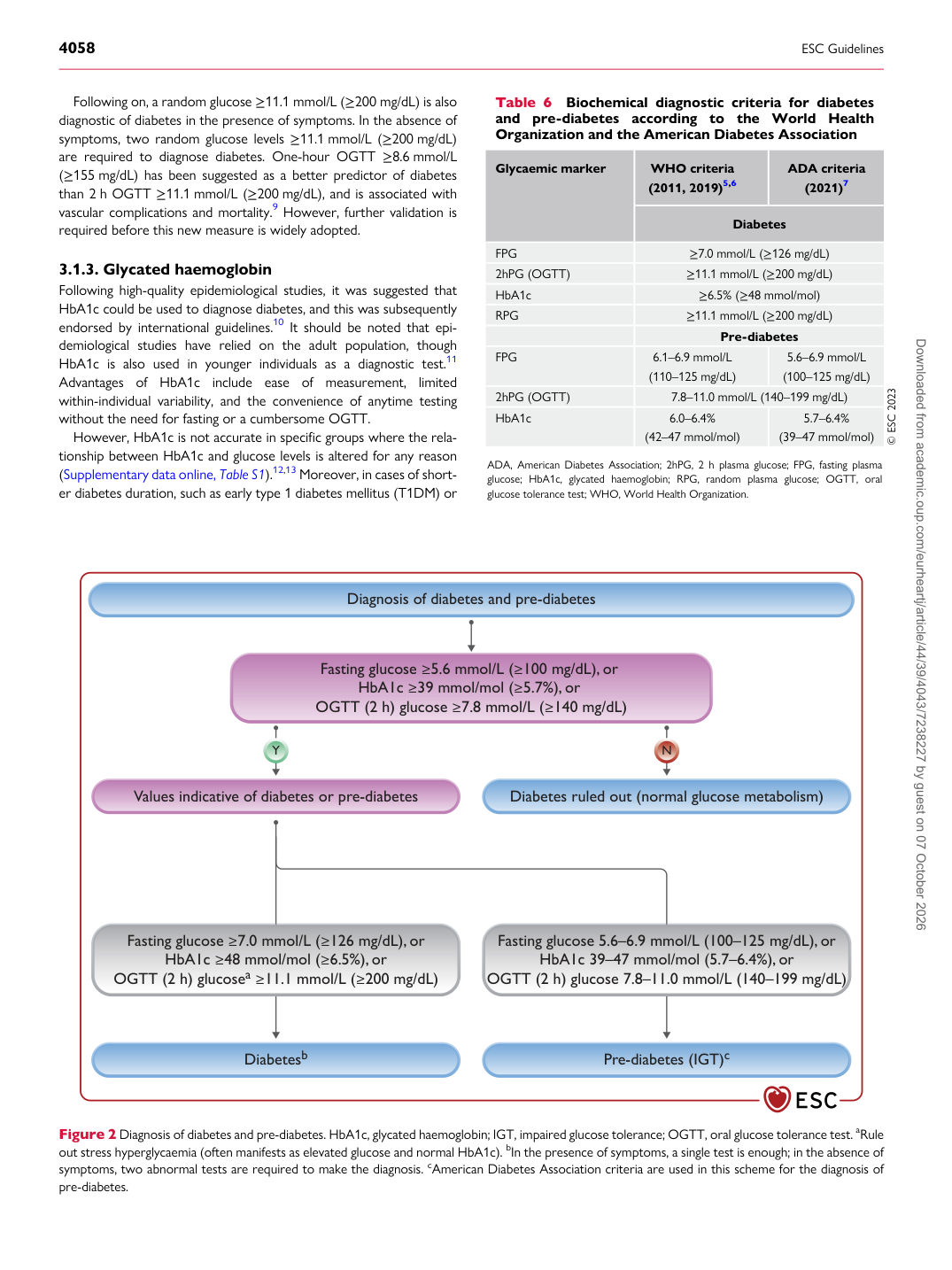
Diabetes ruled out (normal glucose metabolism)

Pre-diabetes (IGT)c Diabetesb

Values indicative of diabetes or pre-diabetes

Fasting glucose ≥7.0 mmol/L (≥126 mg/dL), or HbA1c ≥48 mmol/mol (≥6.5%), or OGTT (2 h) glucosea ≥11.1 mmol/L (≥200 mg/dL) Fasting glucose 5.6–6.9 mmol/L (100–125 mg/dL), or

HbA1c 39–47 mmol/mol (5.7–6.4%), or OGTT (2 h) glucose 7.8–11.0 mmol/L (140–199 mg/dL)

Fasting glucose ≥5.6 mmol/L (≥100 mg/dL), or HbA1c ≥39 mmol/mol (≥5.7%), or OGTT (2 h) glucose ≥7.8 mmol/L (≥140 mg/dL)

N

Diagnosis of diabetes and pre-diabetes

Y

Figure 2 Diagnosis of diabetes and pre-diabetes. HbA1c, glycated haemoglobin; IGT, impaired glucose tolerance; OGTT, oral glucose tolerance test. aRule out stress hyperglycaemia (often manifests as elevated glucose and normal HbA1c). bIn the presence of symptoms, a single test is enough; in the absence of symptoms, two abnormal tests are required to make the diagnosis. cAmerican Diabetes Association criteria are used in this scheme for the diagnosis of pre-diabetes.

Table 6 Biochemical diagnostic criteria for diabetes and pre-diabetes according to the World Health Organization and the American Diabetes Association

Glycaemic marker WHO criteria

(2011, 2019)5,6 ADA criteria

(2021)7

Diabetes

FPG ≥7.0 mmol/L (≥126 mg/dL) 2hPG (OGTT) ≥11.1 mmol/L (≥200 mg/dL) HbA1c ≥6.5% (≥48 mmol/mol) RPG ≥11.1 mmol/L (≥200 mg/dL)

Pre-diabetes

FPG 6.1–6.9 mmol/L

(110–125 mg/dL) 5.6–6.9 mmol/L

(100–125 mg/dL)

2hPG (OGTT) 7.8–11.0 mmol/L (140–199 mg/dL) HbA1c 6.0–6.4% (42–47 mmol/mol) 5.7–6.4% (39–47 mmol/mol) © ESC 2023

ADA, American Diabetes Association; 2hPG, 2 h plasma glucose; FPG, fasting plasma glucose; HbA1c, glycated haemoglobin; RPG, random plasma glucose; OGTT, oral glucose tolerance test; WHO, World Health Organization. Downloaded from academic.oup.com/eurheartj/article/44/39/4043/7238227 by guest on 07 October 2026