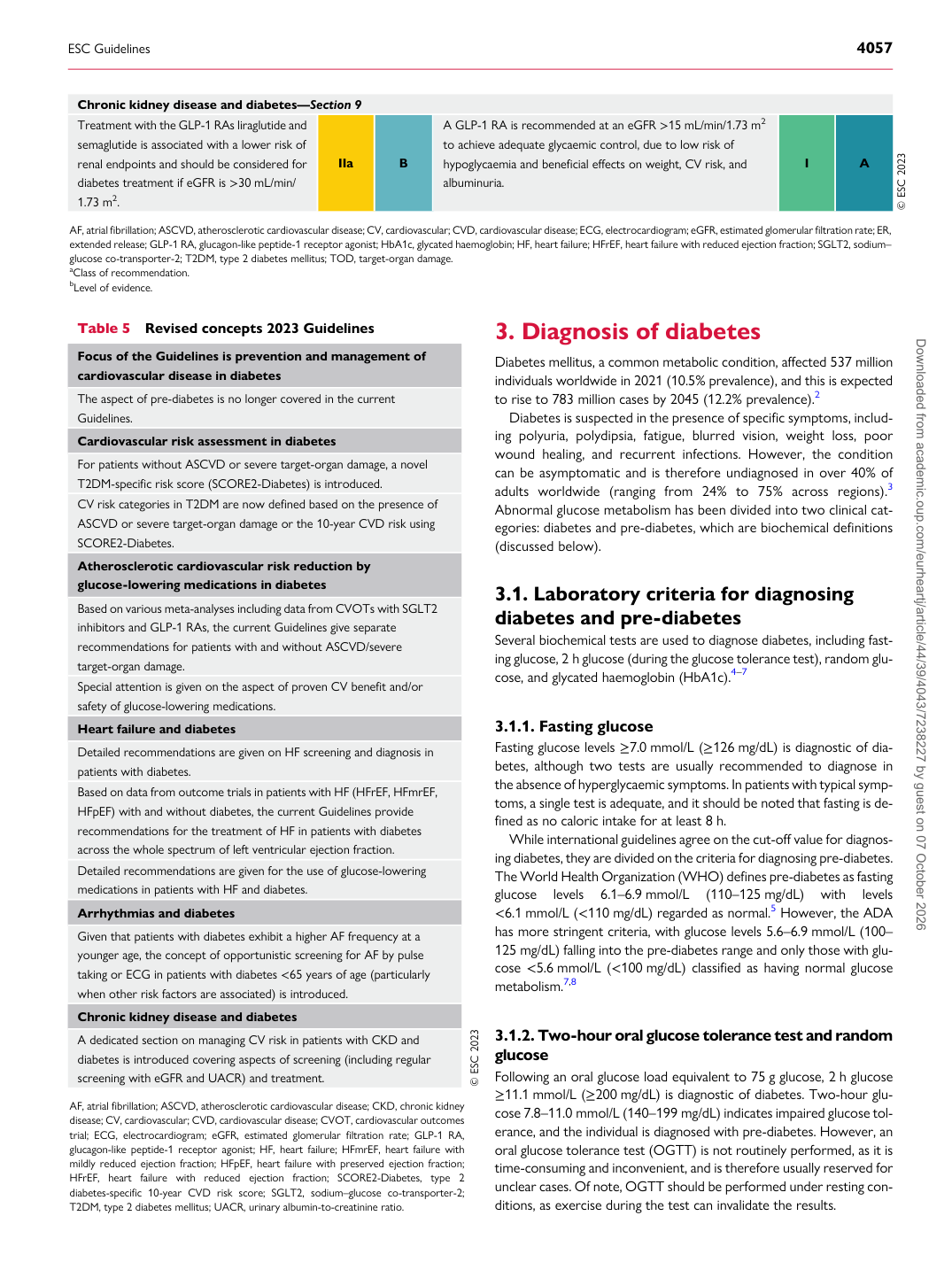
p.15 抽出テキスト
3 Diagnosis of diabetes

Diabetes mellitus, a common metabolic condition, affected 537 million individuals worldwide in 2021 (10.5% prevalence), and this is expected to rise to 783 million cases by 2045 (12.2% prevalence).2 Diabetes is suspected in the presence of specific symptoms, including polyuria, polydipsia, fatigue, blurred vision, weight loss, poor wound healing, and recurrent infections. However, the condition can be asymptomatic and is therefore undiagnosed in over 40% of adults worldwide (ranging from 24% to 75% across regions).3 Abnormal glucose metabolism has been divided into two clinical categories: diabetes and pre-diabetes, which are biochemical definitions (discussed below).

3.1 Laboratory criteria for diagnosing

diabetes and pre-diabetes Several biochemical tests are used to diagnose diabetes, including fasting glucose, 2 h glucose (during the glucose tolerance test), random glucose, and glycated haemoglobin (HbA1c).4–7

3.1.1 Fasting glucose

Fasting glucose levels ≥7.0 mmol/L (≥126 mg/dL) is diagnostic of diabetes, although two tests are usually recommended to diagnose in the absence of hyperglycaemic symptoms. In patients with typical symptoms, a single test is adequate, and it should be noted that fasting is defined as no caloric intake for at least 8 h. While international guidelines agree on the cut-off value for diagnosing diabetes, they are divided on the criteria for diagnosing pre-diabetes. The World Health Organization (WHO) defines pre-diabetes as fasting glucose levels 6.1–6.9 mmol/L (110–125 mg/dL) with levels <6.1 mmol/L (<110 mg/dL) regarded as normal.5 However, the ADA has more stringent criteria, with glucose levels 5.6–6.9 mmol/L (100– 125 mg/dL) falling into the pre-diabetes range and only those with glucose <5.6 mmol/L (<100 mg/dL) classified as having normal glucose metabolism.7,8

3.1.2 Two-hour oral glucose tolerance test and random

glucose Following an oral glucose load equivalent to 75 g glucose, 2 h glucose ≥11.1 mmol/L (≥200 mg/dL) is diagnostic of diabetes. Two-hour glucose 7.8–11.0 mmol/L (140–199 mg/dL) indicates impaired glucose tolerance, and the individual is diagnosed with pre-diabetes. However, an oral glucose tolerance test (OGTT) is not routinely performed, as it is time-consuming and inconvenient, and is therefore usually reserved for unclear cases. Of note, OGTT should be performed under resting conditions, as exercise during the test can invalidate the results.

Chronic kidney disease and diabetes—Section 9 Treatment with the GLP-1 RAs liraglutide and semaglutide is associated with a lower risk of renal endpoints and should be considered for diabetes treatment if eGFR is >30 mL/min/ 1.73 m2. IIa B A GLP-1 RA is recommended at an eGFR >15 mL/min/1.73 m2

to achieve adequate glycaemic control, due to low risk of hypoglycaemia and beneficial effects on weight, CV risk, and albuminuria. I A © ESC 2023

AF, atrial fibrillation; ASCVD, atherosclerotic cardiovascular disease; CV, cardiovascular; CVD, cardiovascular disease; ECG, electrocardiogram; eGFR, estimated glomerular filtration rate; ER, extended release; GLP-1 RA, glucagon-like peptide-1 receptor agonist; HbA1c, glycated haemoglobin; HF, heart failure; HFrEF, heart failure with reduced ejection fraction; SGLT2, sodium– glucose co-transporter-2; T2DM, type 2 diabetes mellitus; TOD, target-organ damage. aClass of recommendation. bLevel of evidence.

Table 5 Revised concepts 2023 Guidelines Focus of the Guidelines is prevention and management of cardiovascular disease in diabetes The aspect of pre-diabetes is no longer covered in the current Guidelines. Cardiovascular risk assessment in diabetes For patients without ASCVD or severe target-organ damage, a novel T2DM-specific risk score (SCORE2-Diabetes) is introduced. CV risk categories in T2DM are now defined based on the presence of ASCVD or severe target-organ damage or the 10-year CVD risk using SCORE2-Diabetes. Atherosclerotic cardiovascular risk reduction by glucose-lowering medications in diabetes Based on various meta-analyses including data from CVOTs with SGLT2 inhibitors and GLP-1 RAs, the current Guidelines give separate recommendations for patients with and without ASCVD/severe target-organ damage. Special attention is given on the aspect of proven CV benefit and/or safety of glucose-lowering medications. Heart failure and diabetes Detailed recommendations are given on HF screening and diagnosis in patients with diabetes. Based on data from outcome trials in patients with HF (HFrEF, HFmrEF, HFpEF) with and without diabetes, the current Guidelines provide recommendations for the treatment of HF in patients with diabetes across the whole spectrum of left ventricular ejection fraction. Detailed recommendations are given for the use of glucose-lowering medications in patients with HF and diabetes. Arrhythmias and diabetes Given that patients with diabetes exhibit a higher AF frequency at a younger age, the concept of opportunistic screening for AF by pulse taking or ECG in patients with diabetes <65 years of age (particularly when other risk factors are associated) is introduced. Chronic kidney disease and diabetes A dedicated section on managing CV risk in patients with CKD and diabetes is introduced covering aspects of screening (including regular screening with eGFR and UACR) and treatment. © ESC 2023

AF, atrial fibrillation; ASCVD, atherosclerotic cardiovascular disease; CKD, chronic kidney disease; CV, cardiovascular; CVD, cardiovascular disease; CVOT, cardiovascular outcomes trial; ECG, electrocardiogram; eGFR, estimated glomerular filtration rate; GLP-1 RA, glucagon-like peptide-1 receptor agonist; HF, heart failure; HFmrEF, heart failure with mildly reduced ejection fraction; HFpEF, heart failure with preserved ejection fraction; HFrEF, heart failure with reduced ejection fraction; SCORE2-Diabetes, type 2 diabetes-specific 10-year CVD risk score; SGLT2, sodium–glucose co-transporter-2; T2DM, type 2 diabetes mellitus; UACR, urinary albumin-to-creatinine ratio.

ESC Guidelines                                                                                                                                                                                          4057

Downloaded from academic.oup.com/eurheartj/article/44/39/4043/7238227 by guest on 07 October 2026