p.10 抽出テキスト
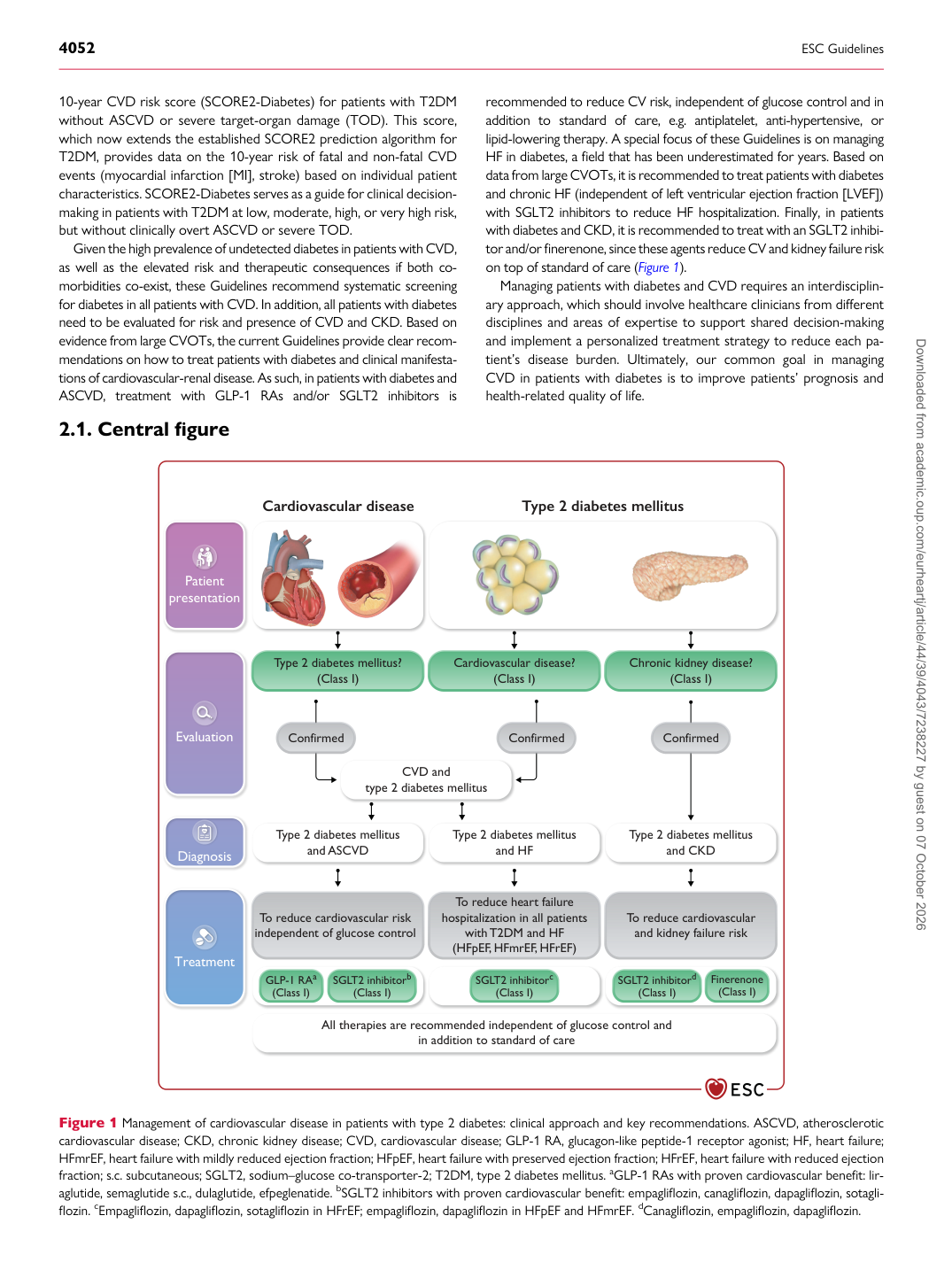
10-year CVD risk score (SCORE2-Diabetes) for patients with T2DM without ASCVD or severe target-organ damage (TOD). This score, which now extends the established SCORE2 prediction algorithm for T2DM, provides data on the 10-year risk of fatal and non-fatal CVD events (myocardial infarction [MI], stroke) based on individual patient characteristics. SCORE2-Diabetes serves as a guide for clinical decisionmaking in patients with T2DM at low, moderate, high, or very high risk, but without clinically overt ASCVD or severe TOD. Given the high prevalence of undetected diabetes in patients with CVD, as well as the elevated risk and therapeutic consequences if both comorbidities co-exist, these Guidelines recommend systematic screening for diabetes in all patients with CVD. In addition, all patients with diabetes need to be evaluated for risk and presence of CVD and CKD. Based on evidence from large CVOTs, the current Guidelines provide clear recommendations on how to treat patients with diabetes and clinical manifestations of cardiovascular-renal disease. As such, in patients with diabetes and ASCVD, treatment with GLP-1 RAs and/or SGLT2 inhibitors is recommended to reduce CV risk, independent of glucose control and in addition to standard of care, e.g. antiplatelet, anti-hypertensive, or lipid-lowering therapy. A special focus of these Guidelines is on managing HF in diabetes, a field that has been underestimated for years. Based on data from large CVOTs, it is recommended to treat patients with diabetes and chronic HF (independent of left ventricular ejection fraction [LVEF]) with SGLT2 inhibitors to reduce HF hospitalization. Finally, in patients with diabetes and CKD, it is recommended to treat with an SGLT2 inhibitor and/or finerenone, since these agents reduce CV and kidney failure risk on top of standard of care (Figure 1).

Managing patients with diabetes and CVD requires an interdisciplinary approach, which should involve healthcare clinicians from different disciplines and areas of expertise to support shared decision-making and implement a personalized treatment strategy to reduce each patient’s disease burden. Ultimately, our common goal in managing CVD in patients with diabetes is to improve patients’ prognosis and health-related quality of life.

Patient presentation Cardiovascular disease Type 2 diabetes mellitus

Evaluation

Diagnosis

Treatment Type 2 diabetes mellitus?

(Class I)

GLP-1 RAa (Class I) SGLT2 inhibitorb

(Class I) SGLT2 inhibitorc

(Class I) Finerenone

(Class I) SGLT2 inhibitord

(Class I)

CVD and type 2 diabetes mellitus

Type 2 diabetes mellitus

and ASCVD Type 2 diabetes mellitus

and HF

All therapies are recommended independent of glucose control and

in addition to standard of care Type 2 diabetes mellitus

and CKD

To reduce cardiovascular risk independent of glucose control To reduce heart failure hospitalization in all patients

with T2DM and HF (HFpEF, HFmrEF, HFrEF) To reduce cardiovascular

and kidney failure risk

Cardiovascular disease?

(Class I) Chronic kidney disease?

(Class I)

Confirmed Confirmed Confirmed

Figure 1 Management of cardiovascular disease in patients with type 2 diabetes: clinical approach and key recommendations. ASCVD, atherosclerotic cardiovascular disease; CKD, chronic kidney disease; CVD, cardiovascular disease; GLP-1 RA, glucagon-like peptide-1 receptor agonist; HF, heart failure; HFmrEF, heart failure with mildly reduced ejection fraction; HFpEF, heart failure with preserved ejection fraction; HFrEF, heart failure with reduced ejection fraction; s.c. subcutaneous; SGLT2, sodium–glucose co-transporter-2; T2DM, type 2 diabetes mellitus. aGLP-1 RAs with proven cardiovascular benefit: liraglutide, semaglutide s.c., dulaglutide, efpeglenatide. bSGLT2 inhibitors with proven cardiovascular benefit: empagliflozin, canagliflozin, dapagliflozin, sotagliflozin. cEmpagliflozin, dapagliflozin, sotagliflozin in HFrEF; empagliflozin, dapagliflozin in HFpEF and HFmrEF. dCanagliflozin, empagliflozin, dapagliflozin.

2.1 Central figure Downloaded from academic.oup.com/eurheartj/article/44/39/4043/7238227 by guest on 07 October 2026