p.90 抽出テキスト
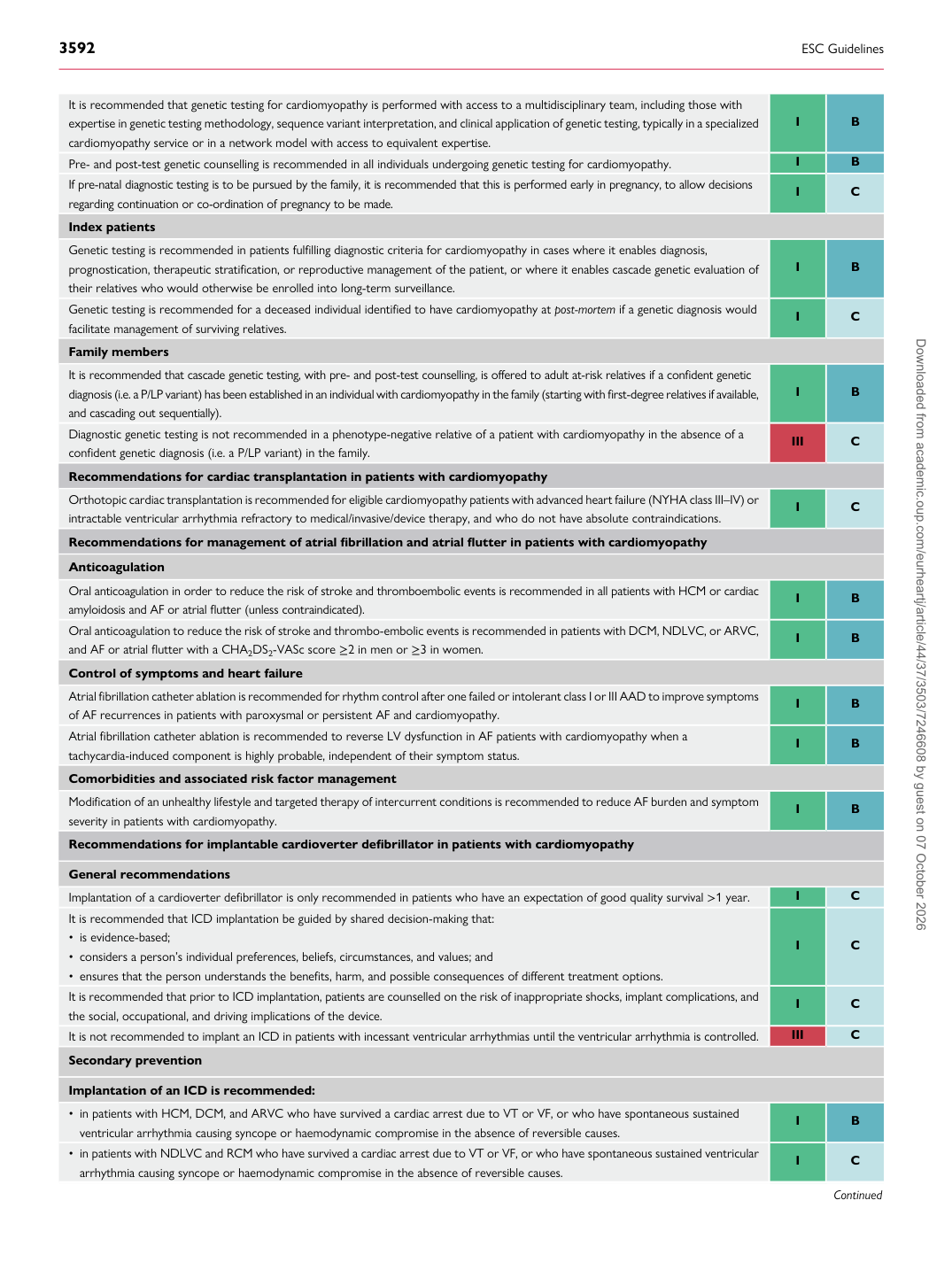
It is recommended that genetic testing for cardiomyopathy is performed with access to a multidisciplinary team, including those with expertise in genetic testing methodology, sequence variant interpretation, and clinical application of genetic testing, typically in a specialized cardiomyopathy service or in a network model with access to equivalent expertise. I B Pre- and post-test genetic counselling is recommended in all individuals undergoing genetic testing for cardiomyopathy. I B If pre-natal diagnostic testing is to be pursued by the family, it is recommended that this is performed early in pregnancy, to allow decisions regarding continuation or co-ordination of pregnancy to be made. I C Index patients Genetic testing is recommended in patients fulfilling diagnostic criteria for cardiomyopathy in cases where it enables diagnosis, prognostication, therapeutic stratification, or reproductive management of the patient, or where it enables cascade genetic evaluation of their relatives who would otherwise be enrolled into long-term surveillance. I B Genetic testing is recommended for a deceased individual identified to have cardiomyopathy at post-mortem if a genetic diagnosis would facilitate management of surviving relatives. I C Family members It is recommended that cascade genetic testing, with pre- and post-test counselling, is offered to adult at-risk relatives if a confident genetic diagnosis (i.e. a P/LP variant) has been established in an individual with cardiomyopathy in the family (starting with first-degree relatives if available, and cascading out sequentially). I B Diagnostic genetic testing is not recommended in a phenotype-negative relative of a patient with cardiomyopathy in the absence of a confident genetic diagnosis (i.e. a P/LP variant) in the family. III C Recommendations for cardiac transplantation in patients with cardiomyopathy Orthotopic cardiac transplantation is recommended for eligible cardiomyopathy patients with advanced heart failure (NYHA class III–IV) or intractable ventricular arrhythmia refractory to medical/invasive/device therapy, and who do not have absolute contraindications. I C Recommendations for management of atrial fibrillation and atrial flutter in patients with cardiomyopathy Anticoagulation Oral anticoagulation in order to reduce the risk of stroke and thromboembolic events is recommended in all patients with HCM or cardiac amyloidosis and AF or atrial flutter (unless contraindicated). I B Oral anticoagulation to reduce the risk of stroke and thrombo-embolic events is recommended in patients with DCM, NDLVC, or ARVC, and AF or atrial flutter with a CHA2DS2-VASc score ≥2 in men or ≥3 in women. I B Control of symptoms and heart failure Atrial fibrillation catheter ablation is recommended for rhythm control after one failed or intolerant class I or III AAD to improve symptoms of AF recurrences in patients with paroxysmal or persistent AF and cardiomyopathy. I B Atrial fibrillation catheter ablation is recommended to reverse LV dysfunction in AF patients with cardiomyopathy when a tachycardia-induced component is highly probable, independent of their symptom status. I B Comorbidities and associated risk factor management Modification of an unhealthy lifestyle and targeted therapy of intercurrent conditions is recommended to reduce AF burden and symptom severity in patients with cardiomyopathy. I B Recommendations for implantable cardioverter defibrillator in patients with cardiomyopathy

General recommendations Implantation of a cardioverter defibrillator is only recommended in patients who have an expectation of good quality survival >1 year. I C It is recommended that ICD implantation be guided by shared decision-making that: • is evidence-based; • considers a person’s individual preferences, beliefs, circumstances, and values; and • ensures that the person understands the benefits, harm, and possible consequences of different treatment options. I C It is recommended that prior to ICD implantation, patients are counselled on the risk of inappropriate shocks, implant complications, and the social, occupational, and driving implications of the device. I C It is not recommended to implant an ICD in patients with incessant ventricular arrhythmias until the ventricular arrhythmia is controlled. III C Secondary prevention

Implantation of an ICD is recommended: • in patients with HCM, DCM, and ARVC who have survived a cardiac arrest due to VT or VF, or who have spontaneous sustained ventricular arrhythmia causing syncope or haemodynamic compromise in the absence of reversible causes. I B • in patients with NDLVC and RCM who have survived a cardiac arrest due to VT or VF, or who have spontaneous sustained ventricular

arrhythmia causing syncope or haemodynamic compromise in the absence of reversible causes. I C

Continued Downloaded from academic.oup.com/eurheartj/article/44/37/3503/7246608 by guest on 07 October 2026