p.86 抽出テキスト
interactions can explain part of the heterogeneity of the phenotypic expression of all cardiomyopathy phenotypes, although published data focus primarily on HCM, DCM, and ARVC.

12.2 Dilated cardiomyopathy

Individual genetic predisposition favours a dilated phenotype in the presence of trigger factors, such as inflammation, infection, toxic insults from alcohol or drugs, and tachyarrhythmias.

12.3 Hypertrophic cardiomyopathy

Hypertension and obesity have been associated with penetrance and phenotypic expression of HCM.1196 Results from the EORP Cardiomyopathy/Mycarditis Registry showed that patients with HCM had a high prevalence of cardiovascular risk factors, comparable with data from the general population.1196 Hypertension, diabetes, and obesity were associated with older age at presentation, a lower prevalence of family history of HCM and SCD, more symptoms, frequent AF, and worse LV diastolic function.1197 Hypertension and obesity were also associated with higher provocable LVOT gradients and LVH.1198

12.4 Arrhythmogenic right ventricular

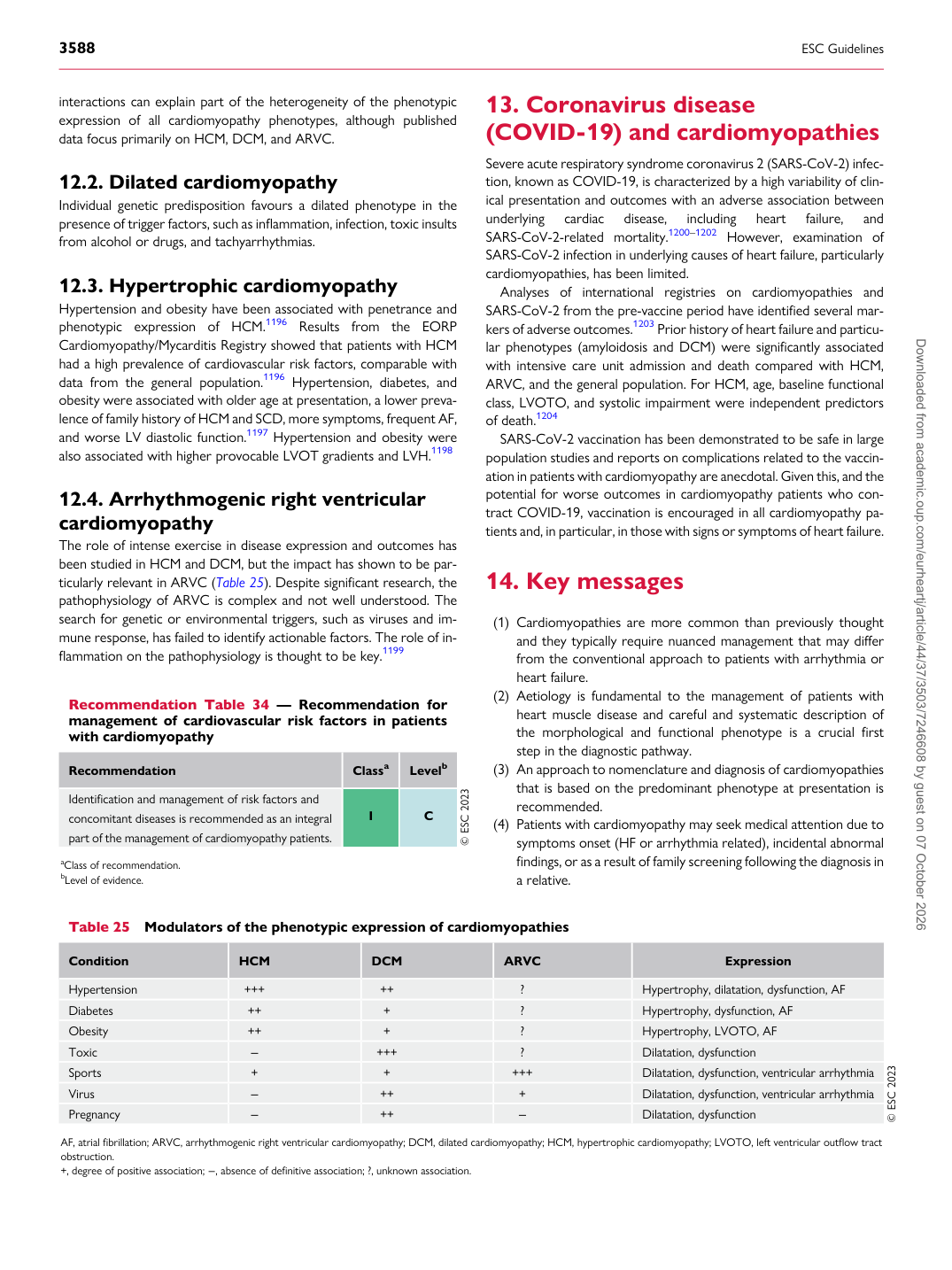
cardiomyopathy The role of intense exercise in disease expression and outcomes has been studied in HCM and DCM, but the impact has shown to be particularly relevant in ARVC (Table 25). Despite significant research, the pathophysiology of ARVC is complex and not well understood. The search for genetic or environmental triggers, such as viruses and immune response, has failed to identify actionable factors. The role of inflammation on the pathophysiology is thought to be key.1199 13 Coronavirus disease

(COVID-19) and cardiomyopathies

Severe acute respiratory syndrome coronavirus 2 (SARS-CoV-2) infection, known as COVID-19, is characterized by a high variability of clinical presentation and outcomes with an adverse association between underlying cardiac disease, including heart failure, and SARS-CoV-2-related mortality.1200–1202 However, examination of SARS-CoV-2 infection in underlying causes of heart failure, particularly cardiomyopathies, has been limited. Analyses of international registries on cardiomyopathies and SARS-CoV-2 from the pre-vaccine period have identified several markers of adverse outcomes.1203 Prior history of heart failure and particular phenotypes (amyloidosis and DCM) were significantly associated with intensive care unit admission and death compared with HCM, ARVC, and the general population. For HCM, age, baseline functional class, LVOTO, and systolic impairment were independent predictors of death.1204 SARS-CoV-2 vaccination has been demonstrated to be safe in large population studies and reports on complications related to the vaccination in patients with cardiomyopathy are anecdotal. Given this, and the potential for worse outcomes in cardiomyopathy patients who contract COVID-19, vaccination is encouraged in all cardiomyopathy patients and, in particular, in those with signs or symptoms of heart failure.

14 Key messages

(1) Cardiomyopathies are more common than previously thought and they typically require nuanced management that may differ from the conventional approach to patients with arrhythmia or heart failure. (2) Aetiology is fundamental to the management of patients with heart muscle disease and careful and systematic description of the morphological and functional phenotype is a crucial first step in the diagnostic pathway. (3) An approach to nomenclature and diagnosis of cardiomyopathies that is based on the predominant phenotype at presentation is recommended. (4) Patients with cardiomyopathy may seek medical attention due to

symptoms onset (HF or arrhythmia related), incidental abnormal findings, or as a result of family screening following the diagnosis in a relative.

Recommendation Table 34 — Recommendation for management of cardiovascular risk factors in patients with cardiomyopathy

Recommendation Classa Levelb

Identification and management of risk factors and concomitant diseases is recommended as an integral part of the management of cardiomyopathy patients. I C © ESC 2023 aClass of recommendation. bLevel of evidence.

Table 25 Modulators of the phenotypic expression of cardiomyopathies

Condition HCM DCM ARVC Expression

Hypertension +++ ++ ? Hypertrophy, dilatation, dysfunction, AF Diabetes ++ + ? Hypertrophy, dysfunction, AF Obesity ++ + ? Hypertrophy, LVOTO, AF Toxic − +++ ? Dilatation, dysfunction Sports + + +++ Dilatation, dysfunction, ventricular arrhythmia Virus − ++ + Dilatation, dysfunction, ventricular arrhythmia Pregnancy − ++ − Dilatation, dysfunction © ESC 2023

AF, atrial fibrillation; ARVC, arrhythmogenic right ventricular cardiomyopathy; DCM, dilated cardiomyopathy; HCM, hypertrophic cardiomyopathy; LVOTO, left ventricular outflow tract obstruction. +, degree of positive association; −, absence of definitive association; ?, unknown association. Downloaded from academic.oup.com/eurheartj/article/44/37/3503/7246608 by guest on 07 October 2026