p.85 抽出テキスト
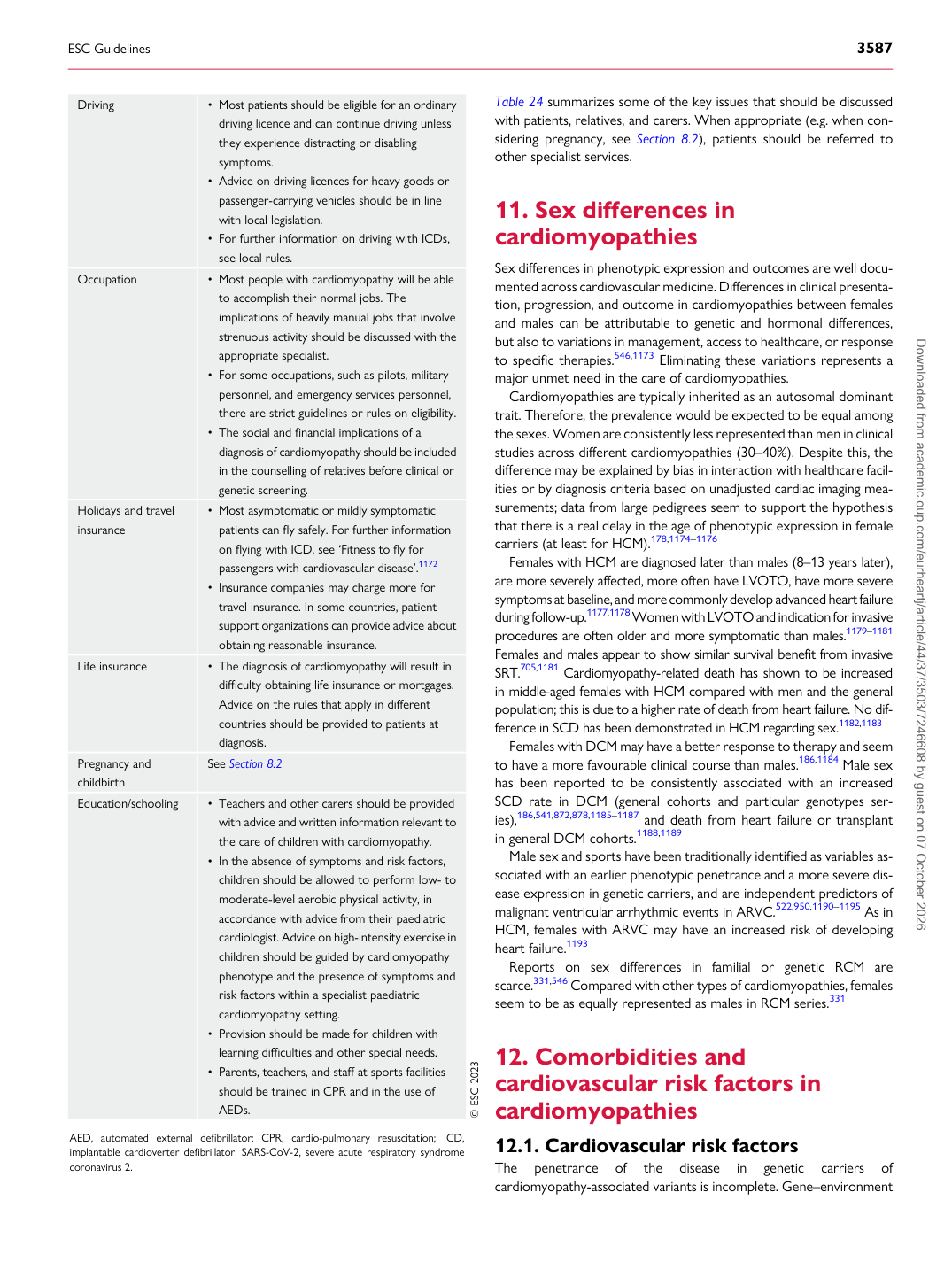
Table 24 summarizes some of the key issues that should be discussed with patients, relatives, and carers. When appropriate (e.g. when considering pregnancy, see Section 8.2), patients should be referred to other specialist services.

11 Sex differences in

cardiomyopathies

Sex differences in phenotypic expression and outcomes are well documented across cardiovascular medicine. Differences in clinical presentation, progression, and outcome in cardiomyopathies between females and males can be attributable to genetic and hormonal differences, but also to variations in management, access to healthcare, or response to specific therapies.546,1173 Eliminating these variations represents a major unmet need in the care of cardiomyopathies. Cardiomyopathies are typically inherited as an autosomal dominant trait. Therefore, the prevalence would be expected to be equal among the sexes. Women are consistently less represented than men in clinical studies across different cardiomyopathies (30–40%). Despite this, the difference may be explained by bias in interaction with healthcare facilities or by diagnosis criteria based on unadjusted cardiac imaging measurements; data from large pedigrees seem to support the hypothesis that there is a real delay in the age of phenotypic expression in female carriers (at least for HCM).178,1174–1176 Females with HCM are diagnosed later than males (8–13 years later), are more severely affected, more often have LVOTO, have more severe symptoms at baseline, and more commonly develop advanced heart failure during follow-up.1177,1178 Women with LVOTO and indication for invasive procedures are often older and more symptomatic than males.1179–1181 Females and males appear to show similar survival benefit from invasive SRT.705,1181 Cardiomyopathy-related death has shown to be increased in middle-aged females with HCM compared with men and the general population; this is due to a higher rate of death from heart failure. No difference in SCD has been demonstrated in HCM regarding sex.1182,1183 Females with DCM may have a better response to therapy and seem to have a more favourable clinical course than males.186,1184 Male sex has been reported to be consistently associated with an increased SCD rate in DCM (general cohorts and particular genotypes series),186,541,872,878,1185–1187 and death from heart failure or transplant in general DCM cohorts.1188,1189 Male sex and sports have been traditionally identified as variables associated with an earlier phenotypic penetrance and a more severe disease expression in genetic carriers, and are independent predictors of malignant ventricular arrhythmic events in ARVC.522,950,1190–1195 As in HCM, females with ARVC may have an increased risk of developing heart failure.1193 Reports on sex differences in familial or genetic RCM are scarce.331,546 Compared with other types of cardiomyopathies, females seem to be as equally represented as males in RCM series.331

12 Comorbidities and

cardiovascular risk factors in cardiomyopathies

12.1 Cardiovascular risk factors

The penetrance of the disease in genetic carriers of cardiomyopathy-associated variants is incomplete. Gene–environment

Driving • Most patients should be eligible for an ordinary

driving licence and can continue driving unless they experience distracting or disabling symptoms. • Advice on driving licences for heavy goods or

passenger-carrying vehicles should be in line with local legislation. • For further information on driving with ICDs,

see local rules.

Occupation • Most people with cardiomyopathy will be able

to accomplish their normal jobs. The implications of heavily manual jobs that involve strenuous activity should be discussed with the appropriate specialist. • For some occupations, such as pilots, military

personnel, and emergency services personnel, there are strict guidelines or rules on eligibility. • The social and financial implications of a

diagnosis of cardiomyopathy should be included in the counselling of relatives before clinical or genetic screening.

Holidays and travel insurance • Most asymptomatic or mildly symptomatic patients can fly safely. For further information

on flying with ICD, see ‘Fitness to fly for passengers with cardiovascular disease’.1172 • Insurance companies may charge more for

travel insurance. In some countries, patient support organizations can provide advice about obtaining reasonable insurance.

Life insurance • The diagnosis of cardiomyopathy will result in difficulty obtaining life insurance or mortgages.

Advice on the rules that apply in different countries should be provided to patients at diagnosis.

Pregnancy and childbirth See Section 8.2 Education/schooling • Teachers and other carers should be provided with advice and written information relevant to

the care of children with cardiomyopathy. • In the absence of symptoms and risk factors, children should be allowed to perform low- to

moderate-level aerobic physical activity, in accordance with advice from their paediatric cardiologist. Advice on high-intensity exercise in children should be guided by cardiomyopathy phenotype and the presence of symptoms and risk factors within a specialist paediatric cardiomyopathy setting. • Provision should be made for children with learning difficulties and other special needs. • Parents, teachers, and staff at sports facilities

should be trained in CPR and in the use of AEDs. © ESC 2023

AED, automated external defibrillator; CPR, cardio-pulmonary resuscitation; ICD, implantable cardioverter defibrillator; SARS-CoV-2, severe acute respiratory syndrome coronavirus 2.

ESC Guidelines                                                                                                                                                                                          3587

Downloaded from academic.oup.com/eurheartj/article/44/37/3503/7246608 by guest on 07 October 2026