p.84 抽出テキスト
9 Requirements for specialized

cardiomyopathy units As genomic tests and information are incorporated into strategies for the routine diagnosis and management of cardiomyopathies and the estimation of disease risk, cardiologists need to familiarize themselves with the general principles underlying the interpretation of test results and must be able to convey the implications to patients. They also need to be able to make informed judgments about which tests are appropriate for different patients and clinical situations. The risk of SCD and the possibility that family members could inherit the condition makes multidisciplinary expertise, including genetic counselling, psychological care, and patient support associations, a critical aspect of care.1166 As a result, there is a growing need for clinicians to develop their understanding of the basic principles of clinical genetics and the diverse clinical manifestations of individual genetic disorders.54,964,1166,1167 Cardiomyopathies have a highly heterogeneous clinical presentation and an evolution that sometimes is difficult to predict. Disease phenotype can be the result of various acquired factors or genetic backgrounds. Mixed phenotypes or two conditions within the same patient or among a family can coexist. Genetic diagnosis raises common logistical and ethical problems in its execution, as well as in the interpretation and communication of the results.1166 Diagnostic process, the management of symptoms, and risk stratification often require comprehensive evaluation of the patient and their family, with the participation of multidisciplinary teams. On the other hand, interventional procedures (septal ablation, myectomies, etc.) require an expertise that only centres that treat many patients can achieve. Specialization in this area also requires permanent updating to accurately characterize the disease prognosis, ensure the choice of the best therapeutic option in each case, and guarantee the implementation of that choice by a team with experience in the field. These characteristics imply that the adequate management of these diseases requires specific tools, extensive experience, and a multidisciplinary basic-clinical approach that are difficult to achieve. The cardiomyopathy unit is usually integrated into a general cardiogenetic (or inherited cardiac conditions) unit, where other professionals involved in hereditary cardiac and vascular conditions, such as channelopathies, genetic aortopathies, familial dyslipidaemias, and a number of genetic metabolic and syndromic diseases with cardiac involvement, are co-ordinated. They represent an organizational model aimed at providing comprehensive cardiovascular and genetic assessment and personalized management in patients with inherited cardiovascular diseases. Specialized multidisciplinary clinics have long been advocated as the ideal model for the management of patients and families with inherited cardiac conditions.4,53,559,1166 Such a model of care supports the holistic care of patients and their at-risk family members, taking a patient-centred approach and valuing clinical, genetic, and psychosocial outcomes. The benefit of a specialized clinic for management of HCM has been previously reported, with patients showing better adjustment and less worry than those who did not attend.53,224 Besides expertise in the field of inherited cardiac conditions, the presence of a multidisciplinary team, access to good technical resources, participation in dedicated research projects, availability of genetic counselling, and family screening are all pre-requisites for organizing a cardiogenetic clinic. The ability to provide education and training for medical professionals and collaboration with patients’ associations is of utmost importance. Supplementary data online, Table S8 synthesizes the requirements and skills and recommendations for professional education/training needed for a cardiogenetic clinic as proposed by international expert associations. 10 Living with cardiomyopathy: advice for patients

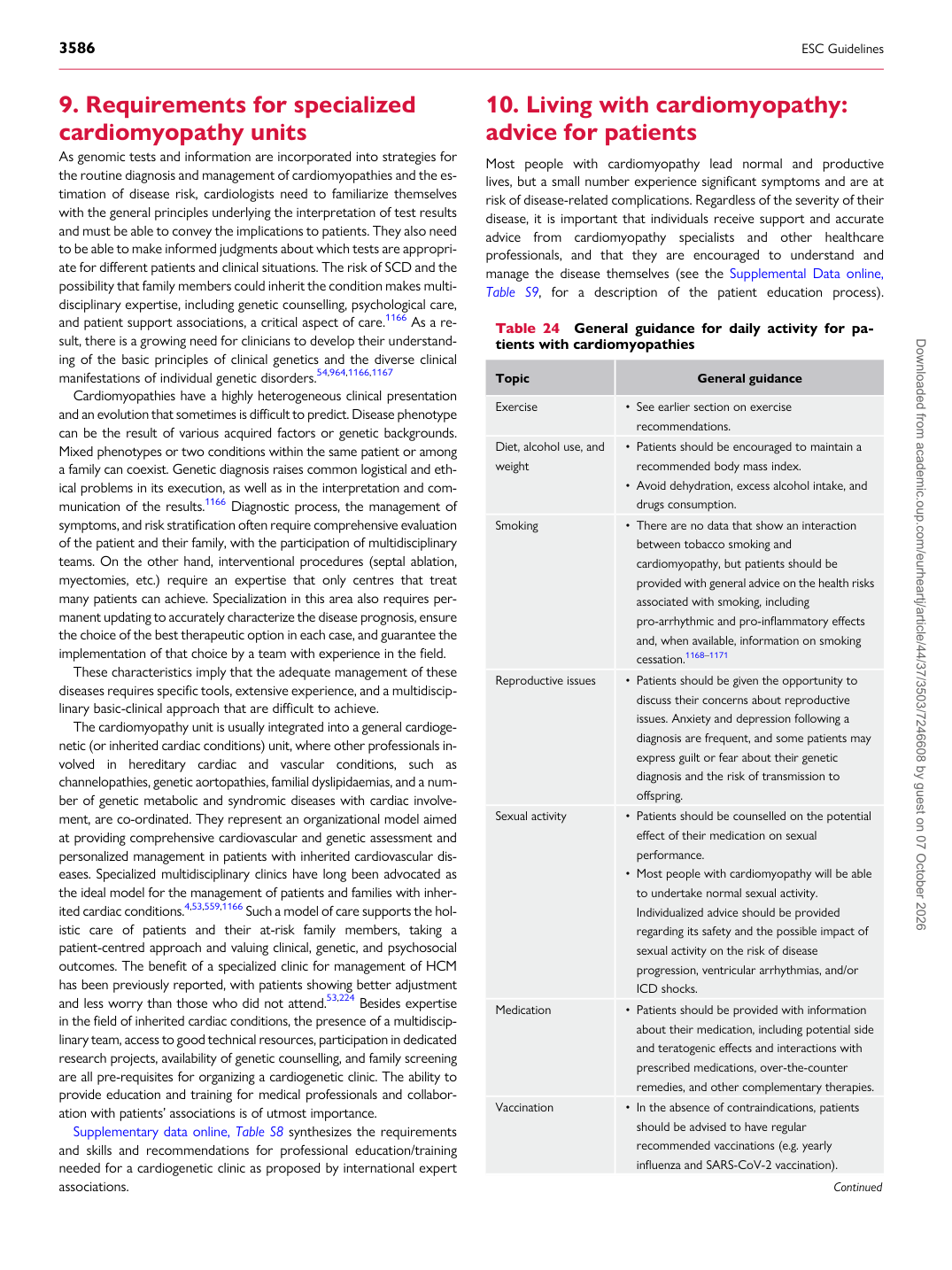
Most people with cardiomyopathy lead normal and productive lives, but a small number experience significant symptoms and are at risk of disease-related complications. Regardless of the severity of their disease, it is important that individuals receive support and accurate advice from cardiomyopathy specialists and other healthcare professionals, and that they are encouraged to understand and manage the disease themselves (see the Supplemental Data online, Table S9, for a description of the patient education process).

Table 24 General guidance for daily activity for patients with cardiomyopathies

Topic General guidance

Exercise • See earlier section on exercise

recommendations.

Diet, alcohol use, and weight • Patients should be encouraged to maintain a

recommended body mass index. • Avoid dehydration, excess alcohol intake, and

drugs consumption.

Smoking • There are no data that show an interaction

between tobacco smoking and cardiomyopathy, but patients should be provided with general advice on the health risks associated with smoking, including pro-arrhythmic and pro-inflammatory effects and, when available, information on smoking cessation.1168–1171

Reproductive issues • Patients should be given the opportunity to

discuss their concerns about reproductive issues. Anxiety and depression following a diagnosis are frequent, and some patients may express guilt or fear about their genetic diagnosis and the risk of transmission to offspring.

Sexual activity • Patients should be counselled on the potential effect of their medication on sexual

performance. • Most people with cardiomyopathy will be able to undertake normal sexual activity.

Individualized advice should be provided regarding its safety and the possible impact of sexual activity on the risk of disease progression, ventricular arrhythmias, and/or ICD shocks.

Medication • Patients should be provided with information

about their medication, including potential side and teratogenic effects and interactions with prescribed medications, over-the-counter remedies, and other complementary therapies.

Vaccination • In the absence of contraindications, patients

should be advised to have regular recommended vaccinations (e.g. yearly influenza and SARS-CoV-2 vaccination).

Continued Downloaded from academic.oup.com/eurheartj/article/44/37/3503/7246608 by guest on 07 October 2026