p.75 抽出テキスト
7.6.1.4 Management

Specific treatment strategies, including enzyme replacement or pharmacological chaperone, have limited efficacy in advanced cases with irreversible organ damage, so early initiation appears to be important. Enzyme replacement therapy is indicated in all symptomatic patients with classical disease, including children, at the earliest signs of organ involvement.974 Therapeutic strategies currently in development include second-generation ERTs, substrate-reduction therapies, and gene and mRNA therapies.980

7.6.2 RASopathies

7.6.2.1. Definition The RASopathies constitute a group of multisystemic syndromes caused by variants in the RAS-mitogen-activated kinase (RAS-MAPK) cascade,984–986 including Noonan syndrome,987–989 Noonan syndrome with multiple lentigines;990,991 Costello syndrome,992,993 and cardiofaciocutaneous syndrome.994–996

7.6.2.2 Diagnosis, clinical work-up, and differential diagnosis

The suspicion of an underlying RASopathy should be raised in infantand childhood-onset HCM with coexisting CHD262,263,991,997–1000 or extracardiac abnormalities (see Table 22). Gene testing is recommended for diagnosis when phenotypic features are present. Compared with sarcomeric HCM, RASopathy-associated HCM (RAS-HCM) shows earlier age at diagnosis,261,999 increased prevalence and severity of left or biventricular obstruction,258,262,1001 and higher rates of early hospitalizations for heart failure or need for interventional procedures or surgery.258 Pulmonary stenosis is the most commonly associated CHD, with a prevalence ranging between 25% and 70%, and unfavourable outcomes for pulmonary valvuloplasty.256,1002–1004

7.6.2.3 Clinical course, management, and sudden death risk

stratification Data from the North American Pediatric Cardiomyopathy Registry1005 cohort show poorer survival rates among patients with RAS-HCM compared with non-syndromic HCM, particularly in patients who have been diagnosed before 1 year of age. Disease-specific risk factors for SCD are currently an area of debate, and may include the degree of LV hypertrophy, prolonged QTc interval, ECG risk score for HCM,771 and the HCM Risk-Kids score >6%.81,826

7.6.2.4 Management

Non-vasodilating beta-blockers should be titrated to maximum tolerated dose in patients with RAS-HCM, particularly in cases of severe

Previous transfusions Chronic liver disease Skin pigmentation Diabetes Hypogonadotropic hypogonadism Elevated ferritin AV block Iron status

Complete blood count Increased T2* values at CMR imaging Genetic test for HFE, HJV, hepcidin receptor, ferroportin, HAMP gene Peripheral blood smear Haemoglobin electrophoresis Genetic testing for hereditary haemoglobinopathies Iron overload

cardiomyopathy Cardiologist

Haematologist Endocrinologist Paediatrician Gastroenterologist Iron-chelating drugs

Phlebotomy

© ESC 2023

18F-FDG-PET, 18F-fluorodeoxyglucose positron emission tomography; AL, amyloid light chain; ATTR, transthyretin amyloidosis; ATTR-CA: transthyretin cardiac amyloidosis; AV, atrioventricular; CCB, calcium channel blocker; CK, creatinine kinase; CMR, cardiac magnetic resonance; DBS, deep brain stimulation; DMD, Duchenne muscular dystrophy; DPD, 3,3-diphosphono-1,2-propanodicarboxylic acid; ECG, electrocardiogram; Gb3, globotriaosylceramide; HCM, hypertrophic cardiomyopathy; HMDP, hydroxymethylene diphosphonate; LGE, late gadolinium enhancement; LMNA, lamin A/C; LVH, left ventricular hypertrophy; MELAS, mitochondrial encephalomyopathy, lactic acidosis, and stroke-like episodes (syndrome); MERRF, mitochondrial epilepsy with ragged-red fibres; MRI, magnetic resonance; mtDNA, mitochondrial DNA; NGS, next-generation sequencing; PRKAG2, protein kinase AMP-activated non-catalytic subunit gamma 2; RVOTO, right ventricular outflow tract obstruction; SCD, sudden cardiac death; TIA, transient ischaemic attack; VE, ventricular ectopic beats. aPatisiran and inotersen approved for treatment of familial polyneuropathy with/without cardiomyopathy.

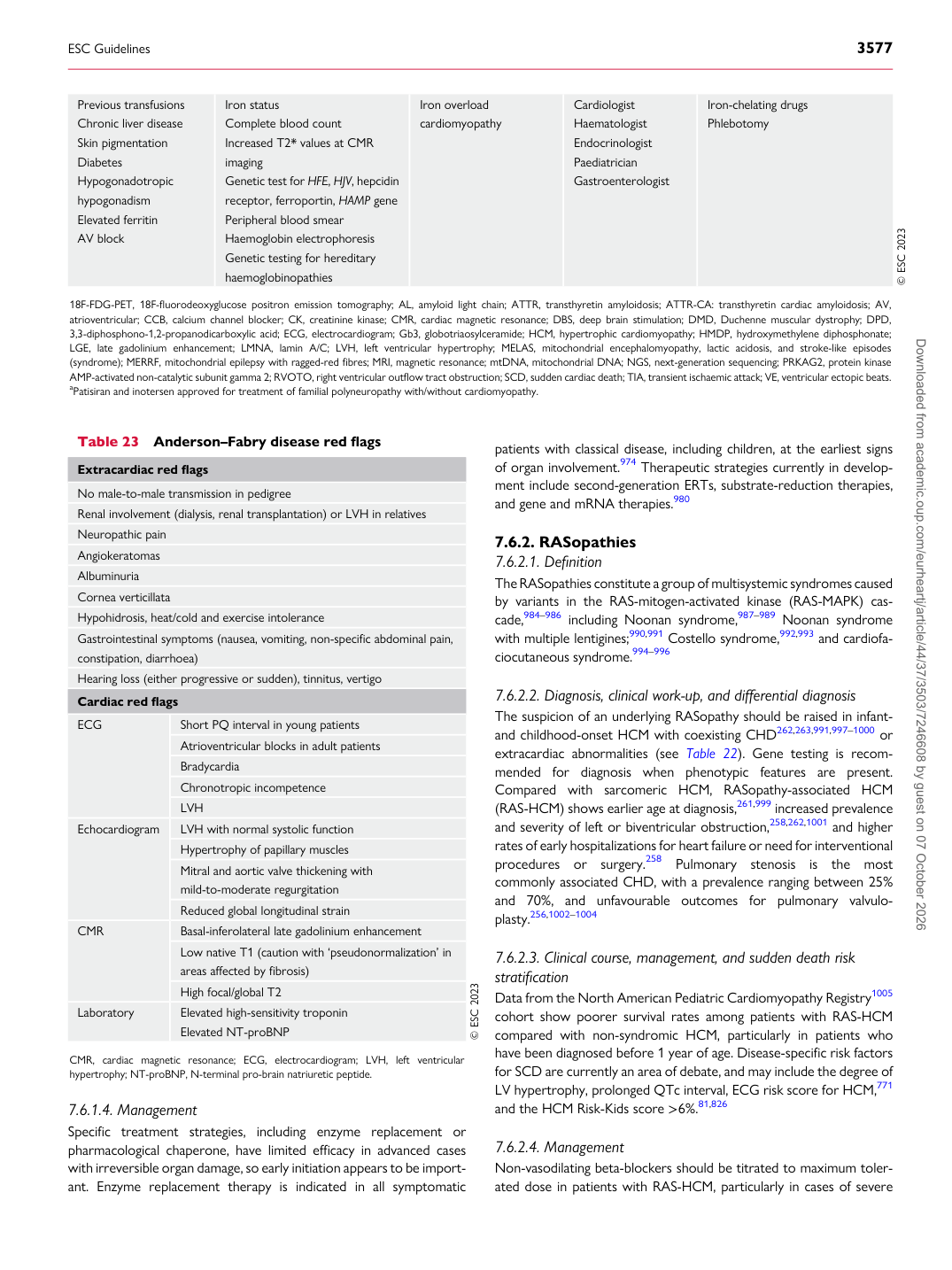
Table 23 Anderson–Fabry disease red flags Extracardiac red flags No male-to-male transmission in pedigree Renal involvement (dialysis, renal transplantation) or LVH in relatives Neuropathic pain Angiokeratomas Albuminuria Cornea verticillata Hypohidrosis, heat/cold and exercise intolerance Gastrointestinal symptoms (nausea, vomiting, non-specific abdominal pain, constipation, diarrhoea) Hearing loss (either progressive or sudden), tinnitus, vertigo Cardiac red flags ECG Short PQ interval in young patients

Atrioventricular blocks in adult patients Bradycardia Chronotropic incompetence LVH

Echocardiogram LVH with normal systolic function

Hypertrophy of papillary muscles Mitral and aortic valve thickening with mild-to-moderate regurgitation Reduced global longitudinal strain

CMR Basal-inferolateral late gadolinium enhancement

Low native T1 (caution with ‘pseudonormalization’ in areas affected by fibrosis) High focal/global T2

Laboratory Elevated high-sensitivity troponin

Elevated NT-proBNP © ESC 2023

CMR, cardiac magnetic resonance; ECG, electrocardiogram; LVH, left ventricular hypertrophy; NT-proBNP, N-terminal pro-brain natriuretic peptide.

ESC Guidelines                                                                                                                                                                                          3577

Downloaded from academic.oup.com/eurheartj/article/44/37/3503/7246608 by guest on 07 October 2026