p.71 抽出テキスト
implicates factors beyond the specific variant in the determination of ultimate clinical manifestation of disease.966 Hereditary infiltrative diseases can also cause RCM, the most common of which is amyloidosis caused by pathogenic variants in the TTR gene, although this is usually in the presence of LVH (see Section 7.7).

7.5.3 Assessment of symptoms

Patients with RCM often develop symptoms of heart failure, although this can occur some years after the appearance of the initial abnormalities. Assessment of symptoms in patients with cardiomyopathies is described in Section 6.10.1.

7.5.4 Management

The administration of heart failure medications and device implantation, including ventricular assist device as a bridge-to-candidacy is guided by symptoms and heart failure phenotype and severity,967 and is described in Section 6.10.2. Precision diagnosis (phenotype and cause) is key to timely planning of heart transplantation as it guarantees the exclusion of all genetic and acquired phenocopies that may be amenable to alternative treatment. Prevention of heart transplantation in all RCM patients with alternative treatments is a major goal for all adult and paediatric RCM.

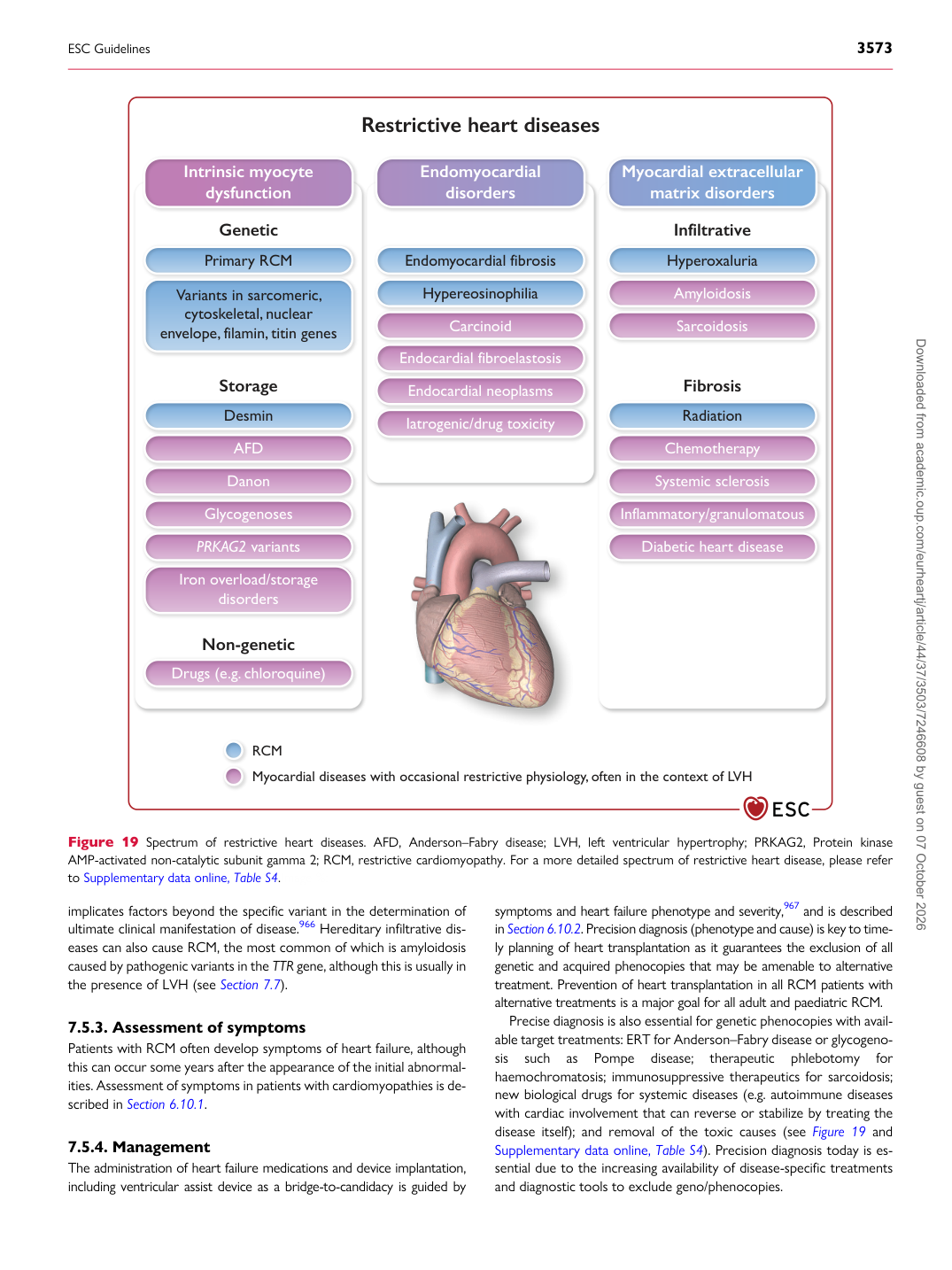
Precise diagnosis is also essential for genetic phenocopies with available target treatments: ERT for Anderson–Fabry disease or glycogenosis such as Pompe disease; therapeutic phlebotomy for haemochromatosis; immunosuppressive therapeutics for sarcoidosis; new biological drugs for systemic diseases (e.g. autoimmune diseases with cardiac involvement that can reverse or stabilize by treating the disease itself); and removal of the toxic causes (see Figure 19 and Supplementary data online, Table S4). Precision diagnosis today is essential due to the increasing availability of disease-specific treatments and diagnostic tools to exclude geno/phenocopies.

Restrictive heart diseases

Intrinsic myocyte

dysfunction

Genetic

Primary RCM Variants in sarcomeric, cytoskeletal, nuclear envelope, filamin, titin genes

Storage

AFD

Desmin

Danon Glycogenoses PRKAG2 variants Iron overload/storage

disorders

Non-genetic Myocardial extracellular

matrix disorders

Infiltrative

Fibrosis

Amyloidosis Sarcoidosis

Diabetic heart disease

Drugs (e.g. chloroquine) Hyperoxaluria

Radiation Chemotherapy Systemic sclerosis Inflammatory/granulomatous

Endomyocardial

disorders

Endomyocardial fibrosis

Hypereosinophilia

Carcinoid Endocardial fibroelastosis

Endocardial neoplasms Iatrogenic/drug toxicity

RCM Myocardial diseases with occasional restrictive physiology, often in the context of LVH

Figure 19 Spectrum of restrictive heart diseases. AFD, Anderson–Fabry disease; LVH, left ventricular hypertrophy; PRKAG2, Protein kinase AMP-activated non-catalytic subunit gamma 2; RCM, restrictive cardiomyopathy. For a more detailed spectrum of restrictive heart disease, please refer to Supplementary data online, Table S4.Image %:

ESC Guidelines                                                                                                                                                                                          3573

Downloaded from academic.oup.com/eurheartj/article/44/37/3503/7246608 by guest on 07 October 2026