p.7 抽出テキスト
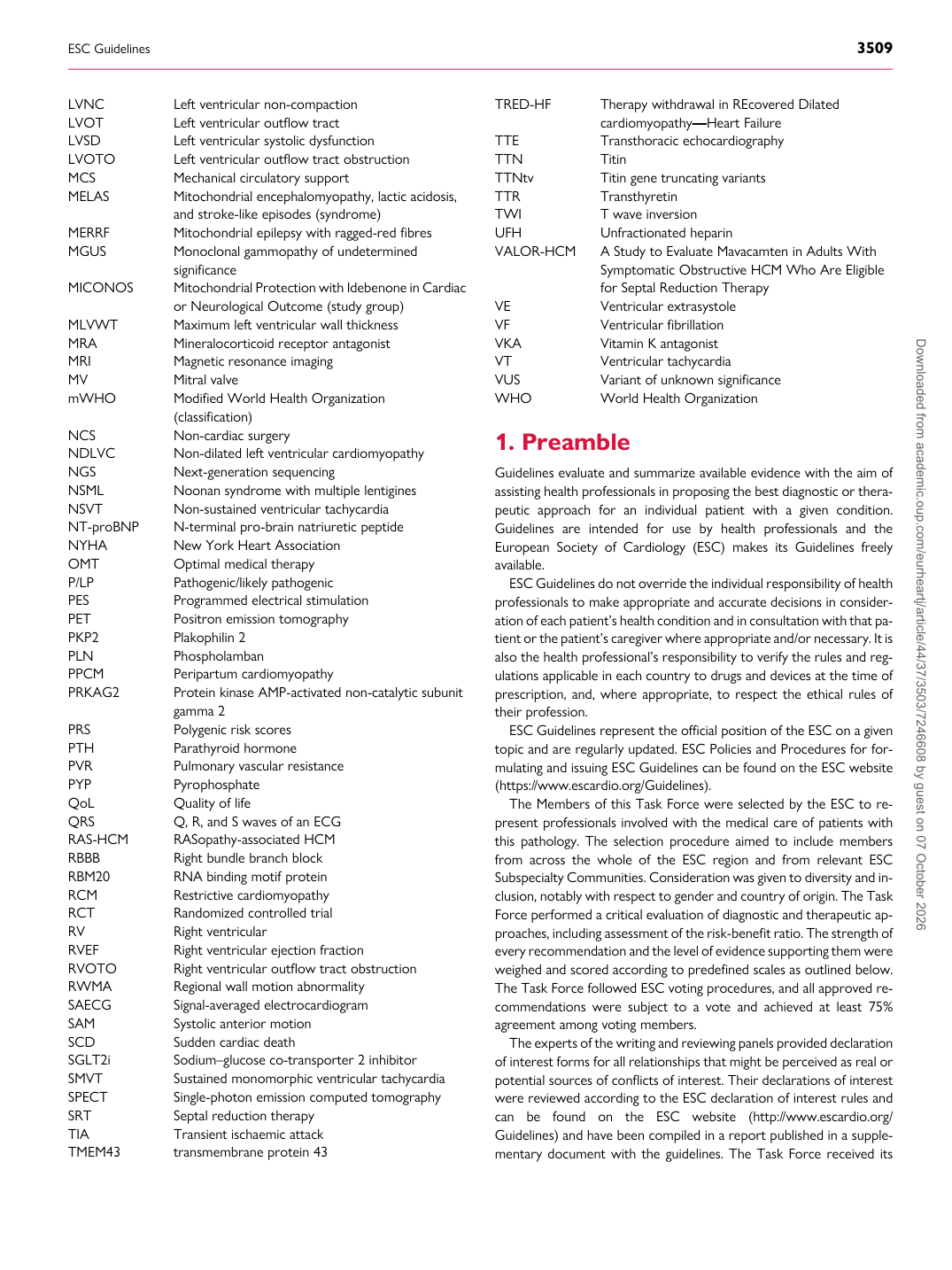
LVNC Left ventricular non-compaction LVOT Left ventricular outflow tract LVSD Left ventricular systolic dysfunction LVOTO Left ventricular outflow tract obstruction MCS Mechanical circulatory support MELAS Mitochondrial encephalomyopathy, lactic acidosis, and stroke-like episodes (syndrome) MERRF Mitochondrial epilepsy with ragged-red fibres MGUS Monoclonal gammopathy of undetermined significance MICONOS Mitochondrial Protection with Idebenone in Cardiac or Neurological Outcome (study group) MLVWT Maximum left ventricular wall thickness MRA Mineralocorticoid receptor antagonist MRI Magnetic resonance imaging MV Mitral valve mWHO Modified World Health Organization (classification) NCS Non-cardiac surgery NDLVC Non-dilated left ventricular cardiomyopathy NGS Next-generation sequencing NSML Noonan syndrome with multiple lentigines NSVT Non-sustained ventricular tachycardia NT-proBNP N-terminal pro-brain natriuretic peptide NYHA New York Heart Association OMT Optimal medical therapy P/LP Pathogenic/likely pathogenic PES Programmed electrical stimulation PET Positron emission tomography PKP2 Plakophilin 2 PLN Phospholamban PPCM Peripartum cardiomyopathy PRKAG2 Protein kinase AMP-activated non-catalytic subunit gamma 2 PRS Polygenic risk scores PTH Parathyroid hormone PVR Pulmonary vascular resistance PYP Pyrophosphate QoL Quality of life QRS Q, R, and S waves of an ECG RAS-HCM RASopathy-associated HCM RBBB Right bundle branch block RBM20 RNA binding motif protein RCM Restrictive cardiomyopathy RCT Randomized controlled trial RV Right ventricular RVEF Right ventricular ejection fraction RVOTO Right ventricular outflow tract obstruction RWMA Regional wall motion abnormality SAECG Signal-averaged electrocardiogram SAM Systolic anterior motion SCD Sudden cardiac death SGLT2i Sodium–glucose co-transporter 2 inhibitor SMVT Sustained monomorphic ventricular tachycardia SPECT Single-photon emission computed tomography SRT Septal reduction therapy TIA Transient ischaemic attack TMEM43 transmembrane protein 43 TRED-HF Therapy withdrawal in REcovered Dilated cardiomyopathy—Heart Failure TTE Transthoracic echocardiography TTN Titin TTNtv Titin gene truncating variants TTR Transthyretin TWI T wave inversion UFH Unfractionated heparin VALOR-HCM A Study to Evaluate Mavacamten in Adults With Symptomatic Obstructive HCM Who Are Eligible for Septal Reduction Therapy VE Ventricular extrasystole VF Ventricular fibrillation VKA Vitamin K antagonist VT Ventricular tachycardia VUS Variant of unknown significance WHO World Health Organization

1 Preamble

Guidelines evaluate and summarize available evidence with the aim of assisting health professionals in proposing the best diagnostic or therapeutic approach for an individual patient with a given condition. Guidelines are intended for use by health professionals and the European Society of Cardiology (ESC) makes its Guidelines freely available. ESC Guidelines do not override the individual responsibility of health professionals to make appropriate and accurate decisions in consideration of each patient’s health condition and in consultation with that patient or the patient’s caregiver where appropriate and/or necessary. It is also the health professional’s responsibility to verify the rules and regulations applicable in each country to drugs and devices at the time of prescription, and, where appropriate, to respect the ethical rules of their profession. ESC Guidelines represent the official position of the ESC on a given topic and are regularly updated. ESC Policies and Procedures for formulating and issuing ESC Guidelines can be found on the ESC website (https://www.escardio.org/Guidelines). The Members of this Task Force were selected by the ESC to represent professionals involved with the medical care of patients with this pathology. The selection procedure aimed to include members from across the whole of the ESC region and from relevant ESC Subspecialty Communities. Consideration was given to diversity and inclusion, notably with respect to gender and country of origin. The Task Force performed a critical evaluation of diagnostic and therapeutic approaches, including assessment of the risk-benefit ratio. The strength of every recommendation and the level of evidence supporting them were weighed and scored according to predefined scales as outlined below. The Task Force followed ESC voting procedures, and all approved recommendations were subject to a vote and achieved at least 75% agreement among voting members. The experts of the writing and reviewing panels provided declaration of interest forms for all relationships that might be perceived as real or potential sources of conflicts of interest. Their declarations of interest were reviewed according to the ESC declaration of interest rules and can be found on the ESC website (http://www.escardio.org/ Guidelines) and have been compiled in a report published in a supplementary document with the guidelines. The Task Force received its

ESC Guidelines                                                                                                                                                                                          3509

Downloaded from academic.oup.com/eurheartj/article/44/37/3503/7246608 by guest on 07 October 2026