p.5 抽出テキスト
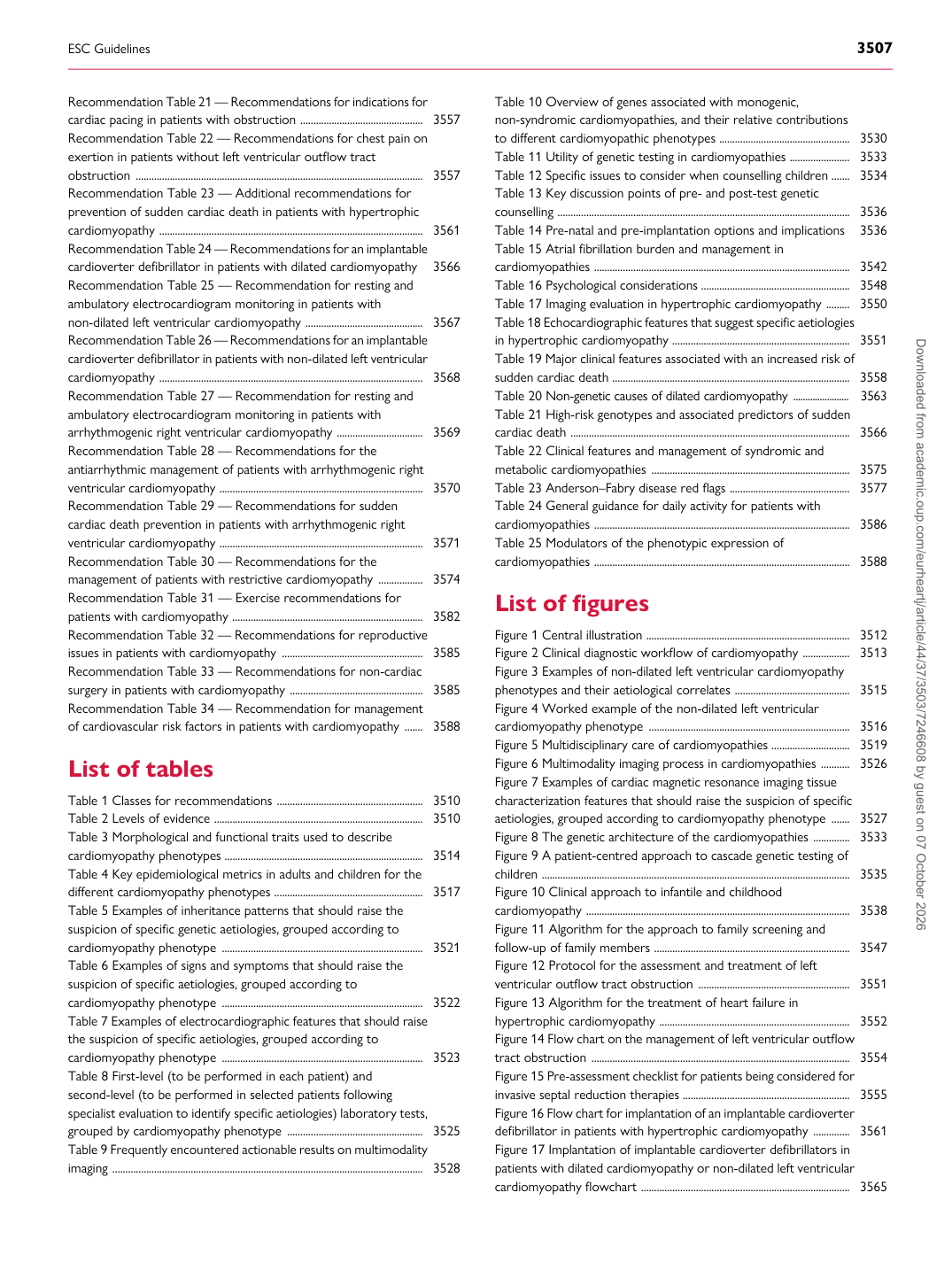
Recommendation Table 21 — Recommendations for indications for cardiac pacing in patients with obstruction ............................................... 3557 Recommendation Table 22 — Recommendations for chest pain on exertion in patients without left ventricular outflow tract obstruction .............................................................................................................. 3557 Recommendation Table 23 — Additional recommendations for prevention of sudden cardiac death in patients with hypertrophic cardiomyopathy ..................................................................................................... 3561 Recommendation Table 24 — Recommendations for an implantable cardioverter defibrillator in patients with dilated cardiomyopathy 3566 Recommendation Table 25 — Recommendation for resting and ambulatory electrocardiogram monitoring in patients with non-dilated left ventricular cardiomyopathy ............................................. 3567 Recommendation Table 26 — Recommendations for an implantable cardioverter defibrillator in patients with non-dilated left ventricular cardiomyopathy ..................................................................................................... 3568 Recommendation Table 27 — Recommendation for resting and ambulatory electrocardiogram monitoring in patients with arrhythmogenic right ventricular cardiomyopathy ................................. 3569 Recommendation Table 28 — Recommendations for the antiarrhythmic management of patients with arrhythmogenic right ventricular cardiomyopathy .............................................................................. 3570 Recommendation Table 29 — Recommendations for sudden cardiac death prevention in patients with arrhythmogenic right ventricular cardiomyopathy .............................................................................. 3571 Recommendation Table 30 — Recommendations for the management of patients with restrictive cardiomyopathy ................. 3574 Recommendation Table 31 — Exercise recommendations for patients with cardiomyopathy ......................................................................... 3582 Recommendation Table 32 — Recommendations for reproductive issues in patients with cardiomyopathy ...................................................... 3585 Recommendation Table 33 — Recommendations for non-cardiac surgery in patients with cardiomyopathy ................................................... 3585 Recommendation Table 34 — Recommendation for management of cardiovascular risk factors in patients with cardiomyopathy ....... 3588

List of tables

Table 1 Classes for recommendations ........................................................ 3510 Table 2 Levels of evidence ................................................................................ 3510 Table 3 Morphological and functional traits used to describe cardiomyopathy phenotypes ............................................................................ 3514 Table 4 Key epidemiological metrics in adults and children for the different cardiomyopathy phenotypes ......................................................... 3517 Table 5 Examples of inheritance patterns that should raise the suspicion of specific genetic aetiologies, grouped according to cardiomyopathy phenotype ............................................................................. 3521 Table 6 Examples of signs and symptoms that should raise the suspicion of specific aetiologies, grouped according to cardiomyopathy phenotype ............................................................................. 3522 Table 7 Examples of electrocardiographic features that should raise the suspicion of specific aetiologies, grouped according to cardiomyopathy phenotype ............................................................................. 3523 Table 8 First-level (to be performed in each patient) and second-level (to be performed in selected patients following specialist evaluation to identify specific aetiologies) laboratory tests, grouped by cardiomyopathy phenotype .................................................... 3525 Table 9 Frequently encountered actionable results on multimodality imaging ....................................................................................................................... 3528 Table 10 Overview of genes associated with monogenic, non-syndromic cardiomyopathies, and their relative contributions to different cardiomyopathic phenotypes .................................................. 3530 Table 11 Utility of genetic testing in cardiomyopathies ....................... 3533 Table 12 Specific issues to consider when counselling children ....... 3534 Table 13 Key discussion points of pre- and post-test genetic counselling ................................................................................................................ 3536 Table 14 Pre-natal and pre-implantation options and implications 3536 Table 15 Atrial fibrillation burden and management in cardiomyopathies .................................................................................................. 3542 Table 16 Psychological considerations ......................................................... 3548 Table 17 Imaging evaluation in hypertrophic cardiomyopathy ......... 3550 Table 18 Echocardiographic features that suggest specific aetiologies in hypertrophic cardiomyopathy .................................................................... 3551 Table 19 Major clinical features associated with an increased risk of sudden cardiac death ........................................................................................... 3558 Table 20 Non-genetic causes of dilated cardiomyopathy ....................... 3563 Table 21 High-risk genotypes and associated predictors of sudden cardiac death ........................................................................................................... 3566 Table 22 Clinical features and management of syndromic and metabolic cardiomyopathies ............................................................................ 3575 Table 23 Anderson–Fabry disease red flags .............................................. 3577 Table 24 General guidance for daily activity for patients with cardiomyopathies .................................................................................................. 3586 Table 25 Modulators of the phenotypic expression of cardiomyopathies .................................................................................................. 3588

List of figures

Figure 1 Central illustration .............................................................................. 3512 Figure 2 Clinical diagnostic workflow of cardiomyopathy .................. 3513 Figure 3 Examples of non-dilated left ventricular cardiomyopathy phenotypes and their aetiological correlates ............................................ 3515 Figure 4 Worked example of the non-dilated left ventricular cardiomyopathy phenotype ............................................................................. 3516 Figure 5 Multidisciplinary care of cardiomyopathies .............................. 3519 Figure 6 Multimodality imaging process in cardiomyopathies ........... 3526 Figure 7 Examples of cardiac magnetic resonance imaging tissue characterization features that should raise the suspicion of specific aetiologies, grouped according to cardiomyopathy phenotype ....... 3527 Figure 8 The genetic architecture of the cardiomyopathies .............. 3533 Figure 9 A patient-centred approach to cascade genetic testing of children ...................................................................................................................... 3535 Figure 10 Clinical approach to infantile and childhood cardiomyopathy ..................................................................................................... 3538 Figure 11 Algorithm for the approach to family screening and follow-up of family members ........................................................................... 3547 Figure 12 Protocol for the assessment and treatment of left ventricular outflow tract obstruction .......................................................... 3551 Figure 13 Algorithm for the treatment of heart failure in hypertrophic cardiomyopathy ......................................................................... 3552 Figure 14 Flow chart on the management of left ventricular outflow tract obstruction ................................................................................................... 3554 Figure 15 Pre-assessment checklist for patients being considered for invasive septal reduction therapies ................................................................ 3555 Figure 16 Flow chart for implantation of an implantable cardioverter defibrillator in patients with hypertrophic cardiomyopathy .............. 3561 Figure 17 Implantation of implantable cardioverter defibrillators in patients with dilated cardiomyopathy or non-dilated left ventricular cardiomyopathy flowchart ................................................................................ 3565

ESC Guidelines                                                                                                                                                                                          3507

Downloaded from academic.oup.com/eurheartj/article/44/37/3503/7246608 by guest on 07 October 2026