p.45 抽出テキスト
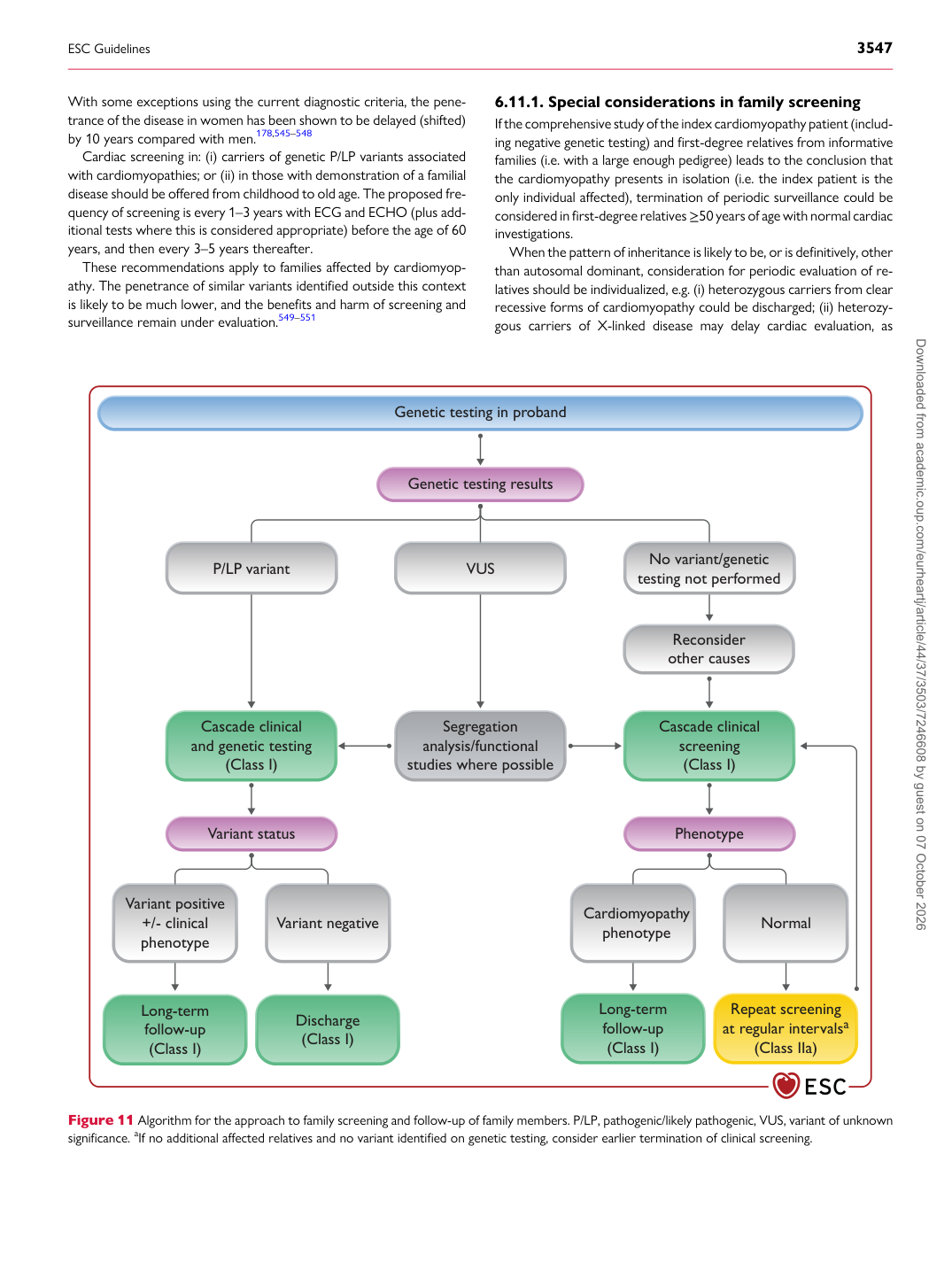
With some exceptions using the current diagnostic criteria, the penetrance of the disease in women has been shown to be delayed (shifted) by 10 years compared with men.178,545–548 Cardiac screening in: (i) carriers of genetic P/LP variants associated with cardiomyopathies; or (ii) in those with demonstration of a familial disease should be offered from childhood to old age. The proposed frequency of screening is every 1–3 years with ECG and ECHO (plus additional tests where this is considered appropriate) before the age of 60 years, and then every 3–5 years thereafter. These recommendations apply to families affected by cardiomyopathy. The penetrance of similar variants identified outside this context is likely to be much lower, and the benefits and harm of screening and surveillance remain under evaluation.549–551 6.11.1 Special considerations in family screening

If the comprehensive study of the index cardiomyopathy patient (including negative genetic testing) and first-degree relatives from informative families (i.e. with a large enough pedigree) leads to the conclusion that the cardiomyopathy presents in isolation (i.e. the index patient is the only individual affected), termination of periodic surveillance could be considered in first-degree relatives ≥50 years of age with normal cardiac investigations. When the pattern of inheritance is likely to be, or is definitively, other than autosomal dominant, consideration for periodic evaluation of relatives should be individualized, e.g. (i) heterozygous carriers from clear recessive forms of cardiomyopathy could be discharged; (ii) heterozygous carriers of X-linked disease may delay cardiac evaluation, as

Genetic testing results

Variant status Phenotype

Genetic testing in proband

P/LP variant

Variant positive

+/- clinical phenotype Variant negative

Long-term follow-up (Class I) Discharge

(Class I) Cardiomyopathy

phenotype Normal

Long-term follow-up (Class I) Repeat screening at regular intervalsa

(Class IIa)

VUS No variant/genetic testing not performed

Reconsider other causes

Segregation analysis/functional studies where possible

Cascade clinical and genetic testing

(Class I) Cascade clinical

screening (Class I)

Figure 11 Algorithm for the approach to family screening and follow-up of family members. P/LP, pathogenic/likely pathogenic, VUS, variant of unknown significance. aIf no additional affected relatives and no variant identified on genetic testing, consider earlier termination of clinical screening.

ESC Guidelines                                                                                                                                                                                          3547

Downloaded from academic.oup.com/eurheartj/article/44/37/3503/7246608 by guest on 07 October 2026