p.36 抽出テキスト
The general approach to paediatric and adult cardiomyopathies is based on age of onset, clinical presentation, and cardiac and systemic phenotype.246 When a syndromic or metabolic disease is suspected, a step-by-step approach taking into consideration age of onset, consanguinity and family history, cardiac and systemic involvement, ECG and imaging, and laboratory work-up is recommended to define phenotype, aetiology, and tailored management.247 As in adults, clinical presentation varies, from an absence of symptoms to SCD as the first and unique manifestation.35,81,248,249

6.9.1 Infantile and early childhood-onset

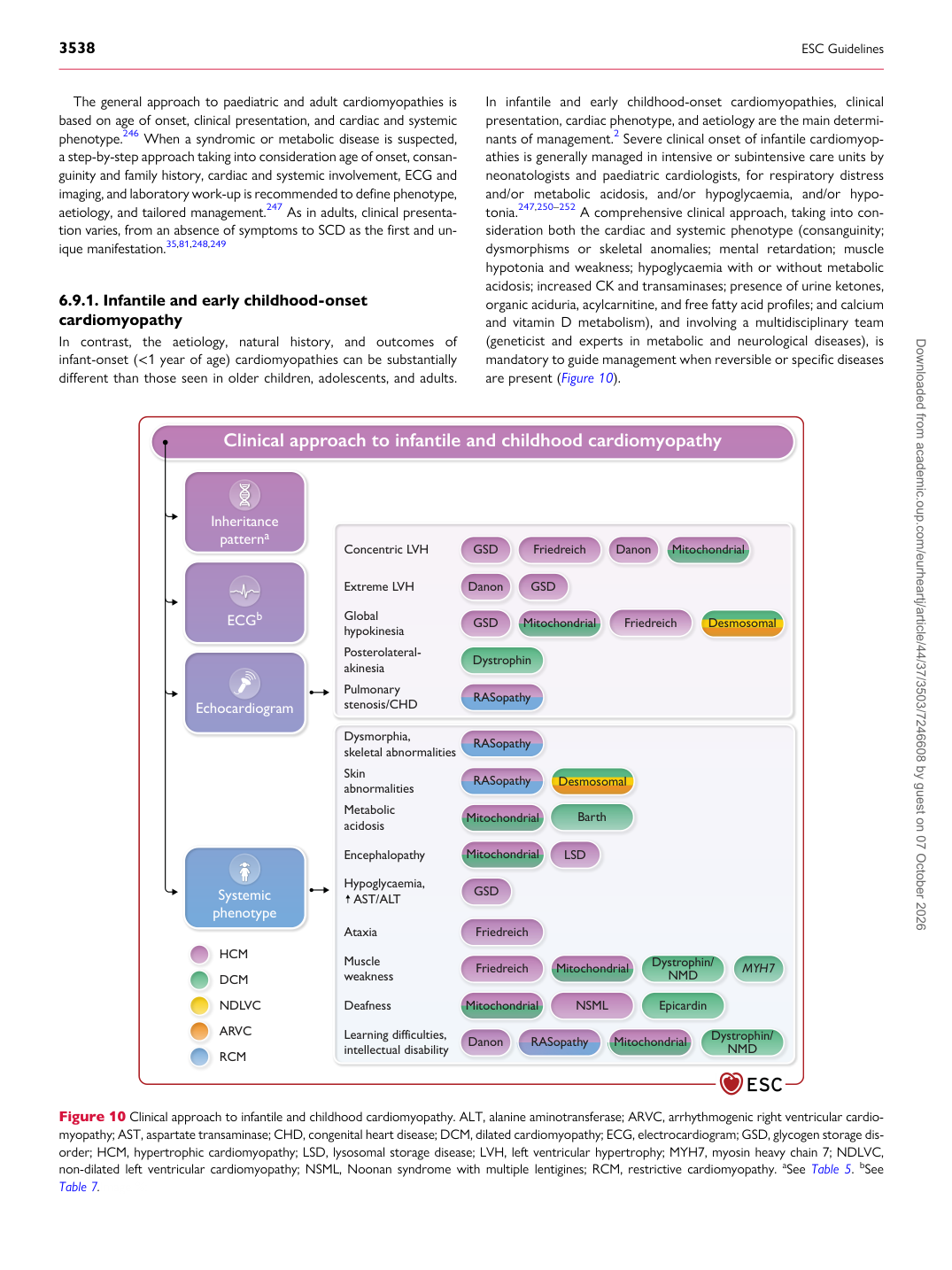
cardiomyopathy In contrast, the aetiology, natural history, and outcomes of infant-onset (<1 year of age) cardiomyopathies can be substantially different than those seen in older children, adolescents, and adults. In infantile and early childhood-onset cardiomyopathies, clinical presentation, cardiac phenotype, and aetiology are the main determinants of management.2 Severe clinical onset of infantile cardiomyopathies is generally managed in intensive or subintensive care units by neonatologists and paediatric cardiologists, for respiratory distress and/or metabolic acidosis, and/or hypoglycaemia, and/or hypotonia.247,250–252 A comprehensive clinical approach, taking into consideration both the cardiac and systemic phenotype (consanguinity; dysmorphisms or skeletal anomalies; mental retardation; muscle hypotonia and weakness; hypoglycaemia with or without metabolic acidosis; increased CK and transaminases; presence of urine ketones, organic aciduria, acylcarnitine, and free fatty acid profiles; and calcium and vitamin D metabolism), and involving a multidisciplinary team (geneticist and experts in metabolic and neurological diseases), is mandatory to guide management when reversible or specific diseases are present (Figure 10).

Clinical approach to infantile and childhood cardiomyopathy

Friedreich GSD Danon Concentric LVH

Danon

Danon

GSD Extreme LVH Global hypokinesia Posterolateralakinesia Pulmonary stenosis/CHD

Barth

Dysmorphia, skeletal abnormalities Skin abnormalities Metabolic acidosis

Encephalopathy

GSD LSD

MYH7

Ataxia Muscle weakness

Deafness Learning difficulties, intellectual disability

Hypoglycaemia, AST/ALT Friedreich

Friedreich

GSD Mitochondrial Desmosomal

Dystrophin

RASopathy

RASopathy

RASopathy Mitochondrial

Mitochondrial

Mitochondrial

RASopathy

Friedreich Dystrophin/

NMD

Dystrophin/

NMD

Mitochondrial

Mitochondrial

NSML Epicardin Mitochondrial

Inheritance

patterna

Echocardiogram

Systemic phenotype

ECGb

HCM DCM

RCM

ARVC

NDLVC Desmosomal

Figure 10 Clinical approach to infantile and childhood cardiomyopathy. ALT, alanine aminotransferase; ARVC, arrhythmogenic right ventricular cardiomyopathy; AST, aspartate transaminase; CHD, congenital heart disease; DCM, dilated cardiomyopathy; ECG, electrocardiogram; GSD, glycogen storage disorder; HCM, hypertrophic cardiomyopathy; LSD, lysosomal storage disease; LVH, left ventricular hypertrophy; MYH7, myosin heavy chain 7; NDLVC, non-dilated left ventricular cardiomyopathy; NSML, Noonan syndrome with multiple lentigines; RCM, restrictive cardiomyopathy. aSee Table 5. bSee Table 7.Image %: Downloaded from academic.oup.com/eurheartj/article/44/37/3503/7246608 by guest on 07 October 2026