p.34 抽出テキスト
The right assignment of the level of pathogenicity of a variant is crucial for cascade genetic testing. Inappropriate use of genetic testing in a family has the potential to introduce unnecessary worry and fear, as well as potential harm related to the misinterpretation of genetic variants. Variants should therefore be classified by a specialized multidisciplinary cardiac genetic team with an appropriate level of expertise. Systematic reclassification of identified variants and communication to families is crucial. Conveying information on the importance of clinical and genetic testing of at-risk relatives is typically reliant on the proband in the family understanding the information and passing it on to the appropriate relatives. Common barriers to communication can include poor family relationships, guilt regarding passing a causative variant on to children, psychosocial factors including distress, and comprehension of the result.214,215 A patient will often selectively communicate genetic information to relatives, assessing their ability to understand and cope with the information, their life stage, and their risk status.216 Poor health literacy is an important barrier to effectively communicating genetic risk information to relatives, highlighting the need for targeted resources and mechanisms for support.217 6.8.3.4 Pre-natal or pre-implantation genetic diagnosis

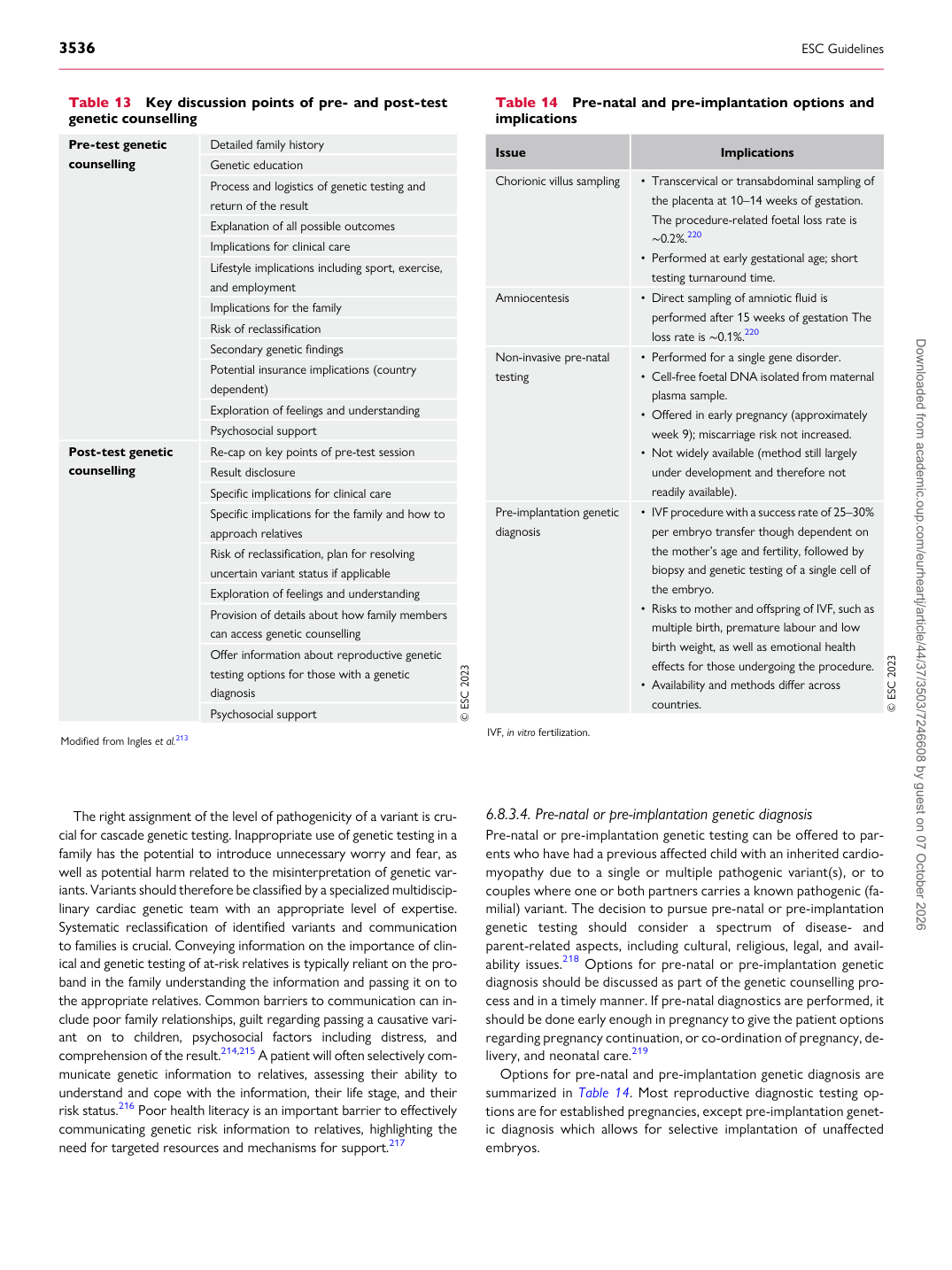
Pre-natal or pre-implantation genetic testing can be offered to parents who have had a previous affected child with an inherited cardiomyopathy due to a single or multiple pathogenic variant(s), or to couples where one or both partners carries a known pathogenic (familial) variant. The decision to pursue pre-natal or pre-implantation genetic testing should consider a spectrum of disease- and parent-related aspects, including cultural, religious, legal, and availability issues.218 Options for pre-natal or pre-implantation genetic diagnosis should be discussed as part of the genetic counselling process and in a timely manner. If pre-natal diagnostics are performed, it should be done early enough in pregnancy to give the patient options regarding pregnancy continuation, or co-ordination of pregnancy, delivery, and neonatal care.219 Options for pre-natal and pre-implantation genetic diagnosis are summarized in Table 14. Most reproductive diagnostic testing options are for established pregnancies, except pre-implantation genetic diagnosis which allows for selective implantation of unaffected embryos.

Table 13 Key discussion points of pre- and post-test genetic counselling Pre-test genetic counselling Detailed family history

Genetic education Process and logistics of genetic testing and return of the result Explanation of all possible outcomes Implications for clinical care Lifestyle implications including sport, exercise, and employment Implications for the family Risk of reclassification Secondary genetic findings Potential insurance implications (country dependent) Exploration of feelings and understanding Psychosocial support

Post-test genetic counselling Re-cap on key points of pre-test session

Result disclosure Specific implications for clinical care Specific implications for the family and how to approach relatives Risk of reclassification, plan for resolving uncertain variant status if applicable Exploration of feelings and understanding Provision of details about how family members can access genetic counselling Offer information about reproductive genetic testing options for those with a genetic diagnosis Psychosocial support © ESC 2023

Modified from Ingles et al.213 Table 14 Pre-natal and pre-implantation options and implications

Issue Implications

Chorionic villus sampling • Transcervical or transabdominal sampling of

the placenta at 10–14 weeks of gestation. The procedure-related foetal loss rate is ∼0.2%.220 • Performed at early gestational age; short testing turnaround time.

Amniocentesis • Direct sampling of amniotic fluid is performed after 15 weeks of gestation The

loss rate is ∼0.1%.220

Non-invasive pre-natal testing • Performed for a single gene disorder.

• Cell-free foetal DNA isolated from maternal plasma sample. • Offered in early pregnancy (approximately

week 9); miscarriage risk not increased. • Not widely available (method still largely under development and therefore not

readily available).

Pre-implantation genetic diagnosis • IVF procedure with a success rate of 25–30%

per embryo transfer though dependent on the mother’s age and fertility, followed by biopsy and genetic testing of a single cell of the embryo. • Risks to mother and offspring of IVF, such as multiple birth, premature labour and low

birth weight, as well as emotional health effects for those undergoing the procedure. • Availability and methods differ across

countries. © ESC 2023

IVF, in vitro fertilization. Downloaded from academic.oup.com/eurheartj/article/44/37/3503/7246608 by guest on 07 October 2026