p.14 抽出テキスト
3.2.4 Arrhythmogenic right ventricular

cardiomyopathy Arrhythmogenic right ventricular cardiomyopathy (ARVC) is defined as the presence of predominantly RV dilatation and/or dysfunction in the presence of histological involvement and/or electrocardiographic abnormalities in accordance with published criteria.10 For decades, ARVC has been one of the principal cardiomyopathy subtypes. It has been defined in accordance with published consensus criteria that comprise RV dysfunction (global or regional), histological abnormalities in the form of fibro-fatty replacement of cardiomyocytes, electrocardiographic characteristics, ventricular arrhythmia of RV origin, and the presence of familial disease and/or pathogenic variants in desmosomal protein genes. Over time, the clinical paradigm of ARVC has moved from a focus on severe RV disease and malignant ventricular arrhythmia to a broader concept that includes concealed or subclinical phenotypes and biventricular or even left-dominant disease. This has led to a plethora of new terms, including ‘arrhythmogenic left ventricular cardiomyopathy (ALVC)’, ‘left and right dominant cardiomyopathy’, ‘arrhythmogenic dilated cardiomyopathy’, and most recently, the catch-all term ‘arrhythmogenic cardiomyopathy’. The term ARVC can be used to describe the original variant in which ventricular dilatation or wall motion abnormalities are predominantly confined to the right ventricle, with or without LV involvement, and the 2010 modified Task Force criteria for the diagnosis of ARVC can be applied.10 Predominant LV disease can also occur in the same family;5 see Section 7.3 for recommendations on assessment and management of this phenotype.

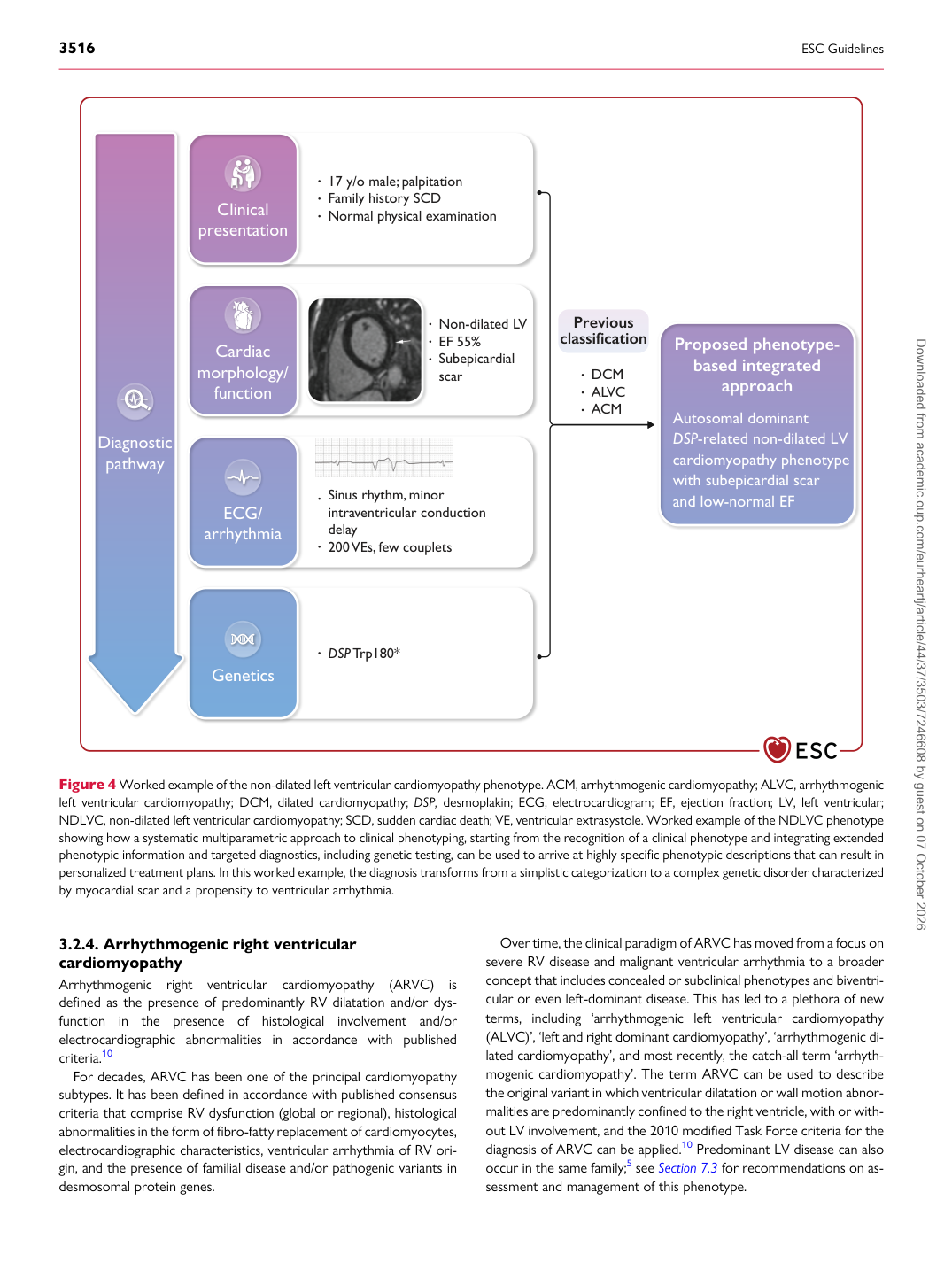
Previous classification

17 y/o male; palpitation Family history SCD Normal physical examination

DCM ALVC ACM

DSP Trp180* Non-dilated LV EF 55% Subepicardial scar

Sinus rhythm, minor intraventricular conduction delay 200 VEs, few couplets

Clinical presentation

Cardiac morphology/

function

ECG/ arrhythmia

Genetics

Diagnostic

pathway Proposed phenotype-

based integrated

approach

Autosomal dominant DSP-related non-dilated LV cardiomyopathy phenotype with subepicardial scar and low-normal EF

Figure 4 Worked example of the non-dilated left ventricular cardiomyopathy phenotype. ACM, arrhythmogenic cardiomyopathy; ALVC, arrhythmogenic left ventricular cardiomyopathy; DCM, dilated cardiomyopathy; DSP, desmoplakin; ECG, electrocardiogram; EF, ejection fraction; LV, left ventricular; NDLVC, non-dilated left ventricular cardiomyopathy; SCD, sudden cardiac death; VE, ventricular extrasystole. Worked example of the NDLVC phenotype showing how a systematic multiparametric approach to clinical phenotyping, starting from the recognition of a clinical phenotype and integrating extended phenotypic information and targeted diagnostics, including genetic testing, can be used to arrive at highly specific phenotypic descriptions that can result in personalized treatment plans. In this worked example, the diagnosis transforms from a simplistic categorization to a complex genetic disorder characterized by myocardial scar and a propensity to ventricular arrhythmia. Downloaded from academic.oup.com/eurheartj/article/44/37/3503/7246608 by guest on 07 October 2026