p.10 抽出テキスト
Symptoms

Ventricular morphology/

function

Ventricular scar and tissue characterization Pedigree analysis

Genetic testing

HCM

DCM

NDLVC

ARVC

RCM Extracardiac involvement

Laboratory markers

Pathology

Incidental findings Family screening

Phenotypespecific management General management principles

LVOTO management SCD risk prediction

GDMT for HF symptoms Aetiology-specific SCD risk prediction

Antiarrhythmic therapy SCD risk prediction

GDMT for HF symptoms PVR study to guide timing of transplantation

Drug therapy Mechanical circulatory support/transplantation

Symptom management

Genetic testing and counselling Family screening and monitoring

Family screening and genetic risk to relatives

Exercise recommendations Pregnancy School, employment, psychological support

Lifestyle

Prevention of diseaserelated complications SCD Stroke thromboembolic prophylaxis

ICD

Clinical scenario

Morphological/functional

characterization

Phenotype Additional traits

4 5 6

2 3

GDMT for HF symptoms Aetiology-specific SCD risk prediction

Arrhythmias/conduction

disease Arrhythmias/conduction

disease

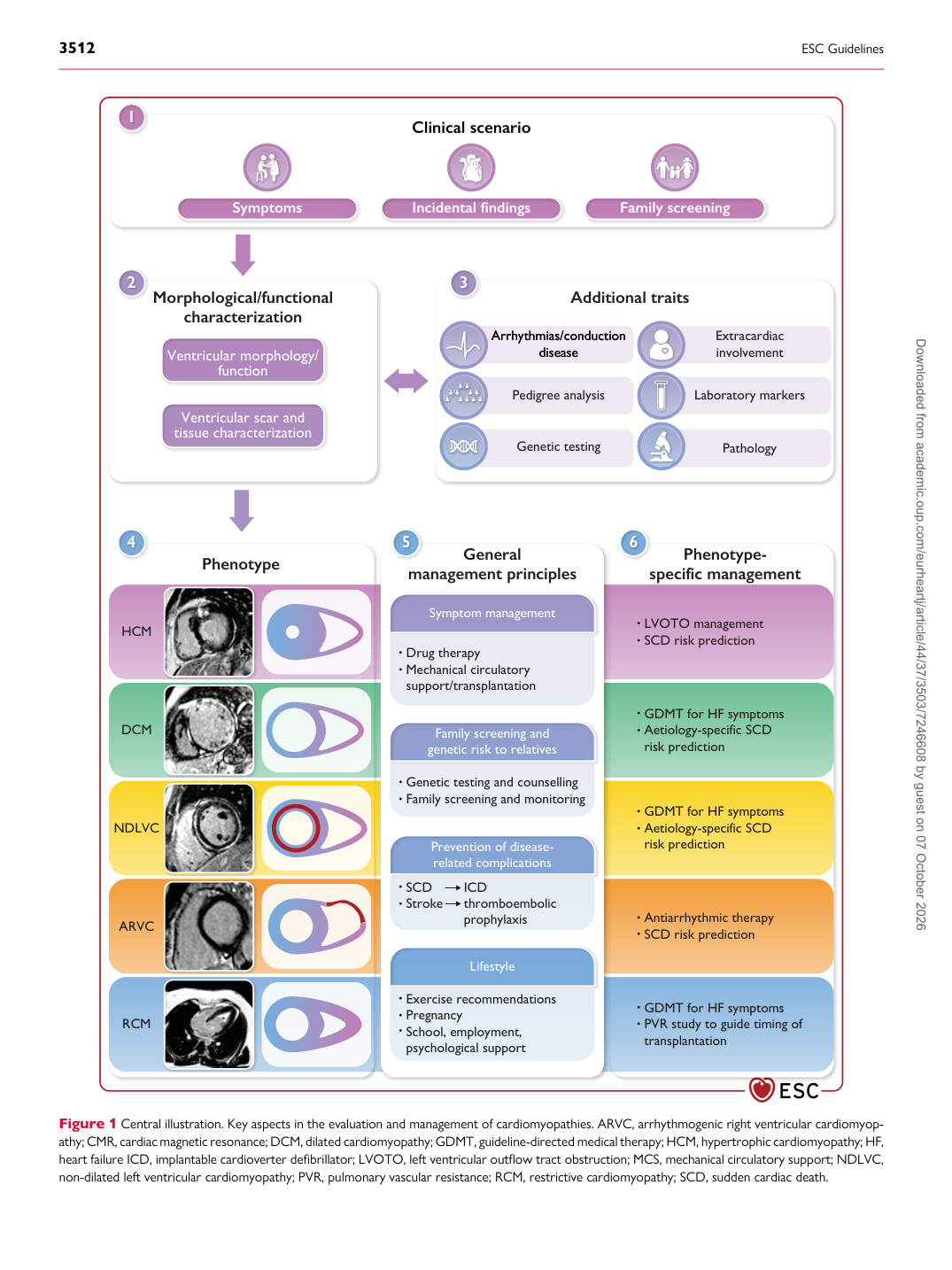
Figure 1 Central illustration. Key aspects in the evaluation and management of cardiomyopathies. ARVC, arrhythmogenic right ventricular cardiomyopathy; CMR, cardiac magnetic resonance; DCM, dilated cardiomyopathy; GDMT, guideline-directed medical therapy; HCM, hypertrophic cardiomyopathy; HF, heart failure ICD, implantable cardioverter defibrillator; LVOTO, left ventricular outflow tract obstruction; MCS, mechanical circulatory support; NDLVC, non-dilated left ventricular cardiomyopathy; PVR, pulmonary vascular resistance; RCM, restrictive cardiomyopathy; SCD, sudden cardiac death.Image %: Downloaded from academic.oup.com/eurheartj/article/44/37/3503/7246608 by guest on 07 October 2026