p.77 抽出テキスト
18 ‘What to do’ and ‘What not to do’ messages from the Guidelines

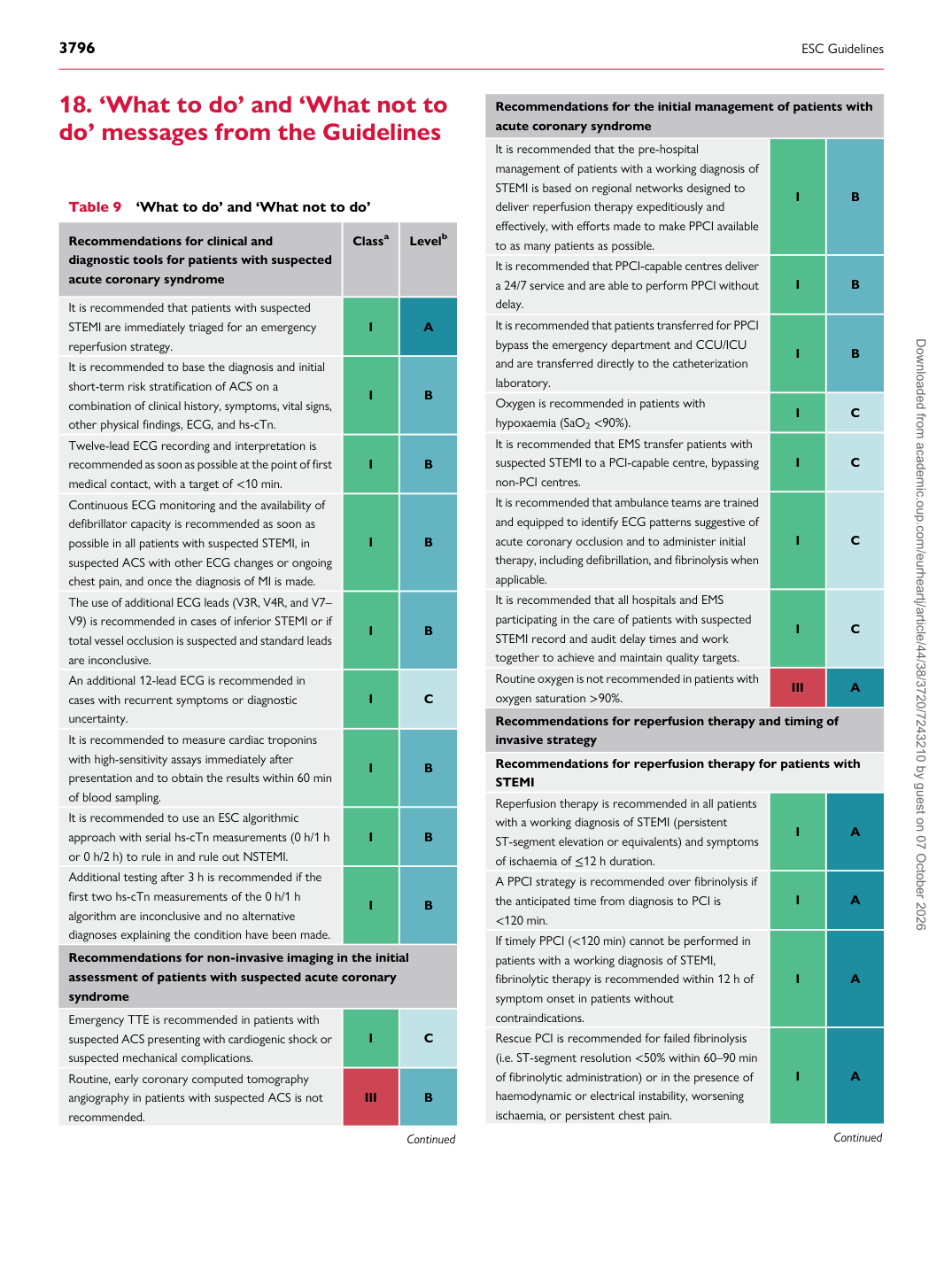
Table 9 ‘What to do’ and ‘What not to do’

Recommendations for clinical and diagnostic tools for patients with suspected acute coronary syndrome Classa Levelb

It is recommended that patients with suspected STEMI are immediately triaged for an emergency reperfusion strategy. I A It is recommended to base the diagnosis and initial short-term risk stratification of ACS on a combination of clinical history, symptoms, vital signs, other physical findings, ECG, and hs-cTn. I B Twelve-lead ECG recording and interpretation is recommended as soon as possible at the point of first medical contact, with a target of <10 min. I B Continuous ECG monitoring and the availability of defibrillator capacity is recommended as soon as possible in all patients with suspected STEMI, in suspected ACS with other ECG changes or ongoing chest pain, and once the diagnosis of MI is made. I B The use of additional ECG leads (V3R, V4R, and V7– V9) is recommended in cases of inferior STEMI or if total vessel occlusion is suspected and standard leads are inconclusive. I B An additional 12-lead ECG is recommended in cases with recurrent symptoms or diagnostic uncertainty. I C It is recommended to measure cardiac troponins with high-sensitivity assays immediately after presentation and to obtain the results within 60 min of blood sampling. I B It is recommended to use an ESC algorithmic approach with serial hs-cTn measurements (0 h/1 h or 0 h/2 h) to rule in and rule out NSTEMI. I B Additional testing after 3 h is recommended if the first two hs-cTn measurements of the 0 h/1 h algorithm are inconclusive and no alternative diagnoses explaining the condition have been made. I B Recommendations for non-invasive imaging in the initial assessment of patients with suspected acute coronary syndrome Emergency TTE is recommended in patients with suspected ACS presenting with cardiogenic shock or suspected mechanical complications. I C Routine, early coronary computed tomography angiography in patients with suspected ACS is not recommended. III B

Continued Recommendations for the initial management of patients with

acute coronary syndrome It is recommended that the pre-hospital management of patients with a working diagnosis of STEMI is based on regional networks designed to deliver reperfusion therapy expeditiously and effectively, with efforts made to make PPCI available to as many patients as possible. I B It is recommended that PPCI-capable centres deliver a 24/7 service and are able to perform PPCI without delay. I B It is recommended that patients transferred for PPCI bypass the emergency department and CCU/ICU and are transferred directly to the catheterization laboratory. I B Oxygen is recommended in patients with hypoxaemia (SaO2 <90%). I C It is recommended that EMS transfer patients with suspected STEMI to a PCI-capable centre, bypassing non-PCI centres. I C It is recommended that ambulance teams are trained and equipped to identify ECG patterns suggestive of acute coronary occlusion and to administer initial therapy, including defibrillation, and fibrinolysis when applicable. I C It is recommended that all hospitals and EMS participating in the care of patients with suspected STEMI record and audit delay times and work together to achieve and maintain quality targets. I C Routine oxygen is not recommended in patients with oxygen saturation >90%. III A Recommendations for reperfusion therapy and timing of invasive strategy Recommendations for reperfusion therapy for patients with STEMI Reperfusion therapy is recommended in all patients with a working diagnosis of STEMI (persistent ST-segment elevation or equivalents) and symptoms of ischaemia of ≤12 h duration. I A A PPCI strategy is recommended over fibrinolysis if the anticipated time from diagnosis to PCI is <120 min. I A If timely PPCI (<120 min) cannot be performed in patients with a working diagnosis of STEMI, fibrinolytic therapy is recommended within 12 h of symptom onset in patients without contraindications. I A Rescue PCI is recommended for failed fibrinolysis (i.e. ST-segment resolution <50% within 60–90 min of fibrinolytic administration) or in the presence of haemodynamic or electrical instability, worsening ischaemia, or persistent chest pain. I A

Continued Downloaded from academic.oup.com/eurheartj/article/44/38/3720/7243210 by guest on 07 October 2026