p.33 抽出テキスト
6.1 Antiplatelet therapy in the acute

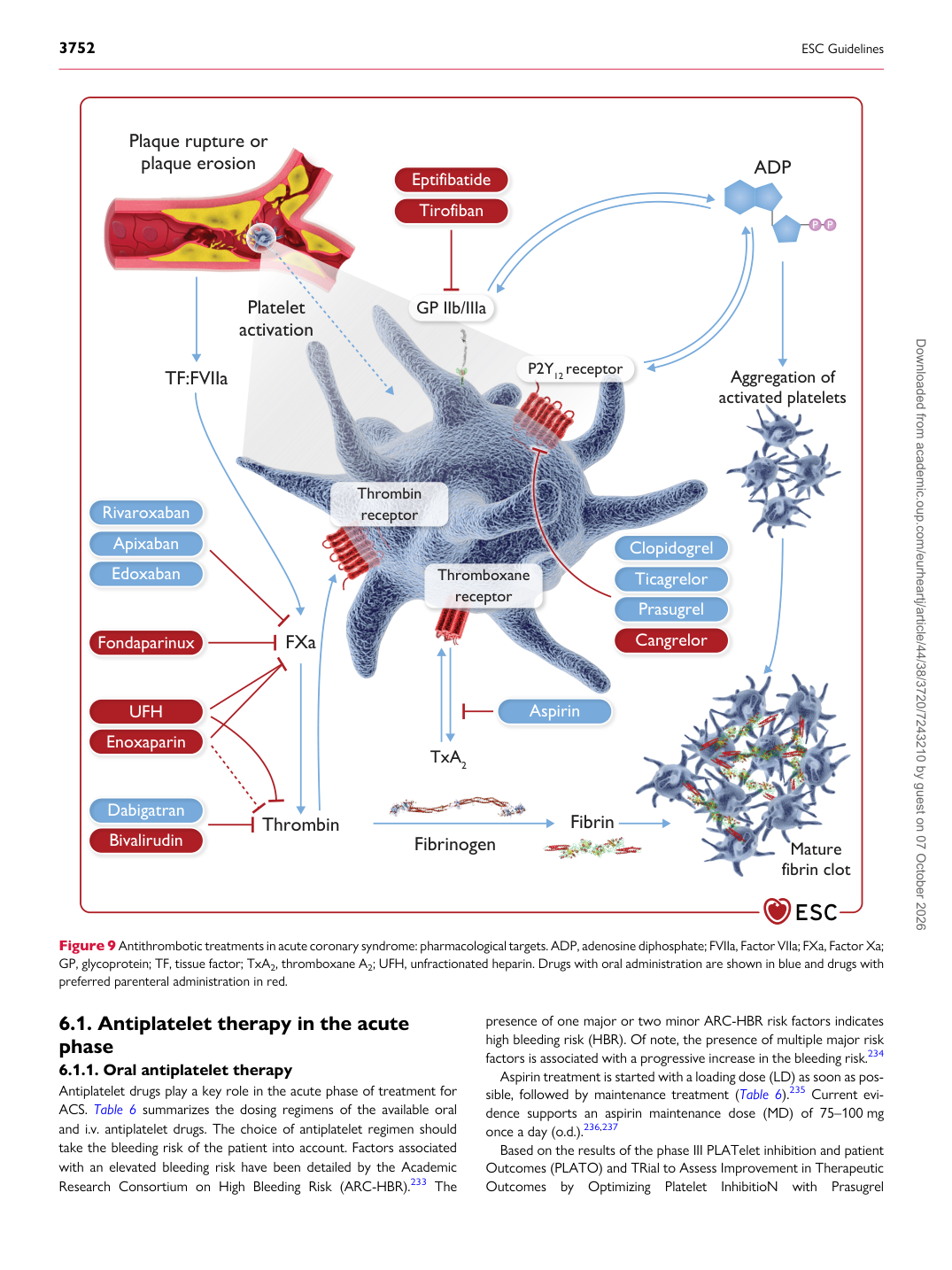
phase 6.1.1. Oral antiplatelet therapy Antiplatelet drugs play a key role in the acute phase of treatment for ACS. Table 6 summarizes the dosing regimens of the available oral and i.v. antiplatelet drugs. The choice of antiplatelet regimen should take the bleeding risk of the patient into account. Factors associated with an elevated bleeding risk have been detailed by the Academic Research Consortium on High Bleeding Risk (ARC-HBR).233 The presence of one major or two minor ARC-HBR risk factors indicates high bleeding risk (HBR). Of note, the presence of multiple major risk factors is associated with a progressive increase in the bleeding risk.234

Aspirin treatment is started with a loading dose (LD) as soon as possible, followed by maintenance treatment (Table 6).235 Current evidence supports an aspirin maintenance dose (MD) of 75–100 mg once a day (o.d.).236,237 Based on the results of the phase III PLATelet inhibition and patient Outcomes (PLATO) and TRial to Assess Improvement in Therapeutic Outcomes by Optimizing Platelet InhibitioN with Prasugrel

Eptifibatide

Tirofiban

Clopidogrel

Aspirin Ticagrelor

Prasugrel

Cangrelor

Rivaroxaban

Apixaban

Edoxaban

UFH

Enoxaparin

Dabigatran

Bivalirudin

Fondaparinux GP IIb/IIIa

TxA2 P2Y12 receptor

Thromboxane

receptor

Thrombin receptor ADP P P

Plaque rupture or

plaque erosion

Platelet activation

TF:FVIIa Aggregation of activated platelets

Fibrinogen Fibrin

FXa

Thrombin

Mature fibrin clot

Figure 9 Antithrombotic treatments in acute coronary syndrome: pharmacological targets. ADP, adenosine diphosphate; FVIIa, Factor VIIa; FXa, Factor Xa; GP, glycoprotein; TF, tissue factor; TxA2, thromboxane A2; UFH, unfractionated heparin. Drugs with oral administration are shown in blue and drugs with preferred parenteral administration in red. Downloaded from academic.oup.com/eurheartj/article/44/38/3720/7243210 by guest on 07 October 2026