p.17 抽出テキスト
It is important that awareness of the symptoms associated with ACS is high among the general population, in particular red flag symptoms such as prolonged chest pain (>15 min) and/or recurrent pain within 1 h, which should prompt patients or other members of the public to seek urgent medical help. Continuous education, promotion, and advocacy efforts are important to make sure that this information is as widely available as possible to the general population.

ACS presentation

Initial A.C.S.

assessment ECG Physical examination Clinical history Vital signs hs-cTna levels

Non-immediate

angiography Echo Intravascular

imaging hs-cTna

levels Non-invasive

imaging ECG monitoring

PCI CABG Long-term medical therapy Lifestyle measures Smoking cessation

STEMI NSTE-ACS with very high-risk featuresb NSTE-ACS without very high-risk featuresb

Immediate angiography ± PPCI or fibrinolysis if timely

PPCI not feasible

PPCI ATT Fibrinolysis Immediate angiography

± PCI Consider angiography within 24 h for NSTE-ACS

with high risk features

Working diagnosis

Early invasive

angiography according to

patient risk

Further management

Further investigations PCI ATT PCI ATT

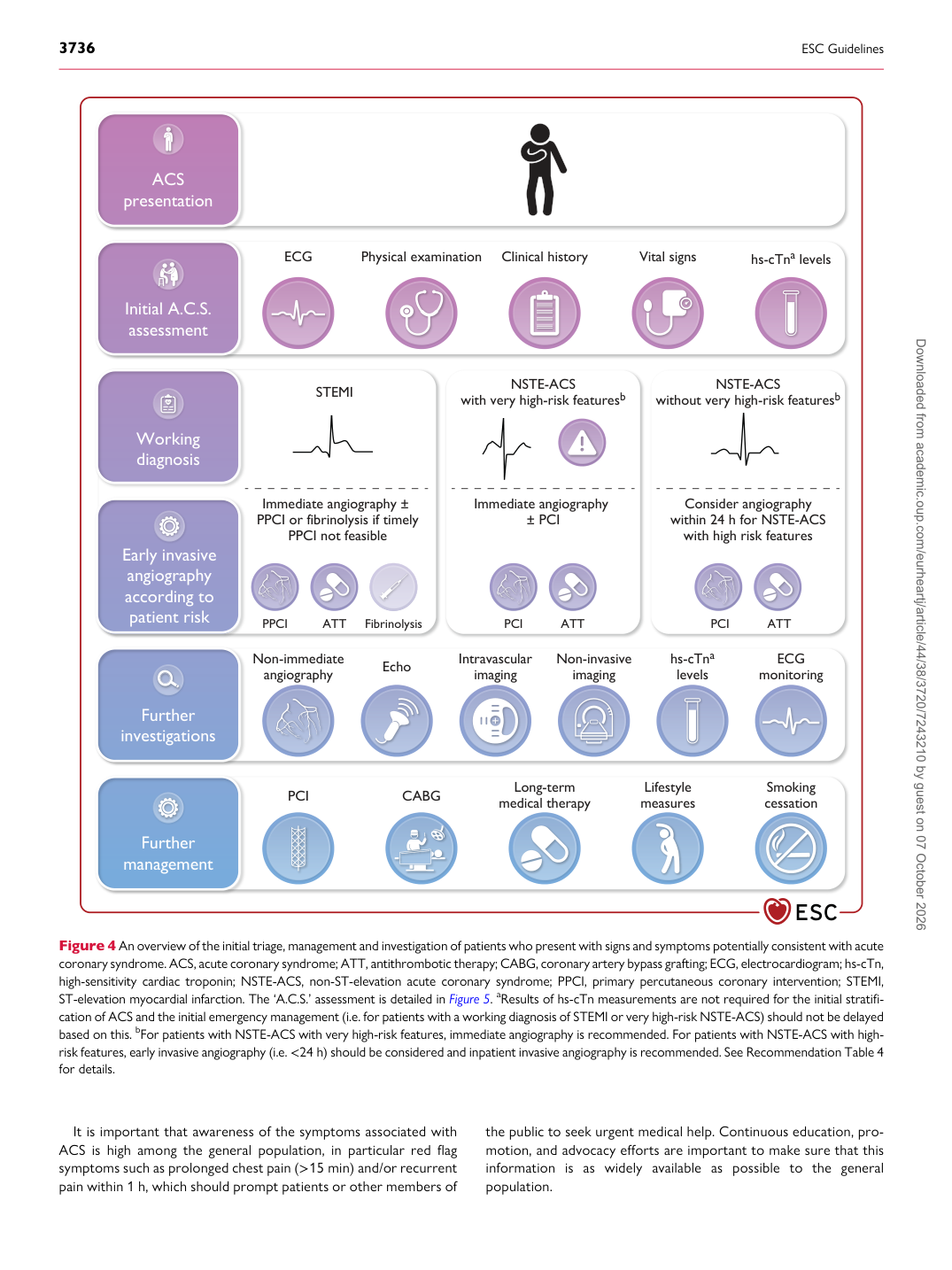
Figure 4 An overview of the initial triage, management and investigation of patients who present with signs and symptoms potentially consistent with acute coronary syndrome. ACS, acute coronary syndrome; ATT, antithrombotic therapy; CABG, coronary artery bypass grafting; ECG, electrocardiogram; hs-cTn, high-sensitivity cardiac troponin; NSTE-ACS, non-ST-elevation acute coronary syndrome; PPCI, primary percutaneous coronary intervention; STEMI, ST-elevation myocardial infarction. The ‘A.C.S.’ assessment is detailed in Figure 5. aResults of hs-cTn measurements are not required for the initial stratification of ACS and the initial emergency management (i.e. for patients with a working diagnosis of STEMI or very high-risk NSTE-ACS) should not be delayed based on this. bFor patients with NSTE-ACS with very high-risk features, immediate angiography is recommended. For patients with NSTE-ACS with highrisk features, early invasive angiography (i.e. <24 h) should be considered and inpatient invasive angiography is recommended. See Recommendation Table 4 for details. Downloaded from academic.oup.com/eurheartj/article/44/38/3720/7243210 by guest on 07 October 2026