p.11 抽出テキスト
2.1 Definitions | Acute coronary

syndromes and myocardial infarction

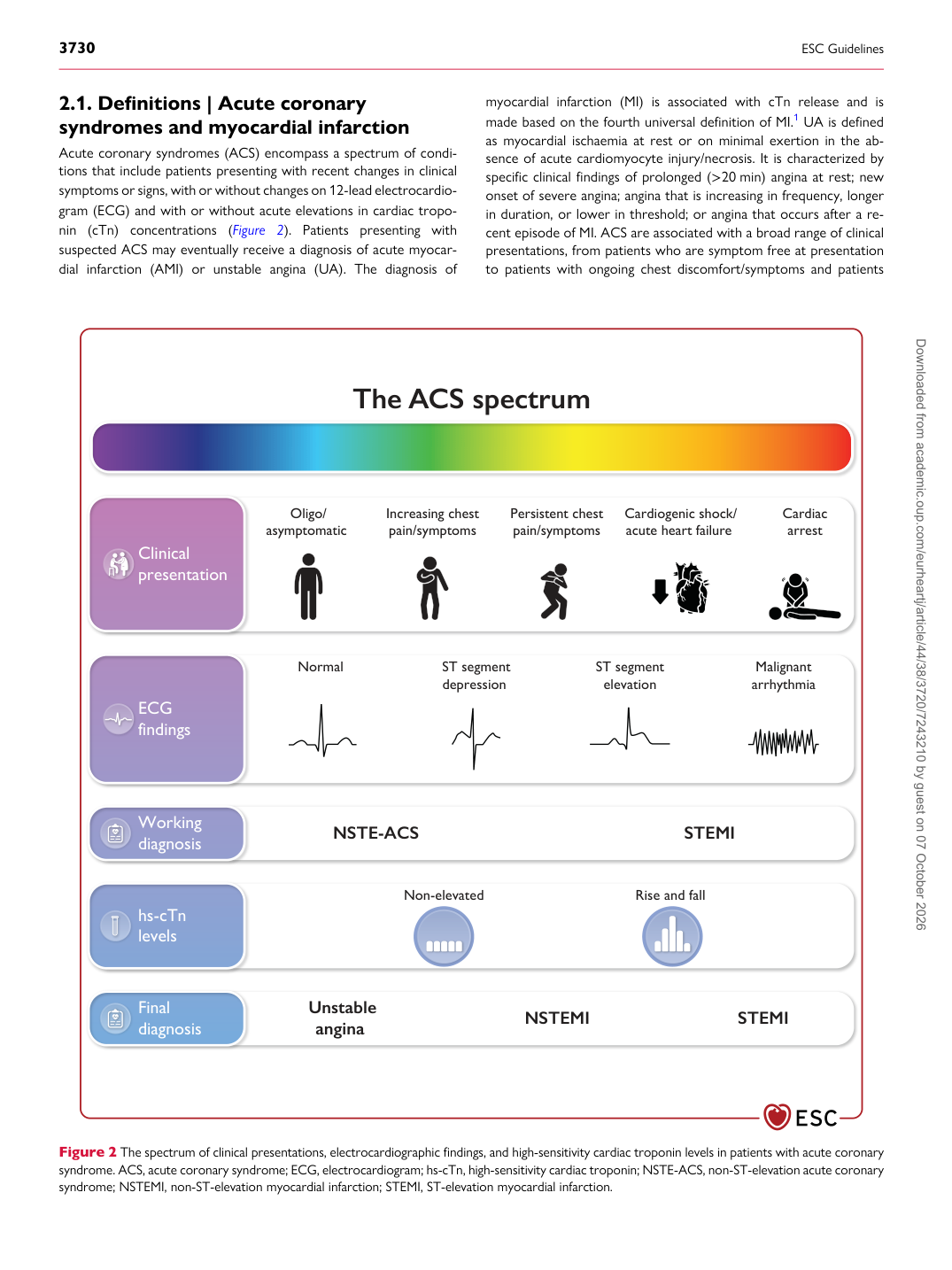
Acute coronary syndromes (ACS) encompass a spectrum of conditions that include patients presenting with recent changes in clinical symptoms or signs, with or without changes on 12-lead electrocardiogram (ECG) and with or without acute elevations in cardiac troponin (cTn) concentrations (Figure 2). Patients presenting with suspected ACS may eventually receive a diagnosis of acute myocardial infarction (AMI) or unstable angina (UA). The diagnosis of myocardial infarction (MI) is associated with cTn release and is made based on the fourth universal definition of MI.1 UA is defined as myocardial ischaemia at rest or on minimal exertion in the absence of acute cardiomyocyte injury/necrosis. It is characterized by specific clinical findings of prolonged (>20 min) angina at rest; new onset of severe angina; angina that is increasing in frequency, longer in duration, or lower in threshold; or angina that occurs after a recent episode of MI. ACS are associated with a broad range of clinical presentations, from patients who are symptom free at presentation to patients with ongoing chest discomfort/symptoms and patients

Increasing chest

pain/symptoms Oligo/ asymptomatic Persistent chest

pain/symptoms Cardiogenic shock/

acute heart failure Cardiac

arrest

Normal ST segment depression ST segment

elevation Malignant arrhythmia

Clinical presentation

ECG findings

hs-cTn levels The ACS spectrum

Final diagnosis

Working diagnosis

Non-elevated

Unstable

angina

NSTE-ACS

NSTEMI Rise and fall STEMI

STEMI

Figure 2 The spectrum of clinical presentations, electrocardiographic findings, and high-sensitivity cardiac troponin levels in patients with acute coronary syndrome. ACS, acute coronary syndrome; ECG, electrocardiogram; hs-cTn, high-sensitivity cardiac troponin; NSTE-ACS, non-ST-elevation acute coronary syndrome; NSTEMI, non-ST-elevation myocardial infarction; STEMI, ST-elevation myocardial infarction. Downloaded from academic.oup.com/eurheartj/article/44/38/3720/7243210 by guest on 07 October 2026