p.10 抽出テキスト
Aim for complete revascularization

2

3

4

1

5 ACS encompasses a spectrum

Think secondary prevention

Abnormal

ECG? Clinical context? Stable patient?

Think ‘A.C.S.’ at initial assessment

Think antithrombotic therapy

Primary PCI Fibrinolysis (If timely primary PCI not feasible) Immediate angiography ± PCI

AND

OR OR OR

Early (<24 h) angiography

should be considered

Aspirin UFH LMWH Bivalirudin Fondaparinux P2Y12 inhibitor

STEMI

OR Very high-risk NSTE-ACS High-risk NSTE-ACS

Antiplatelet therapy

+ Anticoagulant therapy

PCI

Antithrombotic

therapy Lipid lowering

therapy Smoking cessation Cardiac rehabilitation Risk factor management Psychosocial considerations

CABG

Based on clinical status, co-morbidities,

and disease complexity

OR Consider adjunctive tests to guide revascularization

Think invasive management

Think revascularization

Intravascular imaging Intravascular physiology

Unstable angina NSTEMI STEMI

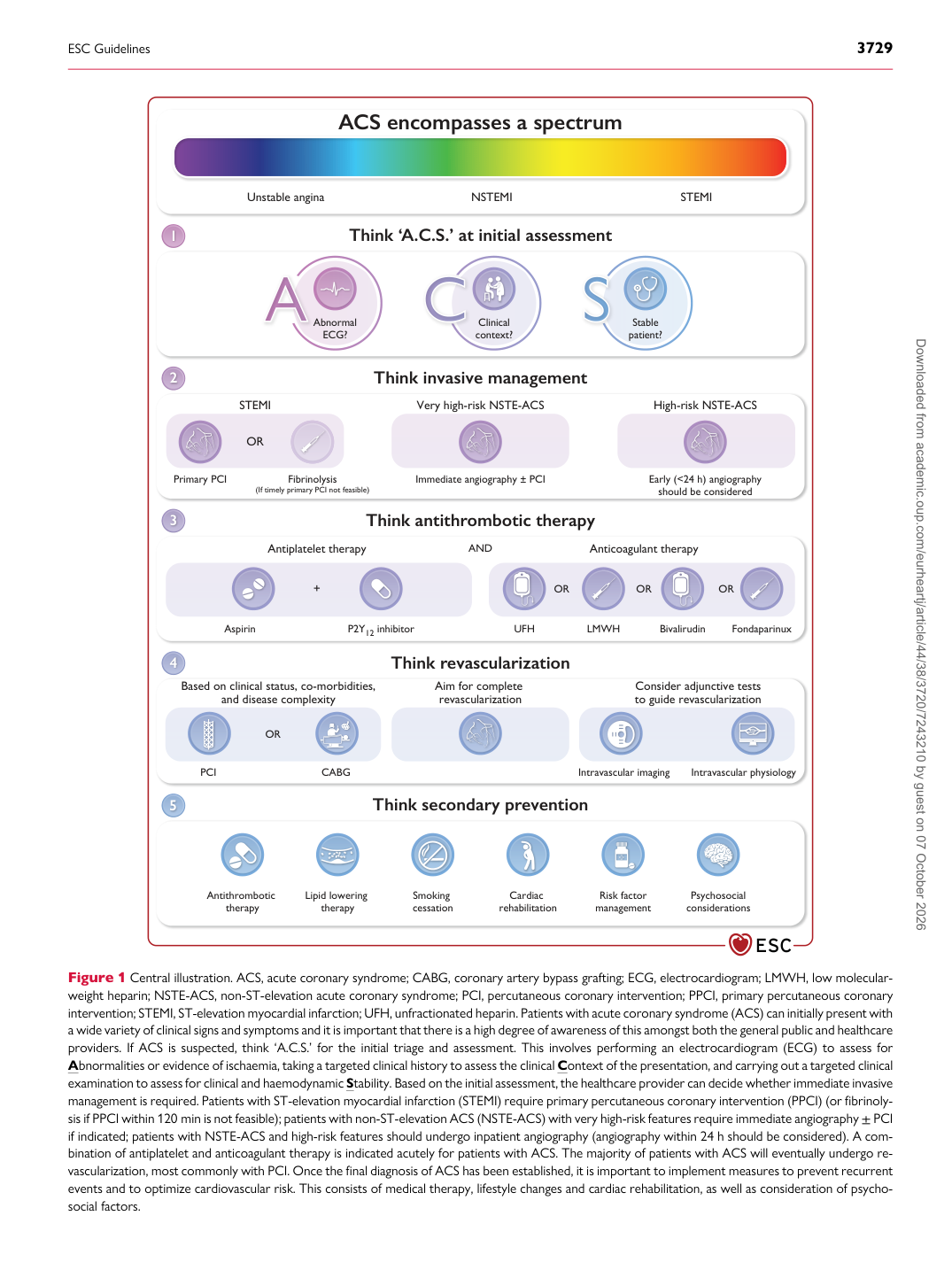
Figure 1 Central illustration. ACS, acute coronary syndrome; CABG, coronary artery bypass grafting; ECG, electrocardiogram; LMWH, low molecularweight heparin; NSTE-ACS, non-ST-elevation acute coronary syndrome; PCI, percutaneous coronary intervention; PPCI, primary percutaneous coronary intervention; STEMI, ST-elevation myocardial infarction; UFH, unfractionated heparin. Patients with acute coronary syndrome (ACS) can initially present with a wide variety of clinical signs and symptoms and it is important that there is a high degree of awareness of this amongst both the general public and healthcare providers. If ACS is suspected, think ‘A.C.S.’ for the initial triage and assessment. This involves performing an electrocardiogram (ECG) to assess for Abnormalities or evidence of ischaemia, taking a targeted clinical history to assess the clinical Context of the presentation, and carrying out a targeted clinical examination to assess for clinical and haemodynamic Stability. Based on the initial assessment, the healthcare provider can decide whether immediate invasive management is required. Patients with ST-elevation myocardial infarction (STEMI) require primary percutaneous coronary intervention (PPCI) (or fibrinolysis if PPCI within 120 min is not feasible); patients with non-ST-elevation ACS (NSTE-ACS) with very high-risk features require immediate angiography ± PCI if indicated; patients with NSTE-ACS and high-risk features should undergo inpatient angiography (angiography within 24 h should be considered). A combination of antiplatelet and anticoagulant therapy is indicated acutely for patients with ACS. The majority of patients with ACS will eventually undergo revascularization, most commonly with PCI. Once the final diagnosis of ACS has been established, it is important to implement measures to prevent recurrent events and to optimize cardiovascular risk. This consists of medical therapy, lifestyle changes and cardiac rehabilitation, as well as consideration of psychosocial factors.

ESC Guidelines                                                                                                                                                                                          3729

Downloaded from academic.oup.com/eurheartj/article/44/38/3720/7243210 by guest on 07 October 2026