p.84 抽出テキスト
induction of sustained VA during electrophysiological studies was associated with a higher future risk of VA.155 Inducibility, however, was associated with a potentially clinically actionable result only in asymptomatic patients with a spontaneous type 1 Brugada pattern ECG. In case of recurrent ICD shocks for VF, quinidine or catheter ablation have been successful in reducing shock frequency.922,1006,1007 Isoproterenol infusion can suppress electrical storm.1008 In several small studies, quinidine was effective in reducing or even preventing arrhythmia inducibility during programmed stimulation.922,1006,1007 However, adverse effects of quinidine can occur in up to 37% of patients, and quinidine is inaccessible in many countries. Cilostazol (phosphodiesterase-3 inhibitor) can be an alternative to quinidine.1008 Electrophysiological mapping data linked to histopathological studies suggest that an abnormal fibrotic arrhythmogenic substrate in the epicardial RVOT is responsible for the ST-segment elevation in the right precordial leads and VF occurrence in BrS patients.1009 Ablation of these abnormal areas can markedly suppress recurrent VF and normalize the ECG in .75% of patients.1009–1015 In patients with recurrent episodes of VF triggered by a similar PVC non-responsive to medical treatment, catheter ablation may target the PVC, which most commonly originates from the RVOT or Purkinje system.1013 However, data regarding the long-term follow-up after ablation are limited, with neither trial data nor evidence for ablation in asymptomatic patients.

Brugada type 1 pattern ECG A

B

I

II

III V1

V2

V3

aVR

aVL

aVF V4

V5

V6

Early repolarization pattern ECG

II

III

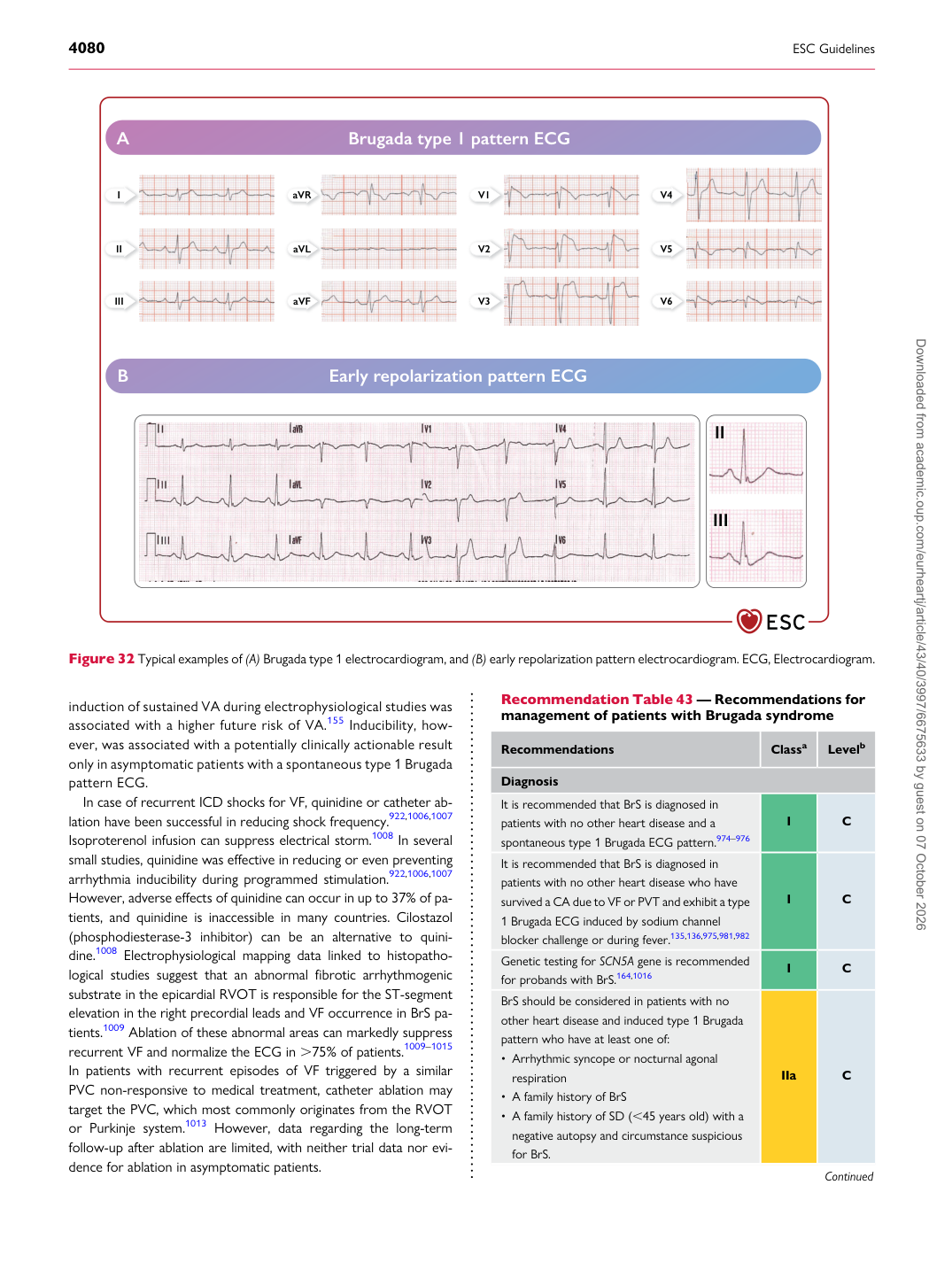
Figure 32 Typical examples of (A) Brugada type 1 electrocardiogram, and (B) early repolarization pattern electrocardiogram. ECG, Electrocardiogram.

Recommendation Table 43 — Recommendations for management of patients with Brugada syndrome

Recommendations Classa Levelb

Diagnosis It is recommended that BrS is diagnosed in patients with no other heart disease and a spontaneous type 1 Brugada ECG pattern.974–976 I C It is recommended that BrS is diagnosed in patients with no other heart disease who have survived a CA due to VF or PVT and exhibit a type 1 Brugada ECG induced by sodium channel blocker challenge or during fever.135,136,975,981,982 I C Genetic testing for SCN5A gene is recommended for probands with BrS.164,1016 I C BrS should be considered in patients with no other heart disease and induced type 1 Brugada pattern who have at least one of: • Arrhythmic syncope or nocturnal agonal respiration • A family history of BrS • A family history of SD (,45 years old) with a

negative autopsy and circumstance suspicious for BrS. IIa C

Continued Downloaded from academic.oup.com/eurheartj/article/43/40/3997/6675633 by guest on 07 October 2026