p.81 抽出テキスト
therapy in addition to OMT may be considered in asymptomatic LQTS patients identified with high-risk according to the 1-2-3 LQTS Risk calculator.947 PES is not useful for risk stratification in LQTS.961 Figure 31 illustrates the algorithm for the management of patients with long QT syndrome.

Recommendation Table 41 — Recommendations for the management of patients with long QT syndrome

Recommendations Classa Levelb

Diagnosis It is recommended that LQTS is diagnosed with either QTc ≥480 ms in repeated 12-lead ECGs with or without symptoms or LQTS diagnostic score .3. I C In patients with clinically diagnosed LQTS, genetic testing and genetic counselling are recommended. I C It is recommended that LQTS is diagnosed in the presence of a pathogenic mutation, irrespective of the QT duration. I C The LQTS diagnosis should be considered in the presence of a QTc ≥460 ms and ,480 ms in repeated 12-lead ECGs in patients with an arrhythmic syncope in the absence of secondary causes for QT prolongation.952,962,963 IIa C

Continued Routine diagnostic testing with epinephrine challenge is not recommended in LQTS.137 III C

General recommendations to prevent SCD The following is recommended in LQTS: • Avoid QT-prolonging drugs.c • Avoid and correct electrolyte abnormalities. • Avoid genotype-specific triggers for

arrhythmias.943 I C Beta-blockers, ideally non-selective beta-blockers (nadolol or propranolol), are recommended in LQTS patients with documented QT interval prolongation, to reduce risk of arrhythmic events.940,945,946 I B Mexiletine is indicated in LQT3 patients with a prolonged QT interval.948 I C Beta-blockers should be considered in patients with a pathogenic mutation and a normal QTc interval.82 IIa B Risk stratification, prevention of SCD and treatment of VA ICD implantation in addition to beta-blockers is recommended in LQTS patients with CA.952,953,962,963 I B ICD implantation is recommended in patients with LQTS who are symptomaticd while receiving beta-blockers and genotype-specific therapies. I C

Continued

I

II

III V1

V2

V3

aVR

aVL

aVF V4

V5

V6

T wave alternans

Brisk Standing Test

Recumbent Standing

A

B

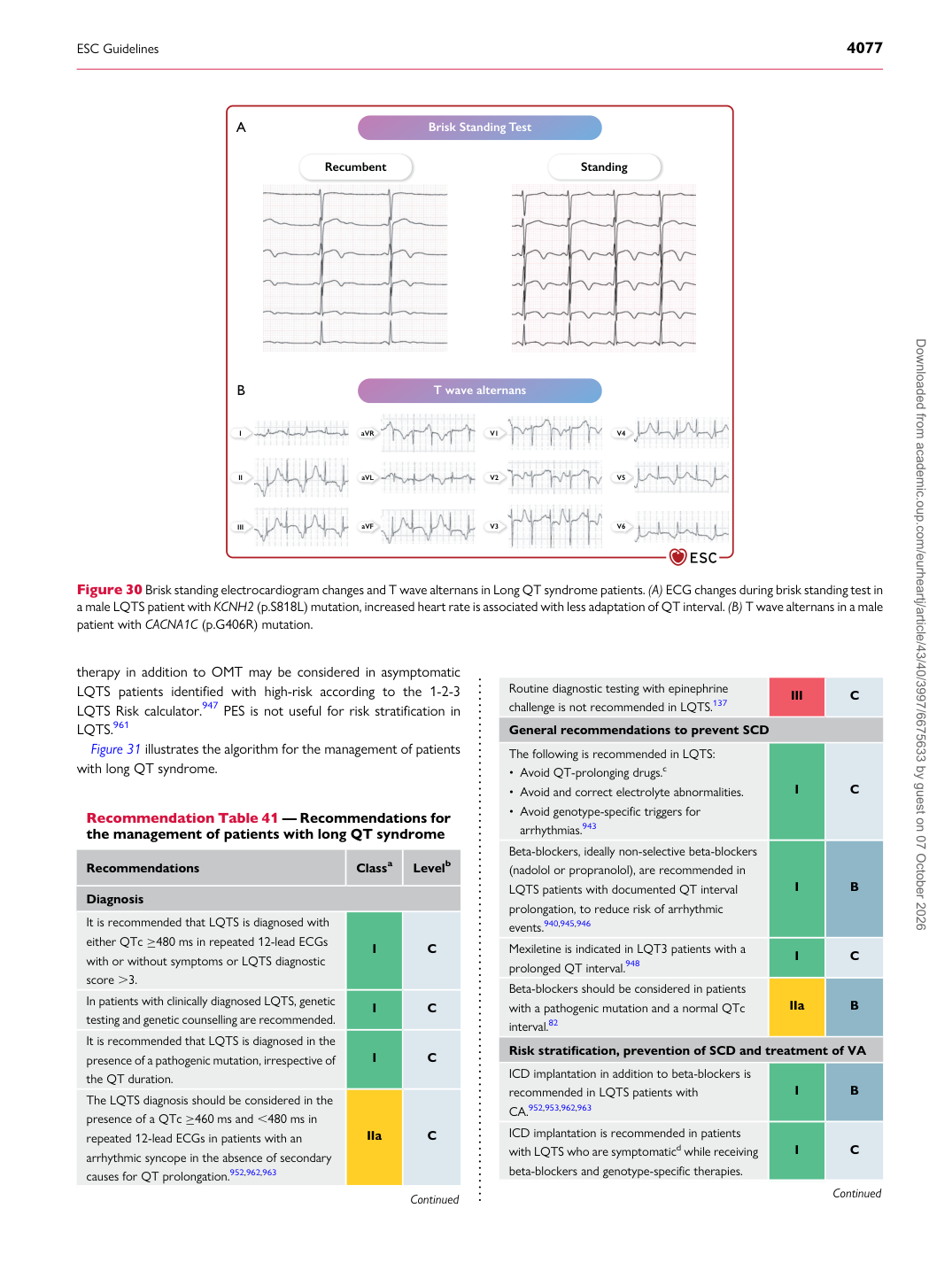
Figure 30 Brisk standing electrocardiogram changes and T wave alternans in Long QT syndrome patients. (A) ECG changes during brisk standing test in a male LQTS patient with KCNH2 (p.S818L) mutation, increased heart rate is associated with less adaptation of QT interval. (B) T wave alternans in a male patient with CACNA1C (p.G406R) mutation. Downloaded from academic.oup.com/eurheartj/article/43/40/3997/6675633 by guest on 07 October 2026