p.28 抽出テキスト
5.2.5 Scenario 5: Relatives of sudden arrhythmic

death syndrome decedents An algorithm for the evaluation of relatives of SADS decedents is presented in Figure 8. Studies evaluating families of SADS decedents have identified underlying genetic heart disease in relatives that is presumed to be the cause of death in the absence of other findings. The overall diagnostic yield ranged from 18 to 53%, depending on population and clinical investigative protocols.276 Aetiologies included LQTS, BrS, CPVT, and other disorders, such as cardiomyopathy.276 All study protocols relied upon a similar initial approach of evaluating the decedent’s pathological reports, medical history, and circumstances of death, and then offering clinical evaluation to relatives with a minimum of personal history, family history, physical examination, ECG and exercise test, and echocardiography.223,252,253,277–282

12-lead ECG (Class I)

STEMI

Suspicious f or extraca

f f r diac cause

Extraca r diac cause identified

P r eexcitation or suggesti v e of

prima r y electrical disease Non-ca r diac

Brain and chest CT scan (Class IIa)

Acute culprit lesion

Fu r ther e valuation acco r ding

to STEMI guidelines Electrical instability

suspicious f or on

f f g oing m y oca r dial ischaemia

Urgent C A G a (Class I) N

N N

N

N

N S C A su r vi v or

Y

Y

Y Y

Y

P r eexcited AF or p r obable prima r y electrical disease b , c ,

Y Evaluation of patient

characteristics and ci r cumstances of S C A

(Class I) Echoca r diogram

(Class I)

Collect blood sample f or t

f f o xicolo g y

and genetic testing (Class I)

R e vi e w/Repeat ECG (Class I)

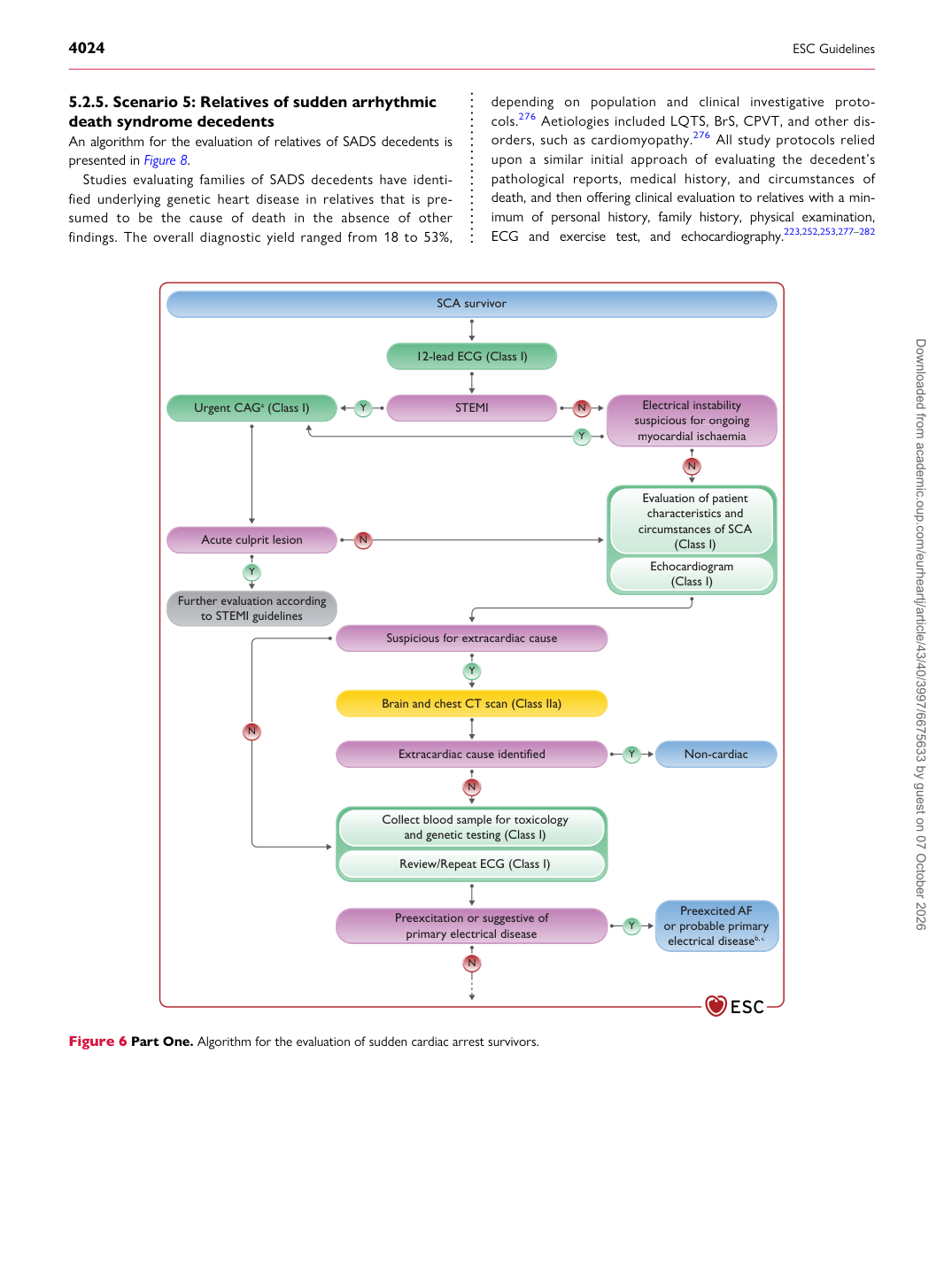
Figure 6 Part One. Algorithm for the evaluation of sudden cardiac arrest survivors. Downloaded from academic.oup.com/eurheartj/article/43/40/3997/6675633 by guest on 07 October 2026