p.17 抽出テキスト
resuscitative interventions, especially prior to emergency medical system arrival, has been identified as key elements to improve survival.95,97 Bystander cardiopulmonary resuscitation (CPR) and use of public automated external defibrillators (AEDs) have demonstrated improvement of neurological and functional outcome as well as survival of OHCA patients. Data support the need for increased availability of public access defibrillators and community training in basic life support,89–95 preferably initiated in childhood and repetitive.98–100 Finally, dispatch of basic life support-trained volunteers, through specific mobile apps networks, has been shown to increase the rate of bystander-initiated CPR, and as a result, greatly reduces the resuscitation-free interval and improves the outcome of

Genetic risks and triggers

for VA/SCD

CPVT

LQT

BrS

ACS

Sarcoid

HCM

DCM

ARVC

rTOF

chronic CAD Age at VA/SCD Dominant subtype

of VA (%)

10 20 30 40 50 60 70 80

PVT MVT

P M

PVT MVT

P M

PVT MVT

P M

PVT MVT

P M

PVT MVT

P M

PVT MVT

P M

PVT MVT

P M

PVT MVT

P M

PVT MVT

P M

PVT MVT

P M

0 50 100

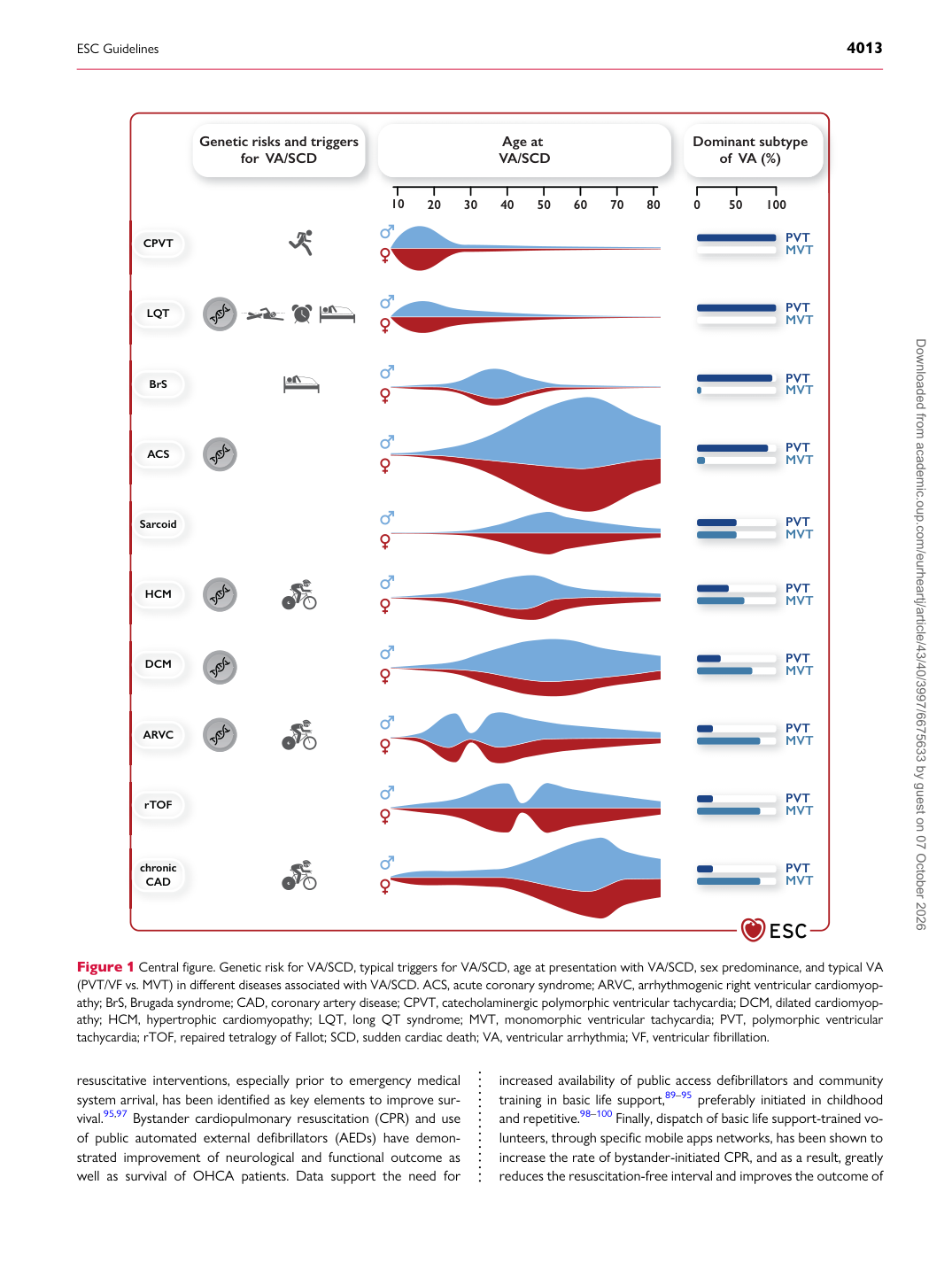
Figure 1 Central figure. Genetic risk for VA/SCD, typical triggers for VA/SCD, age at presentation with VA/SCD, sex predominance, and typical VA (PVT/VF vs. MVT) in different diseases associated with VA/SCD. ACS, acute coronary syndrome; ARVC, arrhythmogenic right ventricular cardiomyopathy; BrS, Brugada syndrome; CAD, coronary artery disease; CPVT, catecholaminergic polymorphic ventricular tachycardia; DCM, dilated cardiomyopathy; HCM, hypertrophic cardiomyopathy; LQT, long QT syndrome; MVT, monomorphic ventricular tachycardia; PVT, polymorphic ventricular tachycardia; rTOF, repaired tetralogy of Fallot; SCD, sudden cardiac death; VA, ventricular arrhythmia; VF, ventricular fibrillation. Downloaded from academic.oup.com/eurheartj/article/43/40/3997/6675633 by guest on 07 October 2026