p.14 抽出テキスト
Another novel concept of this document is the table of evidence (see Supplementary data). The trials and studies that have been selected to support a recommendation are systematically described in the table of evidence after careful review of the available data and the applied methodology, prioritizing papers published after 2015. Recommendations with level of evidence C that are not accompanied by a reference are supported by this panel of experts. To assist physicians in their daily clinical practice, diagnostic and therapeutic procedures with promising usefulness, typically classified as class IIb, but for which evidence is limited and difficult to collect in the near future, the related recommendations are not only described in the narratives but are listed in the table of recommendation.

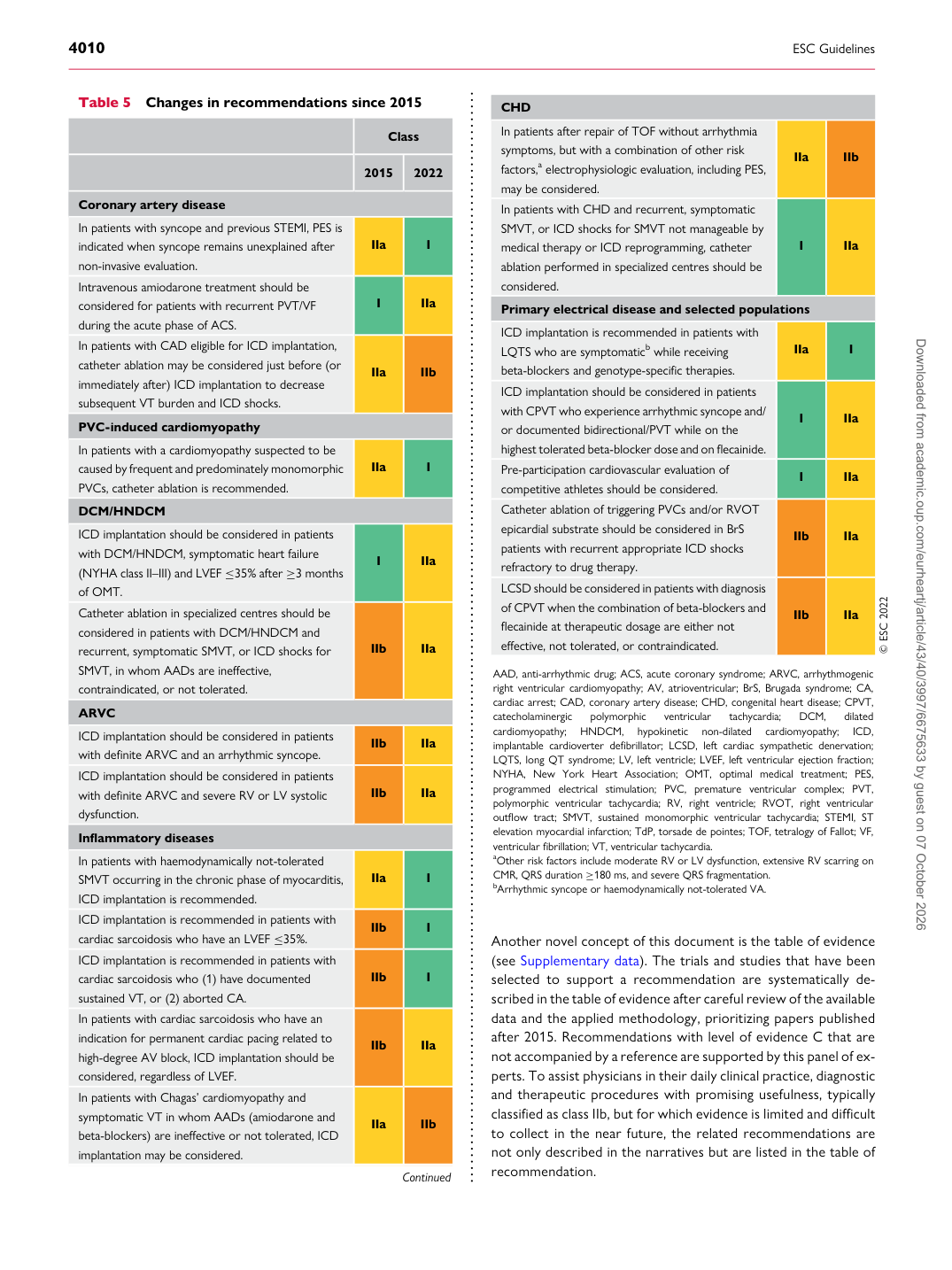
Table 5 Changes in recommendations since 2015

Class

2015 2022

Coronary artery disease In patients with syncope and previous STEMI, PES is indicated when syncope remains unexplained after non-invasive evaluation. IIa I Intravenous amiodarone treatment should be considered for patients with recurrent PVT/VF during the acute phase of ACS. I IIa In patients with CAD eligible for ICD implantation, catheter ablation may be considered just before (or immediately after) ICD implantation to decrease subsequent VT burden and ICD shocks. IIa IIb PVC-induced cardiomyopathy In patients with a cardiomyopathy suspected to be caused by frequent and predominately monomorphic PVCs, catheter ablation is recommended. IIa I DCM/HNDCM ICD implantation should be considered in patients with DCM/HNDCM, symptomatic heart failure (NYHA class II–III) and LVEF ≤35% after ≥3 months of OMT. I IIa Catheter ablation in specialized centres should be considered in patients with DCM/HNDCM and recurrent, symptomatic SMVT, or ICD shocks for SMVT, in whom AADs are ineffective, contraindicated, or not tolerated. IIb IIa ARVC ICD implantation should be considered in patients with definite ARVC and an arrhythmic syncope. IIb IIa ICD implantation should be considered in patients with definite ARVC and severe RV or LV systolic dysfunction. IIb IIa Inflammatory diseases In patients with haemodynamically not-tolerated SMVT occurring in the chronic phase of myocarditis, ICD implantation is recommended. IIa I ICD implantation is recommended in patients with cardiac sarcoidosis who have an LVEF ≤35%. IIb I ICD implantation is recommended in patients with cardiac sarcoidosis who (1) have documented sustained VT, or (2) aborted CA. IIb I In patients with cardiac sarcoidosis who have an indication for permanent cardiac pacing related to high-degree AV block, ICD implantation should be considered, regardless of LVEF. IIb IIa In patients with Chagas’ cardiomyopathy and symptomatic VT in whom AADs (amiodarone and beta-blockers) are ineffective or not tolerated, ICD implantation may be considered. IIa IIb

Continued CHD

In patients after repair of TOF without arrhythmia symptoms, but with a combination of other risk factors,a electrophysiologic evaluation, including PES, may be considered. IIa IIb In patients with CHD and recurrent, symptomatic SMVT, or ICD shocks for SMVT not manageable by medical therapy or ICD reprogramming, catheter ablation performed in specialized centres should be considered. I IIa Primary electrical disease and selected populations ICD implantation is recommended in patients with LQTS who are symptomaticb while receiving beta-blockers and genotype-specific therapies. IIa I ICD implantation should be considered in patients with CPVT who experience arrhythmic syncope and/ or documented bidirectional/PVT while on the highest tolerated beta-blocker dose and on flecainide. I IIa Pre-participation cardiovascular evaluation of competitive athletes should be considered. I IIa Catheter ablation of triggering PVCs and/or RVOT epicardial substrate should be considered in BrS patients with recurrent appropriate ICD shocks refractory to drug therapy. IIb IIa LCSD should be considered in patients with diagnosis of CPVT when the combination of beta-blockers and flecainide at therapeutic dosage are either not effective, not tolerated, or contraindicated. IIb IIa © ESC 2022

AAD, anti-arrhythmic drug; ACS, acute coronary syndrome; ARVC, arrhythmogenic right ventricular cardiomyopathy; AV, atrioventricular; BrS, Brugada syndrome; CA, cardiac arrest; CAD, coronary artery disease; CHD, congenital heart disease; CPVT, catecholaminergic polymorphic ventricular tachycardia; DCM, dilated cardiomyopathy; HNDCM, hypokinetic non-dilated cardiomyopathy; ICD, implantable cardioverter defibrillator; LCSD, left cardiac sympathetic denervation; LQTS, long QT syndrome; LV, left ventricle; LVEF, left ventricular ejection fraction; NYHA, New York Heart Association; OMT, optimal medical treatment; PES, programmed electrical stimulation; PVC, premature ventricular complex; PVT, polymorphic ventricular tachycardia; RV, right ventricle; RVOT, right ventricular outflow tract; SMVT, sustained monomorphic ventricular tachycardia; STEMI, ST elevation myocardial infarction; TdP, torsade de pointes; TOF, tetralogy of Fallot; VF, ventricular fibrillation; VT, ventricular tachycardia. aOther risk factors include moderate RV or LV dysfunction, extensive RV scarring on CMR, QRS duration ≥180 ms, and severe QRS fragmentation. bArrhythmic syncope or haemodynamically not-tolerated VA. Downloaded from academic.oup.com/eurheartj/article/43/40/3997/6675633 by guest on 07 October 2026