p.7 抽出テキスト
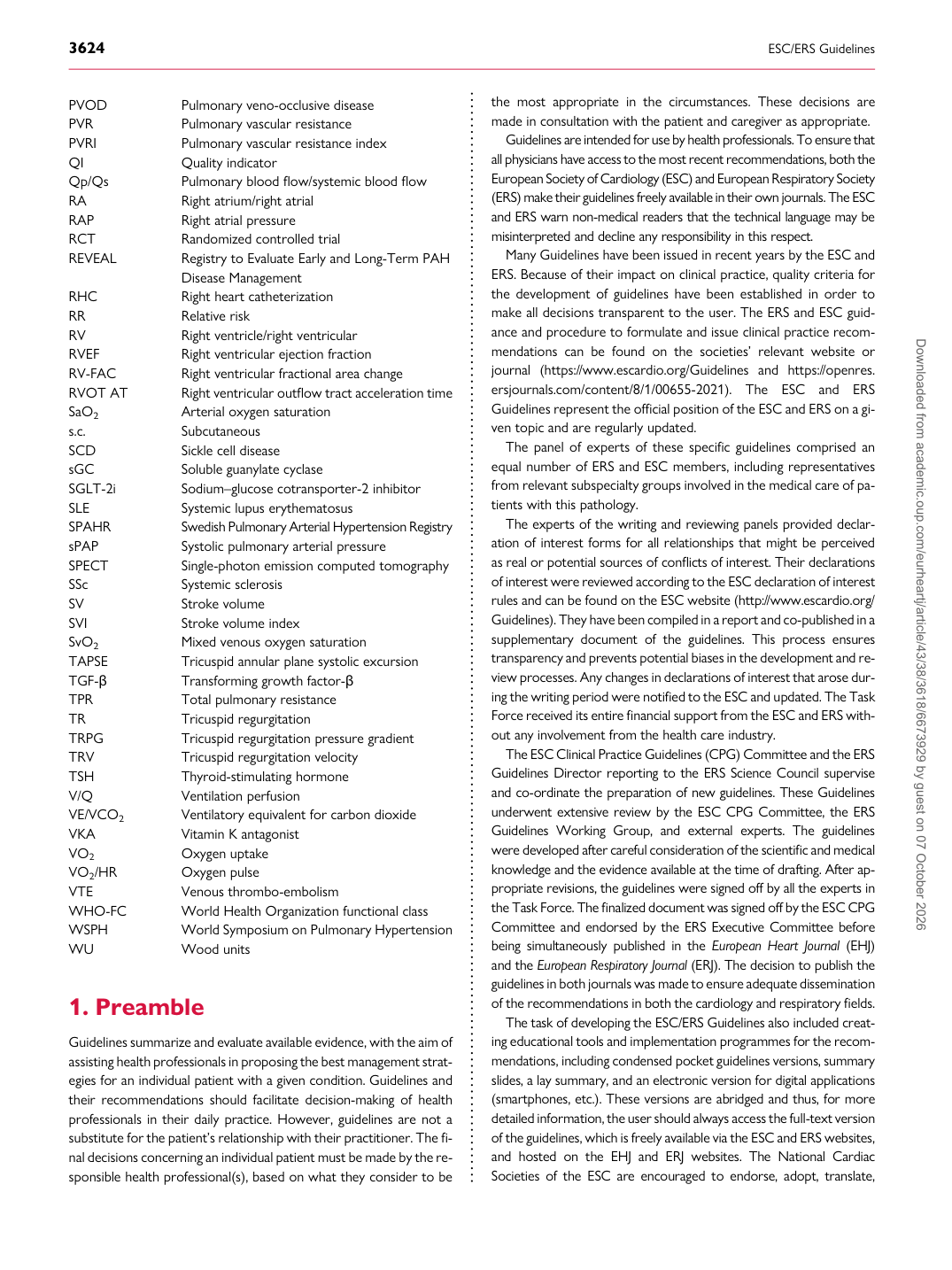
PVOD Pulmonary veno-occlusive disease PVR Pulmonary vascular resistance PVRI Pulmonary vascular resistance index QI Quality indicator Qp/Qs Pulmonary blood flow/systemic blood flow RA Right atrium/right atrial RAP Right atrial pressure RCT Randomized controlled trial REVEAL Registry to Evaluate Early and Long-Term PAH Disease Management RHC Right heart catheterization RR Relative risk RV Right ventricle/right ventricular RVEF Right ventricular ejection fraction RV-FAC Right ventricular fractional area change RVOT AT Right ventricular outflow tract acceleration time SaO2 Arterial oxygen saturation s.c. Subcutaneous SCD Sickle cell disease sGC Soluble guanylate cyclase SGLT-2i Sodium–glucose cotransporter-2 inhibitor SLE Systemic lupus erythematosus SPAHR Swedish Pulmonary Arterial Hypertension Registry sPAP Systolic pulmonary arterial pressure SPECT Single-photon emission computed tomography SSc Systemic sclerosis SV Stroke volume SVI Stroke volume index SvO2 Mixed venous oxygen saturation TAPSE Tricuspid annular plane systolic excursion TGF-β Transforming growth factor-β TPR Total pulmonary resistance TR Tricuspid regurgitation TRPG Tricuspid regurgitation pressure gradient TRV Tricuspid regurgitation velocity TSH Thyroid-stimulating hormone V/Q Ventilation perfusion VE/VCO2 Ventilatory equivalent for carbon dioxide VKA Vitamin K antagonist VO2 Oxygen uptake VO2/HR Oxygen pulse VTE Venous thrombo-embolism WHO-FC World Health Organization functional class WSPH World Symposium on Pulmonary Hypertension WU Wood units

1 Preamble

Guidelines summarize and evaluate available evidence, with the aim of assisting health professionals in proposing the best management strategies for an individual patient with a given condition. Guidelines and their recommendations should facilitate decision-making of health professionals in their daily practice. However, guidelines are not a substitute for the patient’s relationship with their practitioner. The final decisions concerning an individual patient must be made by the responsible health professional(s), based on what they consider to be the most appropriate in the circumstances. These decisions are made in consultation with the patient and caregiver as appropriate.

Guidelines are intended for use by health professionals. To ensure that all physicians have access to the most recent recommendations, both the European Society of Cardiology (ESC) and European Respiratory Society (ERS) make their guidelines freely available in their own journals. The ESC and ERS warn non-medical readers that the technical language may be misinterpreted and decline any responsibility in this respect. Many Guidelines have been issued in recent years by the ESC and ERS. Because of their impact on clinical practice, quality criteria for the development of guidelines have been established in order to make all decisions transparent to the user. The ERS and ESC guidance and procedure to formulate and issue clinical practice recommendations can be found on the societies’ relevant website or journal (https://www.escardio.org/Guidelines and https://openres. ersjournals.com/content/8/1/00655-2021). The ESC and ERS Guidelines represent the official position of the ESC and ERS on a given topic and are regularly updated. The panel of experts of these specific guidelines comprised an equal number of ERS and ESC members, including representatives from relevant subspecialty groups involved in the medical care of patients with this pathology. The experts of the writing and reviewing panels provided declaration of interest forms for all relationships that might be perceived as real or potential sources of conflicts of interest. Their declarations of interest were reviewed according to the ESC declaration of interest rules and can be found on the ESC website (http://www.escardio.org/ Guidelines). They have been compiled in a report and co-published in a supplementary document of the guidelines. This process ensures transparency and prevents potential biases in the development and review processes. Any changes in declarations of interest that arose during the writing period were notified to the ESC and updated. The Task Force received its entire financial support from the ESC and ERS without any involvement from the health care industry. The ESC Clinical Practice Guidelines (CPG) Committee and the ERS Guidelines Director reporting to the ERS Science Council supervise and co-ordinate the preparation of new guidelines. These Guidelines underwent extensive review by the ESC CPG Committee, the ERS Guidelines Working Group, and external experts. The guidelines were developed after careful consideration of the scientific and medical knowledge and the evidence available at the time of drafting. After appropriate revisions, the guidelines were signed off by all the experts in the Task Force. The finalized document was signed off by the ESC CPG Committee and endorsed by the ERS Executive Committee before being simultaneously published in the European Heart Journal (EHJ) and the European Respiratory Journal (ERJ). The decision to publish the guidelines in both journals was made to ensure adequate dissemination of the recommendations in both the cardiology and respiratory fields. The task of developing the ESC/ERS Guidelines also included creating educational tools and implementation programmes for the recommendations, including condensed pocket guidelines versions, summary slides, a lay summary, and an electronic version for digital applications (smartphones, etc.). These versions are abridged and thus, for more detailed information, the user should always access the full-text version of the guidelines, which is freely available via the ESC and ERS websites, and hosted on the EHJ and ERJ websites. The National Cardiac Societies of the ESC are encouraged to endorse, adopt, translate, Downloaded from academic.oup.com/eurheartj/article/43/38/3618/6673929 by guest on 07 October 2026