p.69 抽出テキスト
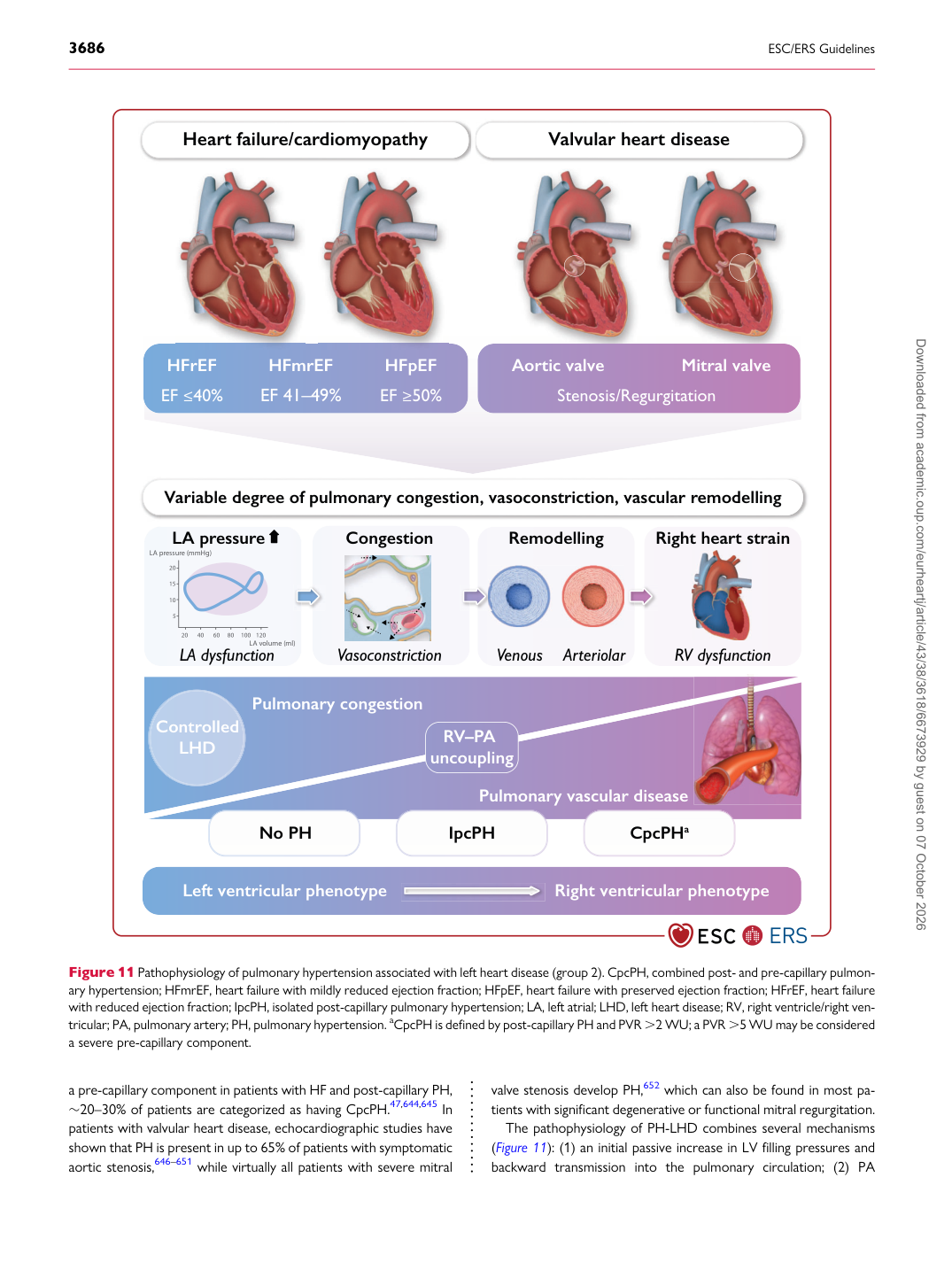
a pre-capillary component in patients with HF and post-capillary PH, ≏20–30% of patients are categorized as having CpcPH.47,644,645 In patients with valvular heart disease, echocardiographic studies have shown that PH is present in up to 65% of patients with symptomatic aortic stenosis,646–651 while virtually all patients with severe mitral valve stenosis develop PH,652 which can also be found in most patients with significant degenerative or functional mitral regurgitation.

The pathophysiology of PH-LHD combines several mechanisms (Figure 11): (1) an initial passive increase in LV filling pressures and backward transmission into the pulmonary circulation; (2) PA

Variable degree of pulmonary congestion, vasoconstriction, vascular remodelling

Left ventricular phenotype Right ventricular phenotype

Pulmonary vascular disease

Pulmonary congestion

No PH IpcPH CpcPHa

HFrEF Aortic valve HFmrEF

LA pressure Remodelling Right heart strain Congestion

HFpEF Mitral valve

EF ≤40% Stenosis/Regurgitation EF 41–49% EF ≥50%

Heart failure/cardiomyopathy Valvular heart disease

Controlled

LHD

LA dysfunction Vasoconstriction Arteriolar RV dysfunction Venous

RV–PA uncoupling

LA pressure (mmHg)

LA volume (ml)

20 15

5 10

20 40 60 80 100 120

Figure 11 Pathophysiology of pulmonary hypertension associated with left heart disease (group 2). CpcPH, combined post- and pre-capillary pulmonary hypertension; HFmrEF, heart failure with mildly reduced ejection fraction; HFpEF, heart failure with preserved ejection fraction; HFrEF, heart failure with reduced ejection fraction; IpcPH, isolated post-capillary pulmonary hypertension; LA, left atrial; LHD, left heart disease; RV, right ventricle/right ventricular; PA, pulmonary artery; PH, pulmonary hypertension. aCpcPH is defined by post-capillary PH and PVR .2 WU; a PVR .5 WU may be considered a severe pre-capillary component. Downloaded from academic.oup.com/eurheartj/article/43/38/3618/6673929 by guest on 07 October 2026