p.65 抽出テキスト
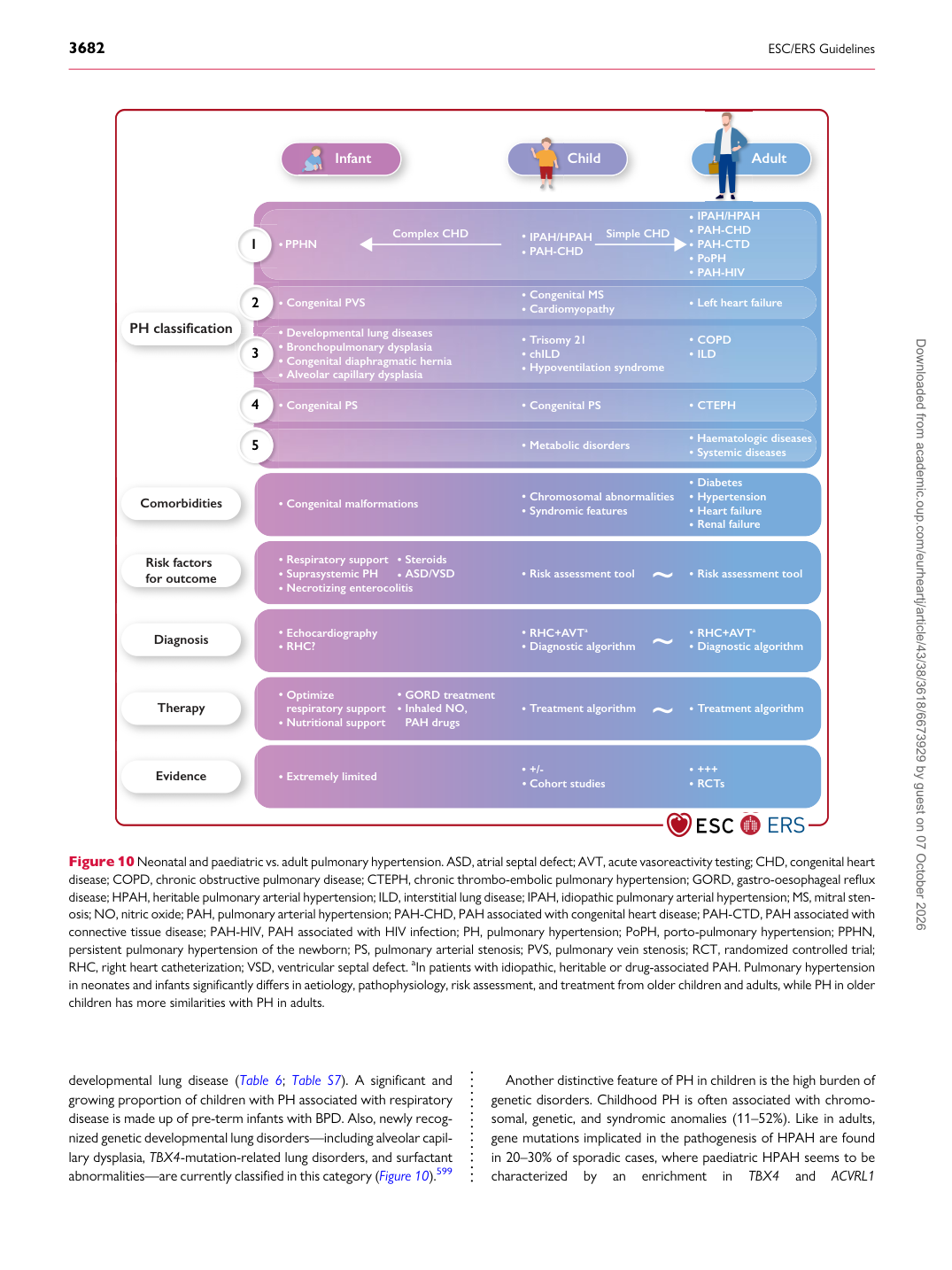
developmental lung disease (Table 6; Table S7). A significant and growing proportion of children with PH associated with respiratory disease is made up of pre-term infants with BPD. Also, newly recognized genetic developmental lung disorders—including alveolar capillary dysplasia, TBX4-mutation-related lung disorders, and surfactant abnormalities—are currently classified in this category (Figure 10).599 Another distinctive feature of PH in children is the high burden of genetic disorders. Childhood PH is often associated with chromosomal, genetic, and syndromic anomalies (11–52%). Like in adults, gene mutations implicated in the pathogenesis of HPAH are found in 20–30% of sporadic cases, where paediatric HPAH seems to be characterized by an enrichment in TBX4 and ACVRL1

Comorbidities

Risk factors for outcome Risk assessment tool Risk assessment tool

Therapy Treatment algorithm Treatment algorithm

Evidence Diabetes Hypertension Heart failure Renal failure

Chromosomal abnormalities Syndromic features

+/- Cohort studies +++ RCTs

Diagnosis RHC+AVTa

Diagnostic algorithm RHC+AVTa

Diagnostic algorithm

~ ~ ~

Child Adult

A

Infant

PPHN IPAH/HPAH PAH-CHD PAH-CTD PoPH PAH-HIV

IPAH/HPAH PAH-CHD

1 Congenital PVS Left heart failure Congenital MS Cardiomyopathy

2

Metabolic disorders Haematologic diseases Systemic diseases

5 Developmental lung diseases Bronchopulmonary dysplasia Congenital diaphragmatic hernia Alveolar capillary dysplasia Trisomy 21 chILD Hypoventilation syndrome COPD ILD

3 Congenital PS Congenital PS CTEPH

4

Congenital malformations

Optimize respiratory support Nutritional support GORD treatment Inhaled NO, PAH drugs

Respiratory support Suprasystemic PH Necrotizing enterocolitis

Steroids ASD/VSD

Echocardiography RHC?

Extremely limited Simple CHD Complex CHD

PH classification

Figure 10 Neonatal and paediatric vs. adult pulmonary hypertension. ASD, atrial septal defect; AVT, acute vasoreactivity testing; CHD, congenital heart disease; COPD, chronic obstructive pulmonary disease; CTEPH, chronic thrombo-embolic pulmonary hypertension; GORD, gastro-oesophageal reflux disease; HPAH, heritable pulmonary arterial hypertension; ILD, interstitial lung disease; IPAH, idiopathic pulmonary arterial hypertension; MS, mitral stenosis; NO, nitric oxide; PAH, pulmonary arterial hypertension; PAH-CHD, PAH associated with congenital heart disease; PAH-CTD, PAH associated with connective tissue disease; PAH-HIV, PAH associated with HIV infection; PH, pulmonary hypertension; PoPH, porto-pulmonary hypertension; PPHN, persistent pulmonary hypertension of the newborn; PS, pulmonary arterial stenosis; PVS, pulmonary vein stenosis; RCT, randomized controlled trial; RHC, right heart catheterization; VSD, ventricular septal defect. aIn patients with idiopathic, heritable or drug-associated PAH. Pulmonary hypertension in neonates and infants significantly differs in aetiology, pathophysiology, risk assessment, and treatment from older children and adults, while PH in older children has more similarities with PH in adults. Downloaded from academic.oup.com/eurheartj/article/43/38/3618/6673929 by guest on 07 October 2026