p.41 抽出テキスト
performed as a maximal exercise test, and is safe even in patients with severe exercise limitation.259,260 Most PH centres use an incremental ramp protocol, although the test has not yet been standardized for this patient population. Robust prognostic evidence for peak VO2 and VE/VCO2 has been found in three studies, all powered for multivariable analysis.261–263 When associated with SVI, peak VO2 provided useful information to further stratify patients with PAH at intermediate risk.264 However, the added value of CPET on top of common clinical and haemodynamic variables remains largely unexplored.

6.2.5 Biochemical markers

Considerable efforts have been made to identify additional biomarkers of PVD, addressing prognosis,265–272 diagnosis, and differentiation of PH subtypes,270,273–276 as well as PAH treatment response.266 Emerging proteins related to PAH and vascular remodelling include bone morphogenetic proteins 9 and 10 and translationally controlled tumour protein.270,277,278 Proteome-wide screening in IPAH and HPAH identified a multimarker panel with prognostic information in addition to the REVEAL risk score.271 Another study found that early development of SSc-associated PAH (PAH-SSc) was predicted by high circulating levels of C-X-C motif chemokine 4 in patients with SSc.276 However, none of these biomarkers have been introduced in clinical practice. Thus, BNP and NT-proBNP remain the only biomarkers routinely used in clinical practice at PH centres, correlating with myocardial stress and providing prognostic information.279 Brain natriuretic peptide and NT-proBNP are not specific for PH, as they can be elevated in other forms of heart disease, exhibiting great variability. The previously proposed cut-off levels of BNP (,50, 50–300, and .300 ng/L) and NT-proBNP (,300, 300–1400, and .1400 ng/L) for low, intermediate, and high risk, respectively, in the ESC/ERS risk-assessment model at baseline and during follow-up are prognostic for long-term outcomes and can be used to predict response to treatment.266 Refined cut-off values for BNP (,50, 50–199, 200– 800, and .800 ng/L) and NT-pro-BNP (,300, 300–649, 650– 1100, and .1100 ng/L) for low, intermediate–low, intermediate– high, and high risk, respectively, have recently been introduced as part of a four-strata risk-assessment strategy (see Section 6.2.7).280

6.2.6 Patient-reported outcome measures

A patient-reported outcome measure (PROM) is a term for health outcomes that are ‘self-reported’ by the patient. It is the patient’s experience of living with PH and its impact on them and their caregivers, including symptomatic, intellectual, psychosocial, spiritual, and goal-orientated dimensions of the disease and its treatment. Despite treatment advances improving survival, patients with PAH present with a range of non-specific yet debilitating symptoms, which affect health-related quality of life (HR-QoL).281,282 Patient-reported outcome measures remain an underused outcome measure. Tools validated in patients with PAH should be used to assess HR-QoL282,283 in individual patients. There has been a reliance on generic PROMs, which have been studied in patients with PAH but may lack sensitivity to detect changes in PAH.284,285 To address this, a number of PH-specific HR-QoL instruments have been developed and validated (e.g. Cambridge Pulmonary Hypertension Outcome Review [CAMPHOR],286 emPHasis-10,282,287 Living with Pulmonary Hypertension,288 and Pulmonary Arterial Hypertension-Symptoms and Impact [PAH-SYMPACT]).289 These disease-specific PROMs track

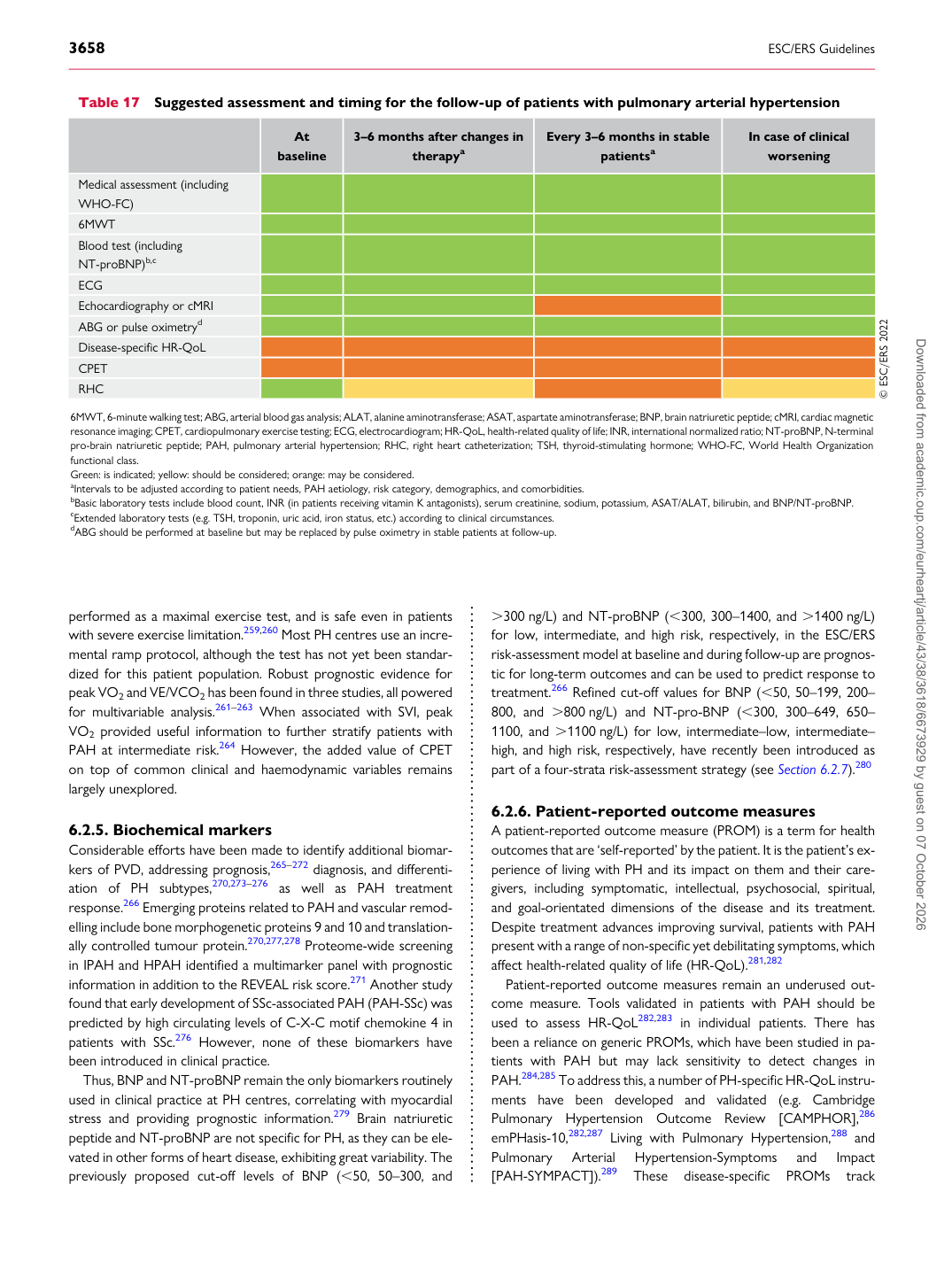
Table 17 Suggested assessment and timing for the follow-up of patients with pulmonary arterial hypertension

At baseline 3–6 months after changes in

therapya Every 3–6 months in stable

patientsa In case of clinical

worsening

Medical assessment (including WHO-FC) 6MWT Blood test (including NT-proBNP)b,c ECG Echocardiography or cMRI ABG or pulse oximetryd Disease-specific HR-QoL CPET RHC © ESC/ERS 2022 6MWT, 6-minute walking test; ABG, arterial blood gas analysis; ALAT, alanine aminotransferase; ASAT, aspartate aminotransferase; BNP, brain natriuretic peptide; cMRI, cardiac magnetic resonance imaging; CPET, cardiopulmonary exercise testing; ECG, electrocardiogram; HR-QoL, health-related quality of life; INR, international normalized ratio; NT-proBNP, N-terminal pro-brain natriuretic peptide; PAH, pulmonary arterial hypertension; RHC, right heart catheterization; TSH, thyroid-stimulating hormone; WHO-FC, World Health Organization functional class. Green: is indicated; yellow: should be considered; orange: may be considered. aIntervals to be adjusted according to patient needs, PAH aetiology, risk category, demographics, and comorbidities. bBasic laboratory tests include blood count, INR (in patients receiving vitamin K antagonists), serum creatinine, sodium, potassium, ASAT/ALAT, bilirubin, and BNP/NT-proBNP. cExtended laboratory tests (e.g. TSH, troponin, uric acid, iron status, etc.) according to clinical circumstances. dABG should be performed at baseline but may be replaced by pulse oximetry in stable patients at follow-up. Downloaded from academic.oup.com/eurheartj/article/43/38/3618/6673929 by guest on 07 October 2026