p.40 抽出テキスト
6.2.4 Exercise capacity

The 6-minute walking test (6MWT) is the most widely used measure of exercise capacity in PH centres. The 6MWT is easy to perform, inexpensive, and widely accepted by patients, health professionals, and medicines agencies as an important and validated variable in PH. As with all PH assessments, 6MWT results must always be interpreted in the clinical context. The 6MWD is influenced by factors such as sex, age, height, weight, comorbidities, need for oxygen, learning curve, and motivation. Test results are usually given in absolute distance (metres) rather than the percentage of predicted values. Change in 6MWD is one of the most commonly used parameters in PAH clinical trials as a primary endpoint, key secondary endpoint, or component of clinical worsening.251 A recent investigation showed that the best absolute-threshold values for 1 year mortality and 1 year survival, respectively, were 165 m and 440 m, respectively.252 Improvements in 6MWD have had less predictive value than deterioration on key clinical outcomes (mortality and survival).250,252,253 These results are consistent with observations from clinical trials and registries;254,255 however, there is no single threshold that would apply to all patients.256 Some studies have also suggested that adding SaO2 measured by pulse oximetry and heart rate responses may improve prognostic relevance.246,257 Hypoxaemia observed during the 6MWT is associated with worse survival, but these findings still await confirmation in large multicentre studies.

The incremental shuttle walking test (ISWT) is an alternative maximal test for assessing patients with PAH. The ISWT has a potential advantage over the 6MWT in that it does not have a ceiling effect; furthermore, it keeps the simplicity of a simple-to-perform field test, in contrast to CPET. However, the ISWT experience in PAH is currently limited.258 Cardiopulmonary exercise testing is a non-invasive method for assessing functional capacity and exercise limitation. It is usually

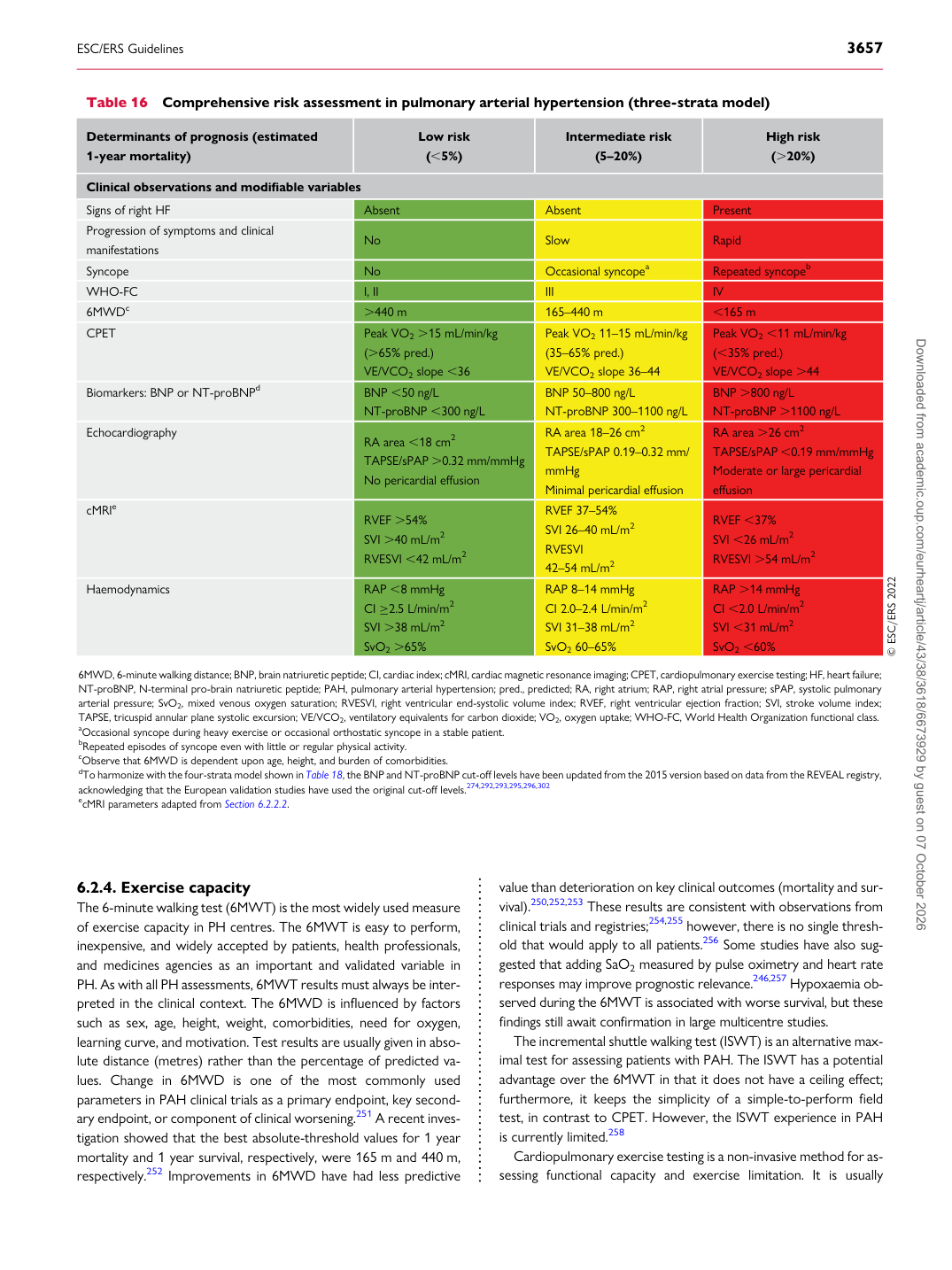
Table 16 Comprehensive risk assessment in pulmonary arterial hypertension (three-strata model)

Determinants of prognosis (estimated 1-year mortality) Low risk

(,5%) Intermediate risk

(5–20%) High risk

(.20%)

Clinical observations and modifiable variables Signs of right HF Absent Absent Present Progression of symptoms and clinical manifestations No Slow Rapid Syncope No Occasional syncopea Repeated syncopeb WHO-FC I, II III IV 6MWDc .440 m 165–440 m ,165 m CPET Peak VO2 .15 mL/min/kg (.65% pred.)

VE/VCO2 slope ,36 Peak VO2 11–15 mL/min/kg (35–65% pred.)

VE/VCO2 slope 36–44 Peak VO2 ,11 mL/min/kg (,35% pred.)

VE/VCO2 slope .44

Biomarkers: BNP or NT-proBNPd BNP ,50 ng/L

NT-proBNP ,300 ng/L BNP 50–800 ng/L

NT-proBNP 300–1100 ng/L BNP .800 ng/L

NT-proBNP .1100 ng/L

Echocardiography RA area ,18 cm2

TAPSE/sPAP .0.32 mm/mmHg No pericardial effusion RA area 18–26 cm2

TAPSE/sPAP 0.19–0.32 mm/ mmHg Minimal pericardial effusion RA area .26 cm2

TAPSE/sPAP ,0.19 mm/mmHg Moderate or large pericardial effusion

cMRIe RVEF .54% SVI .40 mL/m2

RVESVI ,42 mL/m2 RVEF 37–54% SVI 26–40 mL/m2

RVESVI 42–54 mL/m2 RVEF ,37% SVI ,26 mL/m2

RVESVI .54 mL/m2

Haemodynamics RAP ,8 mmHg

CI ≥2.5 L/min/m2 SVI .38 mL/m2 SvO2 .65% RAP 8–14 mmHg

CI 2.0–2.4 L/min/m2 SVI 31–38 mL/m2 SvO2 60–65% RAP .14 mmHg

CI ,2.0 L/min/m2 SVI ,31 mL/m2 SvO2 ,60% © ESC/ERS 2022

6MWD, 6-minute walking distance; BNP, brain natriuretic peptide; CI, cardiac index; cMRI, cardiac magnetic resonance imaging; CPET, cardiopulmonary exercise testing; HF, heart failure; NT-proBNP, N-terminal pro-brain natriuretic peptide; PAH, pulmonary arterial hypertension; pred., predicted; RA, right atrium; RAP, right atrial pressure; sPAP, systolic pulmonary arterial pressure; SvO2, mixed venous oxygen saturation; RVESVI, right ventricular end-systolic volume index; RVEF, right ventricular ejection fraction; SVI, stroke volume index; TAPSE, tricuspid annular plane systolic excursion; VE/VCO2, ventilatory equivalents for carbon dioxide; VO2, oxygen uptake; WHO-FC, World Health Organization functional class. aOccasional syncope during heavy exercise or occasional orthostatic syncope in a stable patient. bRepeated episodes of syncope even with little or regular physical activity. cObserve that 6MWD is dependent upon age, height, and burden of comorbidities. dTo harmonize with the four-strata model shown in Table 18, the BNP and NT-proBNP cut-off levels have been updated from the 2015 version based on data from the REVEAL registry, acknowledging that the European validation studies have used the original cut-off levels.274,292,293,295,296,302 ecMRI parameters adapted from Section 6.2.2.2. Downloaded from academic.oup.com/eurheartj/article/43/38/3618/6673929 by guest on 07 October 2026