p.38 抽出テキスト
6 Pulmonary arterial

hypertension (group 1)

6.1 Clinical characteristics

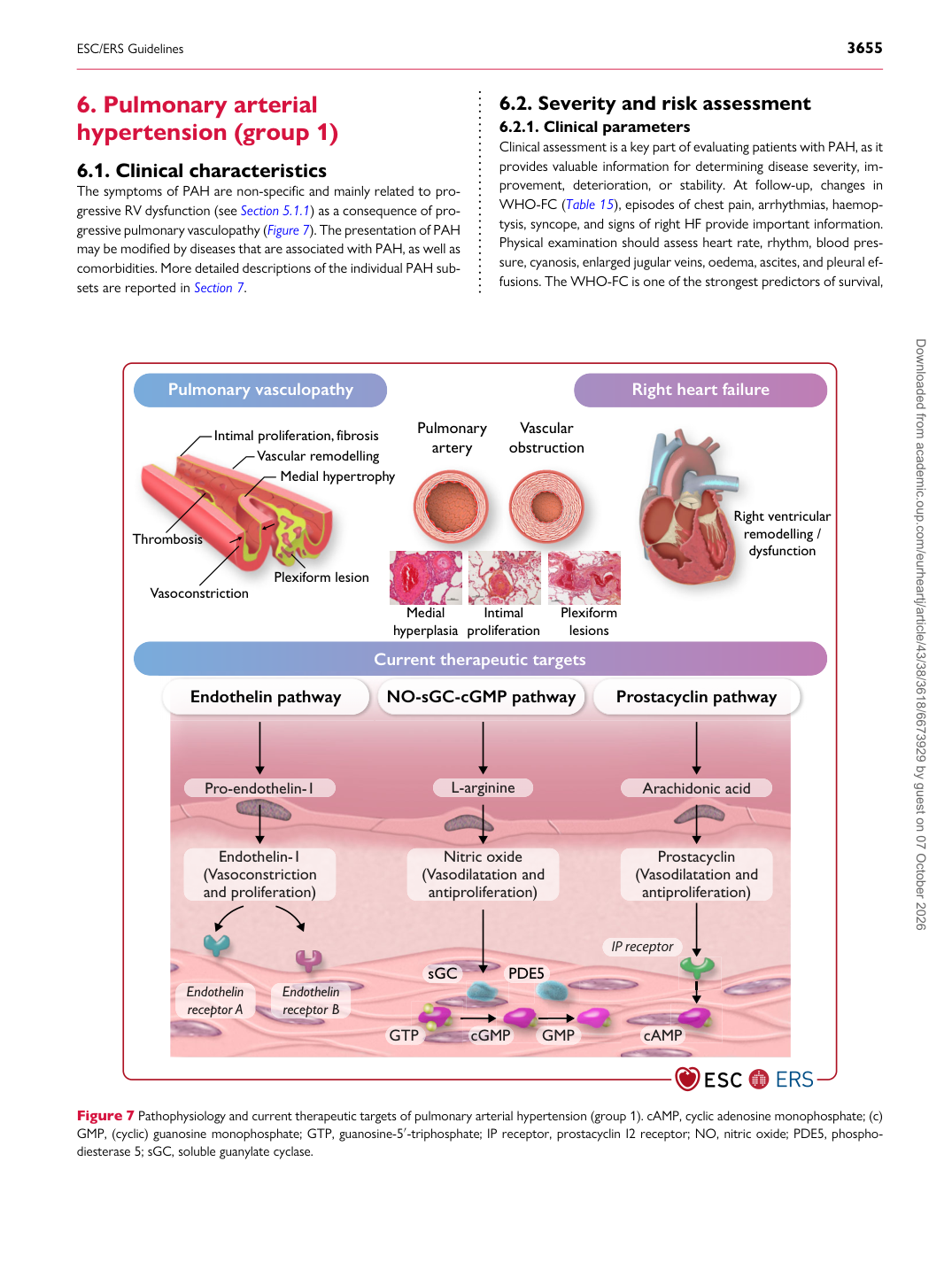
The symptoms of PAH are non-specific and mainly related to progressive RV dysfunction (see Section 5.1.1) as a consequence of progressive pulmonary vasculopathy (Figure 7). The presentation of PAH may be modified by diseases that are associated with PAH, as well as comorbidities. More detailed descriptions of the individual PAH subsets are reported in Section 7. 6.2 Severity and risk assessment

6.2.1. Clinical parameters Clinical assessment is a key part of evaluating patients with PAH, as it provides valuable information for determining disease severity, improvement, deterioration, or stability. At follow-up, changes in WHO-FC (Table 15), episodes of chest pain, arrhythmias, haemoptysis, syncope, and signs of right HF provide important information. Physical examination should assess heart rate, rhythm, blood pressure, cyanosis, enlarged jugular veins, oedema, ascites, and pleural effusions. The WHO-FC is one of the strongest predictors of survival,

Intimal proliferation, fibrosis

Pulmonary vasculopathy Right heart failure

Medial hypertrophy Vascular remodelling

Plexiform lesion

Thrombosis

Vasoconstriction Pulmonary

artery Vascular obstruction

Right ventricular

remodelling / dysfunction

Current therapeutic targets

Medial hyperplasia Intimal proliferation Plexiform

lesions

NO-sGC-cGMP pathway Endothelin pathway Prostacyclin pathway

L-arginine

Nitric oxide (Vasodilatation and antiproliferation)

sGC PDE5

GTP cGMP GMP Arachidonic acid

Prostacyclin (Vasodilatation and antiproliferation)

cAMP

IP receptor

Pro-endothelin-1

Endothelin-1 (Vasoconstriction and proliferation)

Endothelin receptor A Endothelin receptor B

P P

M P G MP

Figure 7 Pathophysiology and current therapeutic targets of pulmonary arterial hypertension (group 1). cAMP, cyclic adenosine monophosphate; (c) GMP, (cyclic) guanosine monophosphate; GTP, guanosine-5′-triphosphate; IP receptor, prostacyclin I2 receptor; NO, nitric oxide; PDE5, phosphodiesterase 5; sGC, soluble guanylate cyclase. Downloaded from academic.oup.com/eurheartj/article/43/38/3618/6673929 by guest on 07 October 2026