p.22 抽出テキスト
1%

1% Global population

Rare

Pulmonary arterial hypertension (PAH) PH associated with

left heart disease PH associated with

lung disease PH associated with

pulmonary artery obstructions PH with unclear and/or multifactorial

mechanisms

Very common Common Rare Rare

Medical therapy

Idiopathic/heritable Associated conditions CpcPH IpcPH Non-severe PH Severe PH CTEPH Other pulmonary obstructions Haematological disorders Systemic disorders

PAH drugs CCB in responders Potentially: PAH drugs (trials) Lung transplantation

IpcPH: Treatment of LHDa

CpcPH: Treatment of LHDa PH-lung disease:

Optimized care of underlying lung disease Severe PH: Potentially: PAH drugs (trials) Surgical therapy:

PEA Interventional: BPA Medical therapy: PH drugs Optimized treatment of underlying disease

Pulmonary congestion in

post-capillary PH

Pulmonary vascular disease / obstruction in pre-capillary PH Mortality Hazard Ratio

mPAP (mmHg) Mortality Hazard Ratio

PVR (Wood units) Right heart

failure

Prevalence

Potentially: PAH drugs (trials) 6 5 4 3 1 2 10 20 30 40 50 60 5 4 3 1 2 0 2 3 4 5 6 0 1

CLINICAL CLASSIFICATION PULMONARY HYPERTENSION

PREVALENCE

THERAPEUTIC STRATEGIES

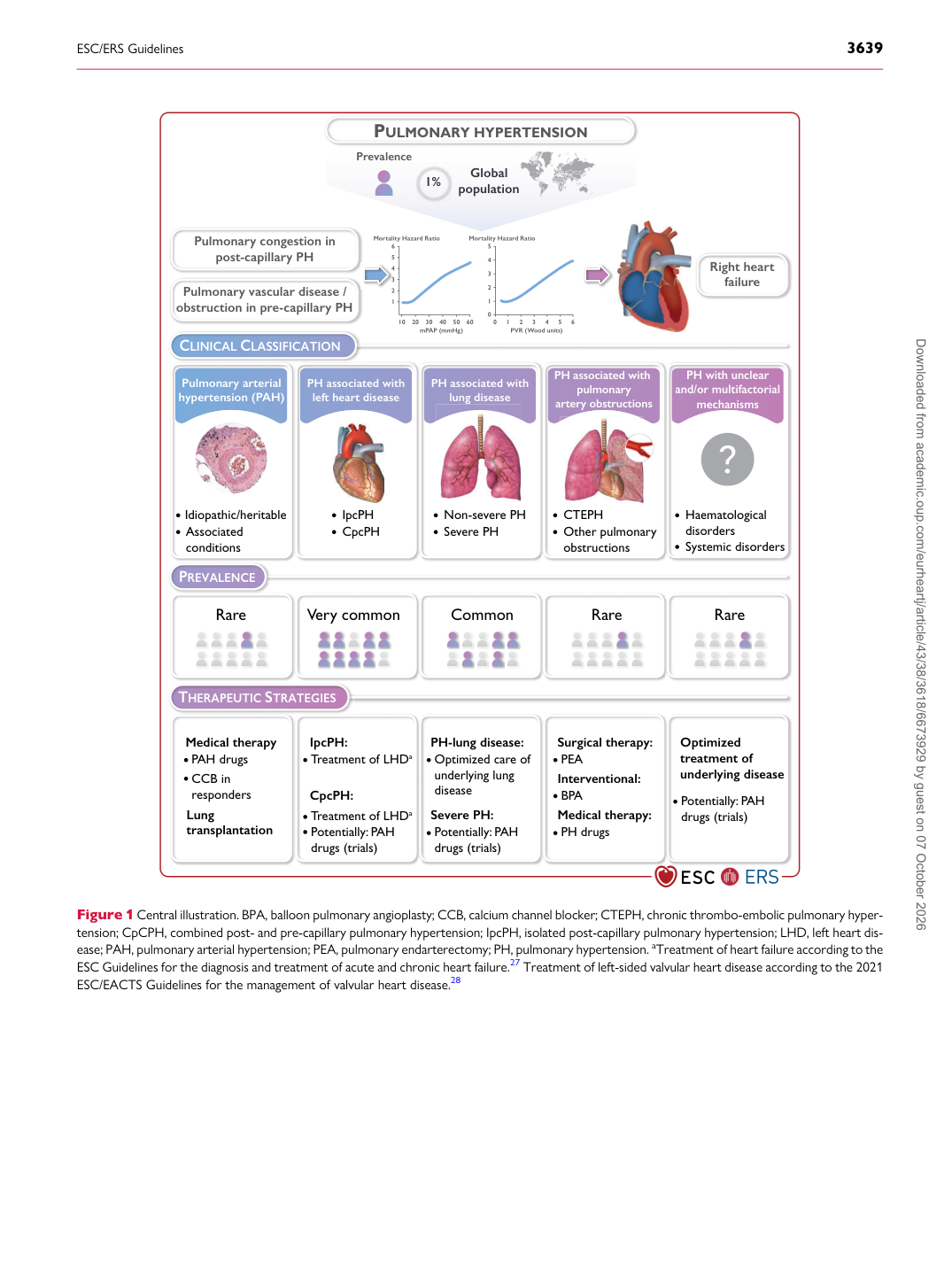
Figure 1 Central illustration. BPA, balloon pulmonary angioplasty; CCB, calcium channel blocker; CTEPH, chronic thrombo-embolic pulmonary hypertension; CpCPH, combined post- and pre-capillary pulmonary hypertension; IpcPH, isolated post-capillary pulmonary hypertension; LHD, left heart disease; PAH, pulmonary arterial hypertension; PEA, pulmonary endarterectomy; PH, pulmonary hypertension. aTreatment of heart failure according to the ESC Guidelines for the diagnosis and treatment of acute and chronic heart failure.27 Treatment of left-sided valvular heart disease according to the 2021 ESC/EACTS Guidelines for the management of valvular heart disease.28 Downloaded from academic.oup.com/eurheartj/article/43/38/3618/6673929 by guest on 07 October 2026