p.80 抽出テキスト
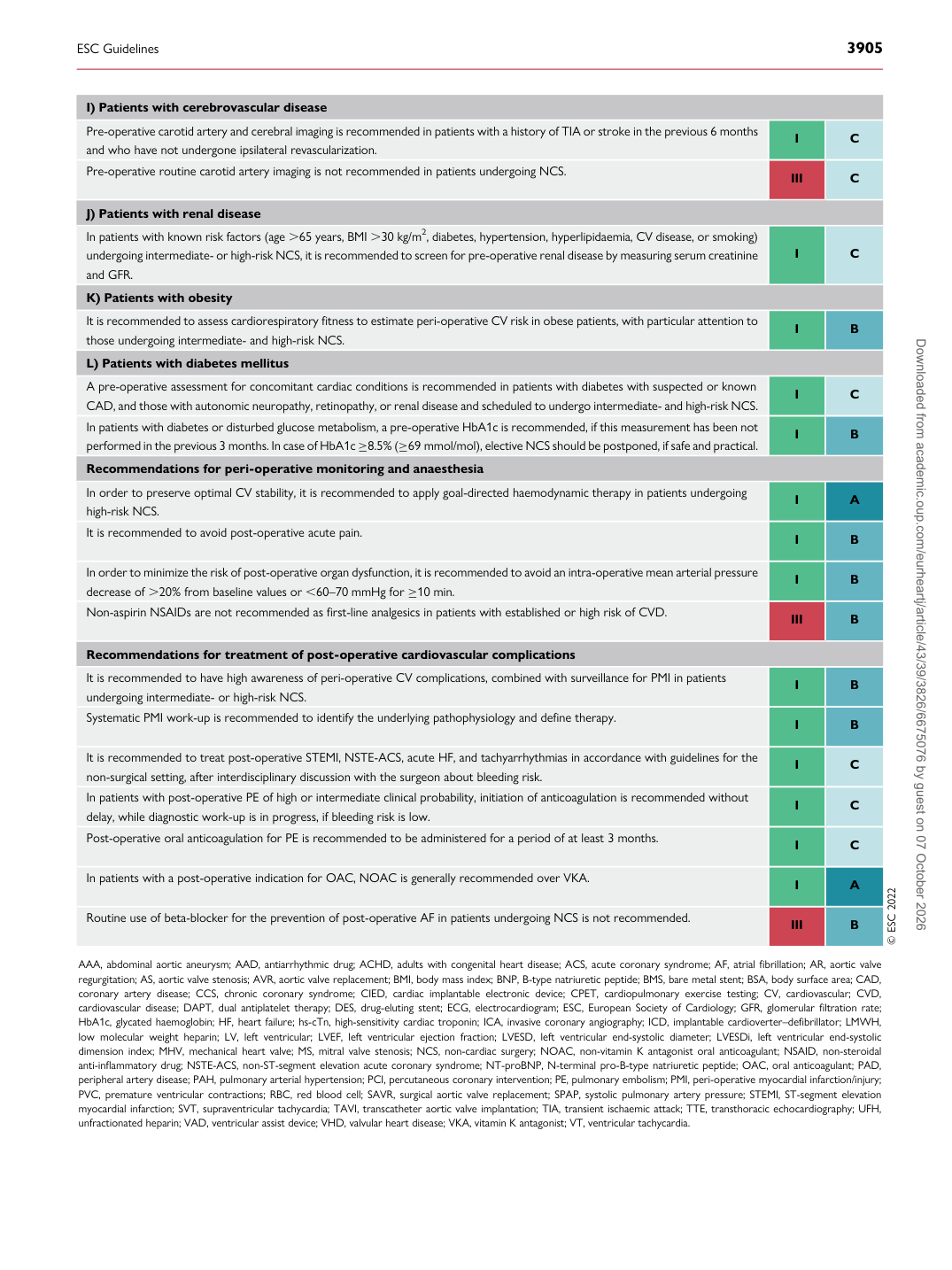
I) Patients with cerebrovascular disease Pre-operative carotid artery and cerebral imaging is recommended in patients with a history of TIA or stroke in the previous 6 months and who have not undergone ipsilateral revascularization. I C Pre-operative routine carotid artery imaging is not recommended in patients undergoing NCS. III C

J) Patients with renal disease In patients with known risk factors (age .65 years, BMI .30 kg/m2, diabetes, hypertension, hyperlipidaemia, CV disease, or smoking) undergoing intermediate- or high-risk NCS, it is recommended to screen for pre-operative renal disease by measuring serum creatinine and GFR. I C K) Patients with obesity It is recommended to assess cardiorespiratory fitness to estimate peri-operative CV risk in obese patients, with particular attention to those undergoing intermediate- and high-risk NCS. I B L) Patients with diabetes mellitus A pre-operative assessment for concomitant cardiac conditions is recommended in patients with diabetes with suspected or known CAD, and those with autonomic neuropathy, retinopathy, or renal disease and scheduled to undergo intermediate- and high-risk NCS. I C In patients with diabetes or disturbed glucose metabolism, a pre-operative HbA1c is recommended, if this measurement has been not performed in the previous 3 months. In case of HbA1c ≥8.5% (≥69 mmol/mol), elective NCS should be postponed, if safe and practical. I B Recommendations for peri-operative monitoring and anaesthesia In order to preserve optimal CV stability, it is recommended to apply goal-directed haemodynamic therapy in patients undergoing high-risk NCS. I A It is recommended to avoid post-operative acute pain. I B

In order to minimize the risk of post-operative organ dysfunction, it is recommended to avoid an intra-operative mean arterial pressure decrease of .20% from baseline values or ,60–70 mmHg for ≥10 min. I B Non-aspirin NSAIDs are not recommended as first-line analgesics in patients with established or high risk of CVD. III B

Recommendations for treatment of post-operative cardiovascular complications It is recommended to have high awareness of peri-operative CV complications, combined with surveillance for PMI in patients undergoing intermediate- or high-risk NCS. I B Systematic PMI work-up is recommended to identify the underlying pathophysiology and define therapy. I B

It is recommended to treat post-operative STEMI, NSTE-ACS, acute HF, and tachyarrhythmias in accordance with guidelines for the non-surgical setting, after interdisciplinary discussion with the surgeon about bleeding risk. I C In patients with post-operative PE of high or intermediate clinical probability, initiation of anticoagulation is recommended without delay, while diagnostic work-up is in progress, if bleeding risk is low. I C Post-operative oral anticoagulation for PE is recommended to be administered for a period of at least 3 months. I C

In patients with a post-operative indication for OAC, NOAC is generally recommended over VKA. I A

Routine use of beta-blocker for the prevention of post-operative AF in patients undergoing NCS is not recommended. III B © ESC 2022

AAA, abdominal aortic aneurysm; AAD, antiarrhythmic drug; ACHD, adults with congenital heart disease; ACS, acute coronary syndrome; AF, atrial fibrillation; AR, aortic valve regurgitation; AS, aortic valve stenosis; AVR, aortic valve replacement; BMI, body mass index; BNP, B-type natriuretic peptide; BMS, bare metal stent; BSA, body surface area; CAD, coronary artery disease; CCS, chronic coronary syndrome; CIED, cardiac implantable electronic device; CPET, cardiopulmonary exercise testing; CV, cardiovascular; CVD, cardiovascular disease; DAPT, dual antiplatelet therapy; DES, drug-eluting stent; ECG, electrocardiogram; ESC, European Society of Cardiology; GFR, glomerular filtration rate; HbA1c, glycated haemoglobin; HF, heart failure; hs-cTn, high-sensitivity cardiac troponin; ICA, invasive coronary angiography; ICD, implantable cardioverter–defibrillator; LMWH, low molecular weight heparin; LV, left ventricular; LVEF, left ventricular ejection fraction; LVESD, left ventricular end-systolic diameter; LVESDi, left ventricular end-systolic dimension index; MHV, mechanical heart valve; MS, mitral valve stenosis; NCS, non-cardiac surgery; NOAC, non-vitamin K antagonist oral anticoagulant; NSAID, non-steroidal anti-inflammatory drug; NSTE-ACS, non-ST-segment elevation acute coronary syndrome; NT-proBNP, N-terminal pro-B-type natriuretic peptide; OAC, oral anticoagulant; PAD, peripheral artery disease; PAH, pulmonary arterial hypertension; PCI, percutaneous coronary intervention; PE, pulmonary embolism; PMI, peri-operative myocardial infarction/injury; PVC, premature ventricular contractions; RBC, red blood cell; SAVR, surgical aortic valve replacement; SPAP, systolic pulmonary artery pressure; STEMI, ST-segment elevation myocardial infarction; SVT, supraventricular tachycardia; TAVI, transcatheter aortic valve implantation; TIA, transient ischaemic attack; TTE, transthoracic echocardiography; UFH, unfractionated heparin; VAD, ventricular assist device; VHD, valvular heart disease; VKA, vitamin K antagonist; VT, ventricular tachycardia.

ESC Guidelines                                                                                                                                                                                     3905

Downloaded from academic.oup.com/eurheartj/article/43/39/3826/6675076 by guest on 07 October 2026