p.73 抽出テキスト
Data for other interventions—such as statins,672,673 magnesium,674 sotalol,666 colchicine,675 or corticosteroids676—are not robust.677,678

8.6.2 Management of post-operative atrial

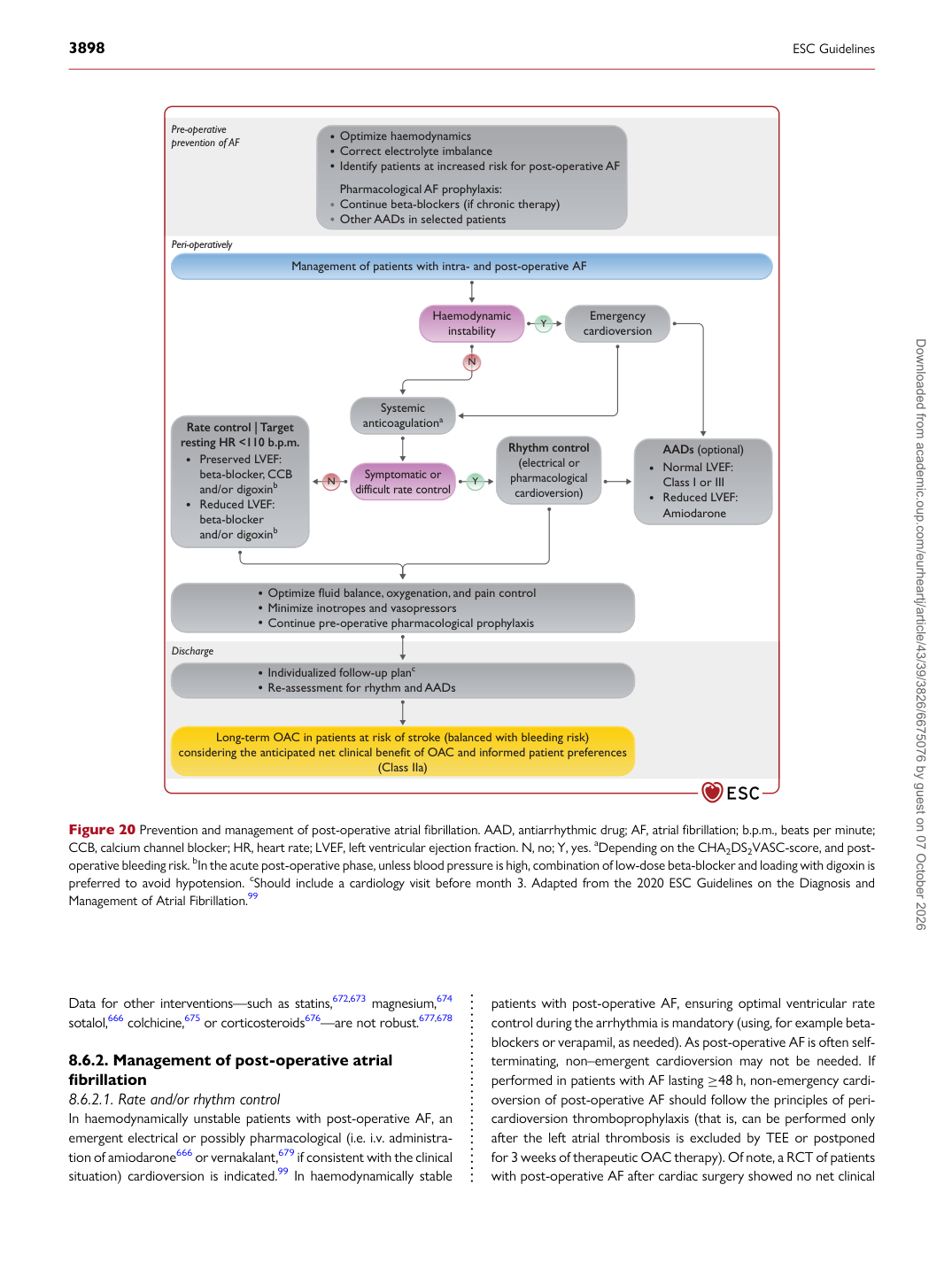
fibrillation 8.6.2.1. Rate and/or rhythm control In haemodynamically unstable patients with post-operative AF, an emergent electrical or possibly pharmacological (i.e. i.v. administration of amiodarone666 or vernakalant,679 if consistent with the clinical situation) cardioversion is indicated.99 In haemodynamically stable patients with post-operative AF, ensuring optimal ventricular rate control during the arrhythmia is mandatory (using, for example betablockers or verapamil, as needed). As post-operative AF is often selfterminating, non–emergent cardioversion may not be needed. If performed in patients with AF lasting ≥48 h, non-emergency cardioversion of post-operative AF should follow the principles of pericardioversion thromboprophylaxis (that is, can be performed only after the left atrial thrombosis is excluded by TEE or postponed for 3 weeks of therapeutic OAC therapy). Of note, a RCT of patients with post-operative AF after cardiac surgery showed no net clinical

N N Y Y

Symptomatic or difficult rate control

Systemic anticoagulationa

Haemodynamic

instability Emergency cardioversion

Rhythm control (electrical or pharmacological cardioversion)

Management of patients with intra- and post-operative AF

AADs (optional) Normal LVEF: Class I or III Reduced LVEF: Amiodarone

Rate control | Target resting HR <110 b.p.m.

Preserved LVEF: beta-blocker, CCB and/or digoxinb Reduced LVEF: beta-blocker and/or digoxinb

Pre-operative prevention of AF

Peri-operatively

Discharge Optimize fluid balance, oxygenation, and pain control Minimize inotropes and vasopressors Continue pre-operative pharmacological prophylaxis

Pharmacological AF prophylaxis: Continue beta-blockers (if chronic therapy) Other AADs in selected patients

Optimize haemodynamics Correct electrolyte imbalance Identify patients at increased risk for post-operative AF

Individualized follow-up planc Re-assessment for rhythm and AADs

Long-term OAC in patients at risk of stroke (balanced with bleeding risk) considering the anticipated net clinical benefit of OAC and informed patient preferences

(Class IIa)

Figure 20 Prevention and management of post-operative atrial fibrillation. AAD, antiarrhythmic drug; AF, atrial fibrillation; b.p.m., beats per minute; CCB, calcium channel blocker; HR, heart rate; LVEF, left ventricular ejection fraction. N, no; Y, yes. aDepending on the CHA2DS2VASC-score, and postoperative bleeding risk. bIn the acute post-operative phase, unless blood pressure is high, combination of low-dose beta-blocker and loading with digoxin is preferred to avoid hypotension. cShould include a cardiology visit before month 3. Adapted from the 2020 ESC Guidelines on the Diagnosis and Management of Atrial Fibrillation.99 Downloaded from academic.oup.com/eurheartj/article/43/39/3826/6675076 by guest on 07 October 2026