p.7 抽出テキスト
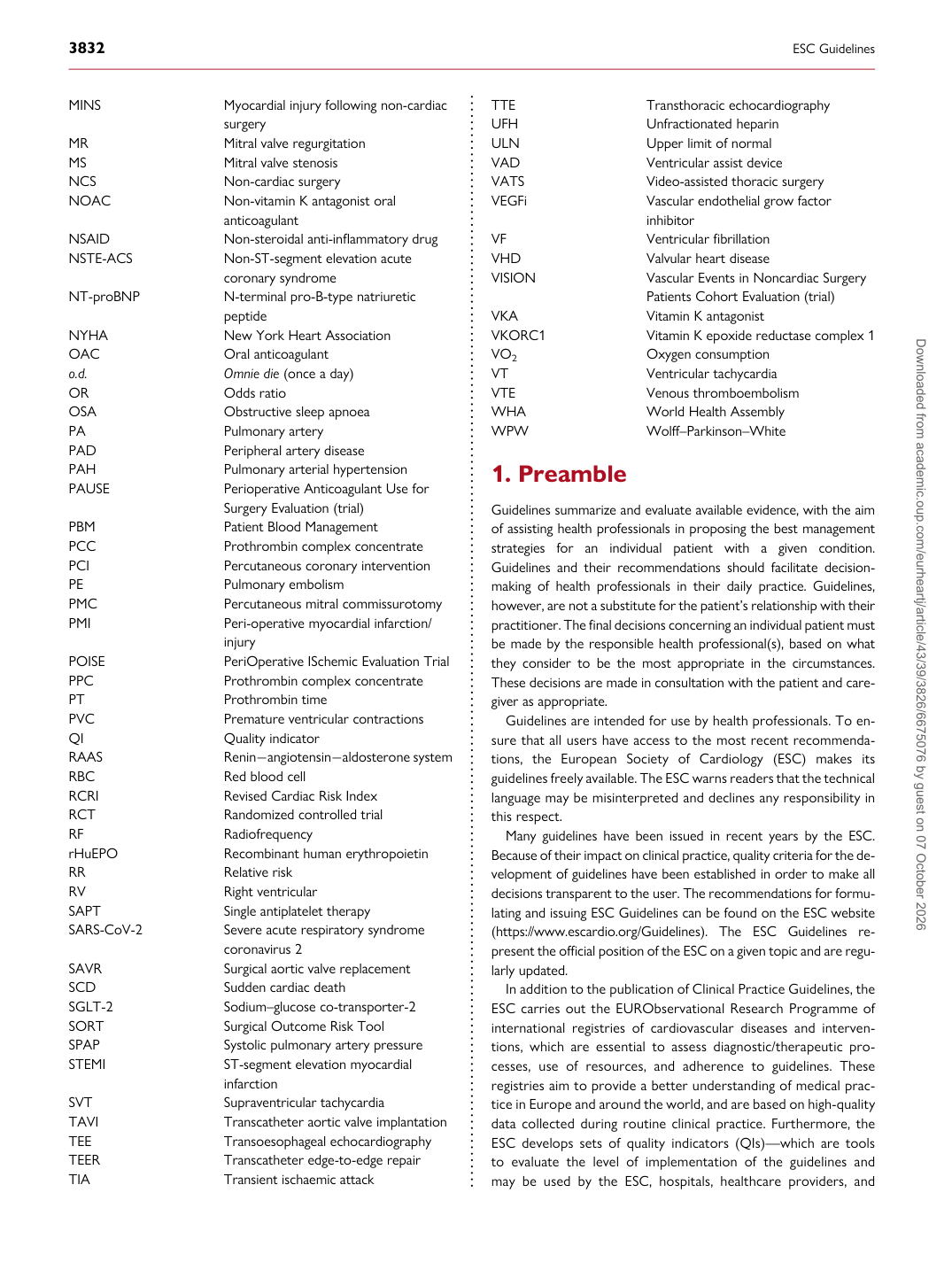
MINS Myocardial injury following non-cardiac surgery MR Mitral valve regurgitation MS Mitral valve stenosis NCS Non-cardiac surgery NOAC Non-vitamin K antagonist oral anticoagulant NSAID Non-steroidal anti-inflammatory drug NSTE-ACS Non-ST-segment elevation acute coronary syndrome NT-proBNP N-terminal pro-B-type natriuretic peptide NYHA New York Heart Association OAC Oral anticoagulant o.d. Omnie die (once a day) OR Odds ratio OSA Obstructive sleep apnoea PA Pulmonary artery PAD Peripheral artery disease PAH Pulmonary arterial hypertension PAUSE Perioperative Anticoagulant Use for Surgery Evaluation (trial) PBM Patient Blood Management PCC Prothrombin complex concentrate PCI Percutaneous coronary intervention PE Pulmonary embolism PMC Percutaneous mitral commissurotomy PMI Peri-operative myocardial infarction/ injury POISE PeriOperative ISchemic Evaluation Trial PPC Prothrombin complex concentrate PT Prothrombin time PVC Premature ventricular contractions QI Quality indicator RAAS Renin−angiotensin−aldosterone system RBC Red blood cell RCRI Revised Cardiac Risk Index RCT Randomized controlled trial RF Radiofrequency rHuEPO Recombinant human erythropoietin RR Relative risk RV Right ventricular SAPT Single antiplatelet therapy SARS-CoV-2 Severe acute respiratory syndrome coronavirus 2 SAVR Surgical aortic valve replacement SCD Sudden cardiac death SGLT-2 Sodium–glucose co-transporter-2 SORT Surgical Outcome Risk Tool SPAP Systolic pulmonary artery pressure STEMI ST-segment elevation myocardial infarction SVT Supraventricular tachycardia TAVI Transcatheter aortic valve implantation TEE Transoesophageal echocardiography TEER Transcatheter edge-to-edge repair TIA Transient ischaemic attack TTE Transthoracic echocardiography UFH Unfractionated heparin ULN Upper limit of normal VAD Ventricular assist device VATS Video-assisted thoracic surgery VEGFi Vascular endothelial grow factor inhibitor VF Ventricular fibrillation VHD Valvular heart disease VISION Vascular Events in Noncardiac Surgery Patients Cohort Evaluation (trial) VKA Vitamin K antagonist VKORC1 Vitamin K epoxide reductase complex 1 VO2 Oxygen consumption VT Ventricular tachycardia VTE Venous thromboembolism WHA World Health Assembly WPW Wolff–Parkinson–White

1 Preamble

Guidelines summarize and evaluate available evidence, with the aim of assisting health professionals in proposing the best management strategies for an individual patient with a given condition. Guidelines and their recommendations should facilitate decisionmaking of health professionals in their daily practice. Guidelines, however, are not a substitute for the patient’s relationship with their practitioner. The final decisions concerning an individual patient must be made by the responsible health professional(s), based on what they consider to be the most appropriate in the circumstances. These decisions are made in consultation with the patient and caregiver as appropriate. Guidelines are intended for use by health professionals. To ensure that all users have access to the most recent recommendations, the European Society of Cardiology (ESC) makes its guidelines freely available. The ESC warns readers that the technical language may be misinterpreted and declines any responsibility in this respect. Many guidelines have been issued in recent years by the ESC. Because of their impact on clinical practice, quality criteria for the development of guidelines have been established in order to make all decisions transparent to the user. The recommendations for formulating and issuing ESC Guidelines can be found on the ESC website (https://www.escardio.org/Guidelines). The ESC Guidelines represent the official position of the ESC on a given topic and are regularly updated. In addition to the publication of Clinical Practice Guidelines, the ESC carries out the EURObservational Research Programme of international registries of cardiovascular diseases and interventions, which are essential to assess diagnostic/therapeutic processes, use of resources, and adherence to guidelines. These registries aim to provide a better understanding of medical practice in Europe and around the world, and are based on high-quality data collected during routine clinical practice. Furthermore, the ESC develops sets of quality indicators (QIs)—which are tools to evaluate the level of implementation of the guidelines and may be used by the ESC, hospitals, healthcare providers, and Downloaded from academic.oup.com/eurheartj/article/43/39/3826/6675076 by guest on 07 October 2026