p.69 抽出テキスト
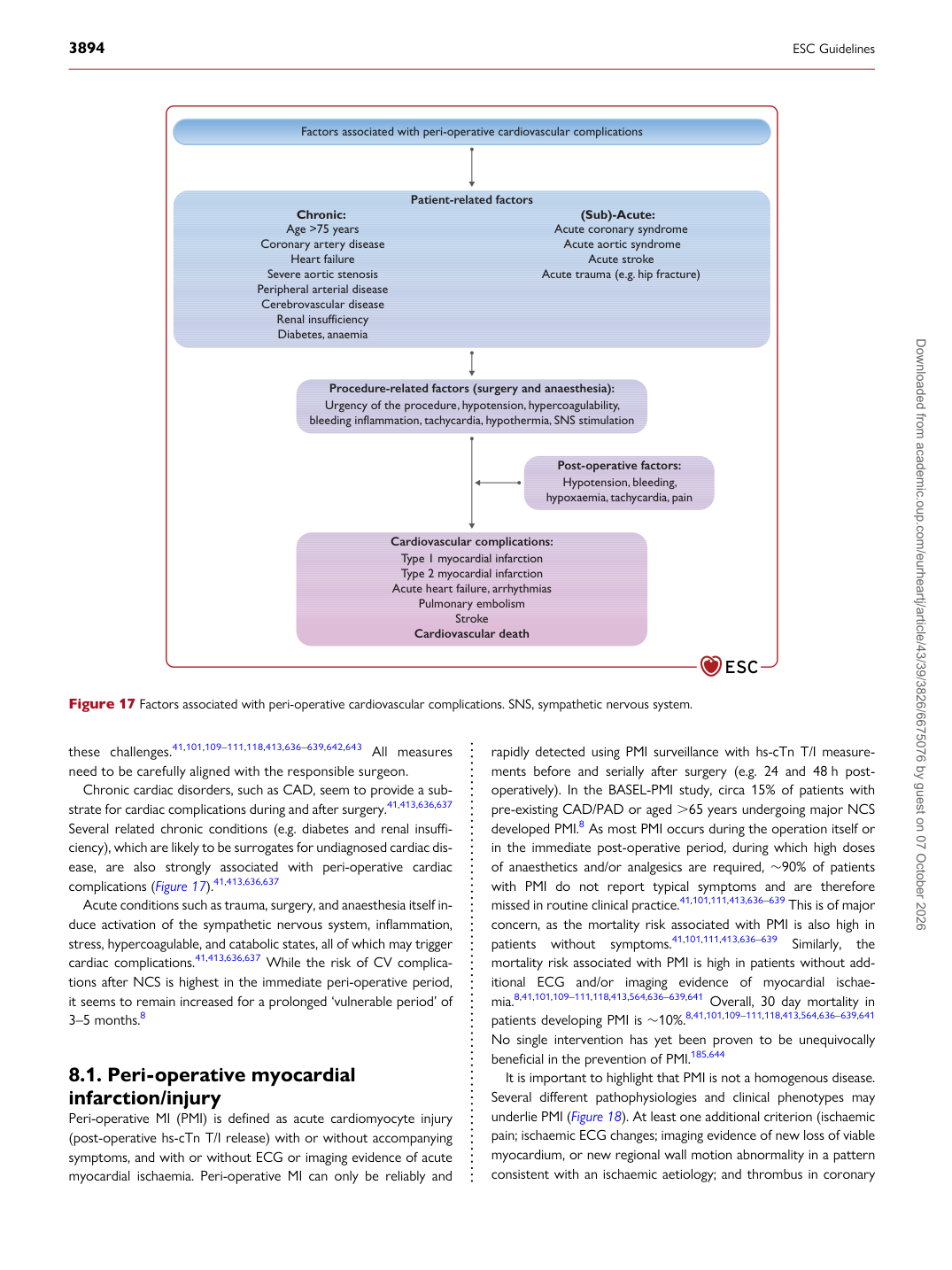
these challenges.41,101,109–111,118,413,636–639,642,643 All measures need to be carefully aligned with the responsible surgeon. Chronic cardiac disorders, such as CAD, seem to provide a substrate for cardiac complications during and after surgery.41,413,636,637 Several related chronic conditions (e.g. diabetes and renal insufficiency), which are likely to be surrogates for undiagnosed cardiac disease, are also strongly associated with peri-operative cardiac complications (Figure 17).41,413,636,637 Acute conditions such as trauma, surgery, and anaesthesia itself induce activation of the sympathetic nervous system, inflammation, stress, hypercoagulable, and catabolic states, all of which may trigger cardiac complications.41,413,636,637 While the risk of CV complications after NCS is highest in the immediate peri-operative period, it seems to remain increased for a prolonged ‘vulnerable period’ of 3–5 months.8

8.1 Peri-operative myocardial

infarction/injury Peri-operative MI (PMI) is defined as acute cardiomyocyte injury (post-operative hs-cTn T/I release) with or without accompanying symptoms, and with or without ECG or imaging evidence of acute myocardial ischaemia. Peri-operative MI can only be reliably and rapidly detected using PMI surveillance with hs-cTn T/I measurements before and serially after surgery (e.g. 24 and 48 h postoperatively). In the BASEL-PMI study, circa 15% of patients with pre-existing CAD/PAD or aged .65 years undergoing major NCS developed PMI.8 As most PMI occurs during the operation itself or in the immediate post-operative period, during which high doses of anaesthetics and/or analgesics are required, ≏90% of patients with PMI do not report typical symptoms and are therefore missed in routine clinical practice.41,101,111,413,636–639 This is of major concern, as the mortality risk associated with PMI is also high in patients without symptoms.41,101,111,413,636–639 Similarly, the mortality risk associated with PMI is high in patients without additional ECG and/or imaging evidence of myocardial ischaemia.8,41,101,109–111,118,413,564,636–639,641 Overall, 30 day mortality in patients developing PMI is ≏10%.8,41,101,109–111,118,413,564,636–639,641

No single intervention has yet been proven to be unequivocally beneficial in the prevention of PMI.185,644 It is important to highlight that PMI is not a homogenous disease. Several different pathophysiologies and clinical phenotypes may underlie PMI (Figure 18). At least one additional criterion (ischaemic pain; ischaemic ECG changes; imaging evidence of new loss of viable myocardium, or new regional wall motion abnormality in a pattern consistent with an ischaemic aetiology; and thrombus in coronary

Patient-related factors

Procedure-related factors (surgery and anaesthesia):

Factors associated with peri-operative cardiovascular complications

Urgency of the procedure, hypotension, hypercoagulability, bleeding inflammation, tachycardia, hypothermia, SNS stimulation

Post-operative factors: Hypotension, bleeding, hypoxaemia, tachycardia, pain

Cardiovascular complications: Type 1 myocardial infarction Type 2 myocardial infarction Acute heart failure, arrhythmias

Pulmonary embolism Stroke Cardiovascular death

Chronic: Age >75 years Coronary artery disease Heart failure Severe aortic stenosis Peripheral arterial disease Cerebrovascular disease

Renal insufficiency Diabetes, anaemia (Sub)-Acute: Acute coronary syndrome

Acute aortic syndrome Acute stroke Acute trauma (e.g. hip fracture)

Figure 17 Factors associated with peri-operative cardiovascular complications. SNS, sympathetic nervous system. Downloaded from academic.oup.com/eurheartj/article/43/39/3826/6675076 by guest on 07 October 2026