p.65 抽出テキスト
intrinsic peri-operative risk of adverse cardiac events associated with surgical procedures.587,588 To date, there is no specific CV screening to be performed after COVID-19 infection in patients scheduled for NCS. The preoperative evaluation of CV risk associated with NCS in this specific subset of patients should incorporate, beyond the general risk assessment outlined in these guidelines, the severity of COVID-19 disease, history of CV complications during COVID-19 infection, and functional capacity after recovery. This information is deemed of importance to further optimize timing of surgery and the treatment of COVID-19-associated cardiovascular conditions affecting the perioperative risk of NCS.589 The optimal timing of NCS in patients with a history of COVID-19 infection is largely unknown. Generally, elective NCS should be postponed until complete recovery and optimization of coexisting comorbidities. Registry data of patients undergoing NCS after COVID-19 infection report increased risks of mortality and morbidity up to 7 weeks post-COVID diagnosis.586 Another study has reported greater risk of post-operative complications up to 8 weeks post-diagnosis.590 However, it should be noted that almost all available data come from study periods with zero to low prevalence of vaccination, and no robust data exist on patients recovering from the more recent Delta and Omicron variants. A joint statement on elective surgery and anaesthesia for patients after COVID-19 infection from the American Society of Anaesthesiologists and Anaesthesia Patient Safety Foundation591 suggests delaying elective surgery for 7 weeks after a SARS-CoV-2 infection in unvaccinated patients who are asymptomatic at the time of surgery. The clinical course of COVID-19 infection, presence and intensity of cardiopulmonary symptoms during the acute and late phases, and pre-existing comorbidities should be taken into consideration. In addition, persistence of COVID-19 symptoms—such as fatigue, shortness of breath, and chest discomfort—should be given attention, as this condition is associated with higher postoperative mortality independent of the timing of COVID-19 diagnosis.588,589 The evidence is currently insufficient to make recommendations for those who become infected after vaccination.

7 Peri-operative monitoring and

anaesthesia

7.1 Peri-operative monitoring

Despite the absence of prospective RCTs investigating the prognostic relevance of peri-operative monitoring, previous evidence clearly indicates that the routine use of monitoring improves safety of surgical procedures. Mandatory intra-operative monitoring of the CV and respiratory systems, temperature, neuromuscular transmission, and depth of anaesthesia is recommended.592,593 Routine CV monitoring includes ECG, automated non-invasive BP measurement at regular intervals, and peripheral oxygen saturation with pulse oximetry. Near-infrared spectroscopy has recently been introduced to assess regional tissue perfusion and oxygenation. In selected cases, more invasive monitoring techniques can be applied such as continuous arterial BP measurement via an arterial catheter and monitoring of cardiac output. Mean arterial pressure and heart

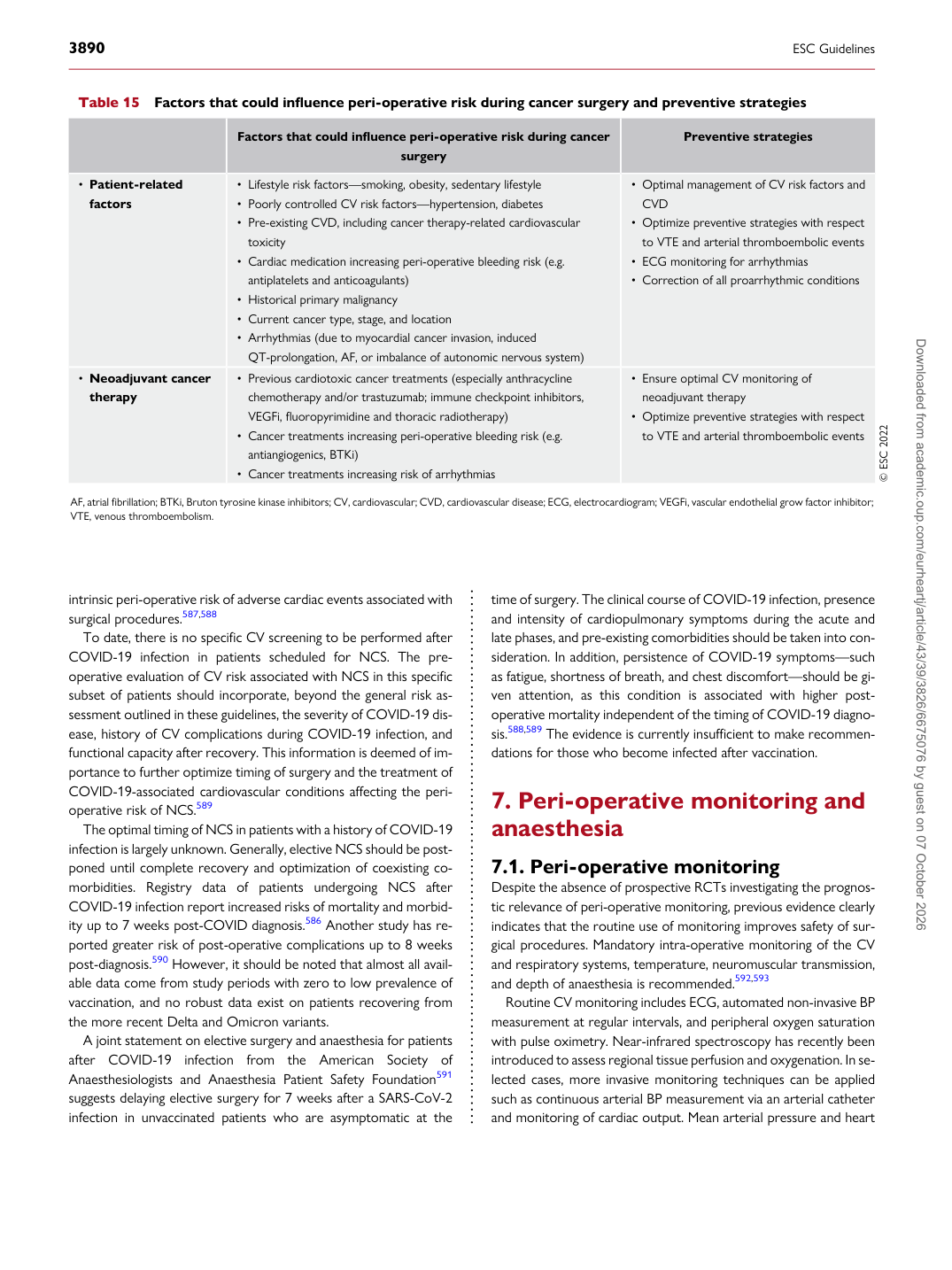
Table 15 Factors that could influence peri-operative risk during cancer surgery and preventive strategies

Factors that could influence peri-operative risk during cancer

surgery Preventive strategies

• Patient-related

factors • Lifestyle risk factors—smoking, obesity, sedentary lifestyle

• Poorly controlled CV risk factors—hypertension, diabetes • Pre-existing CVD, including cancer therapy-related cardiovascular toxicity • Cardiac medication increasing peri-operative bleeding risk (e.g. antiplatelets and anticoagulants) • Historical primary malignancy • Current cancer type, stage, and location • Arrhythmias (due to myocardial cancer invasion, induced QT-prolongation, AF, or imbalance of autonomic nervous system) • Optimal management of CV risk factors and

CVD • Optimize preventive strategies with respect to VTE and arterial thromboembolic events • ECG monitoring for arrhythmias • Correction of all proarrhythmic conditions

• Neoadjuvant cancer therapy • Previous cardiotoxic cancer treatments (especially anthracycline chemotherapy and/or trastuzumab; immune checkpoint inhibitors,

VEGFi, fluoropyrimidine and thoracic radiotherapy) • Cancer treatments increasing peri-operative bleeding risk (e.g. antiangiogenics, BTKi) • Cancer treatments increasing risk of arrhythmias • Ensure optimal CV monitoring of neoadjuvant therapy

• Optimize preventive strategies with respect

to VTE and arterial thromboembolic events © ESC 2022

AF, atrial fibrillation; BTKi, Bruton tyrosine kinase inhibitors; CV, cardiovascular; CVD, cardiovascular disease; ECG, electrocardiogram; VEGFi, vascular endothelial grow factor inhibitor; VTE, venous thromboembolism. Downloaded from academic.oup.com/eurheartj/article/43/39/3826/6675076 by guest on 07 October 2026