p.52 抽出テキスト
Aortic valve replacement has been associated with reduced in-hospital and 30 day mortality and morbidity among patients with AS undergoing intermediate- to high-risk NCS.425,426 However, the decision regarding the timing of AVR in relation to NCS should be weighted according to the baseline risk profile and the risk associated with the NCS. The choice of surgical aortic valve replacement (SAVR) vs. TAVI should follow the 2021 ESC/EACTS Guidelines for the management of valvular heart disease245 and patient’s informed preference (Figure 13). In patients with severe symptomatic AS, in whom NCS can be deferred, aortic valve intervention (SAVR or TAVI) is recommended before NCS. In patients requiring time-sensitive NCS, TAVI is a reasonable option.427 In patients with severe symptomatic AS in need of time-sensitive NCS in whom TAVI or SAVR are unfeasible, balloon aortic valvuloplasty (BAV) may be considered before NCS as a bridge to definitive aortic valve repair. Asymptomatic patients with severe AS and normal LVEF can safely undergo low- to intermediate-risk NCS, unless the NCS is associated with large volume shifts.245,428

6.3.2.2 Mitral valve stenosis

Non-cardiac surgery can be performed with a relatively low risk of complications in patients with mild MS (valve area .1.5 cm2) and in asymptomatic patients with moderate-to-severe MS (valve area ≤1.5 cm2) and systolic pulmonary artery pressure (SPAP) ,50 mmHg on echocardiography.429 As transmitral gradients are flow-sensitive, tachycardia and fluid overload can cause pulmonary oedema during NCS. In this regard, arterial vasodilators should be avoided and surveillance for peri-operative AF is of paramount importance. Management of anticoagulation for patients with high thrombotic risk is discussed in Section 5.3.2. In asymptomatic patients with moderate-to-severe MS and SPAP .50 mmHg, and in symptomatic patients, the peri-operative risk of CV events is increased.

Intermediate-risk or high-risk NCS

Low-risk NCS

Management of severe secondary mitral valve regurgitation in patients scheduled for NCS

Clinical examination + ECG + biomarkers + TTE ± TEE (Class I)

Persistent symptoms despite GDMT

Elective NCS

Optimal GDMT including

CRT if indicated

(Class I) ± Myocardial revascularizationa Optimal GDMT

(Class I)

Time-sensitive NCS

No additional procedures

Consider NCS under strict monitoring

Inoperable or at high procedural risk

TEER or surgery (repair when possible) depending on eligibility and according to the decision of the

Heart Team (Class IIa)

Y

Y Y

N

N AND AND

Multidisciplinary

consultation

NCS under strict monitoring AND

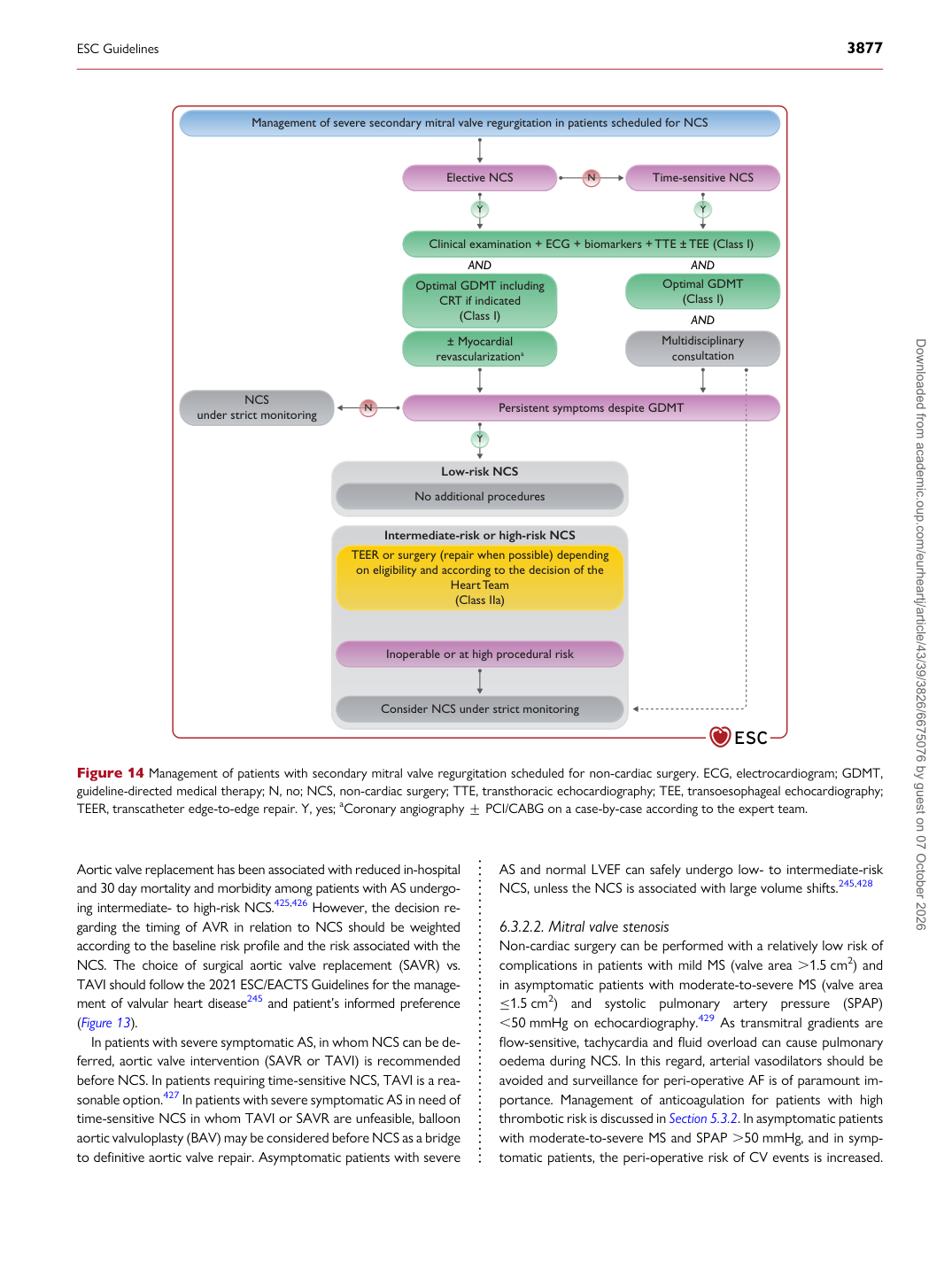
Figure 14 Management of patients with secondary mitral valve regurgitation scheduled for non-cardiac surgery. ECG, electrocardiogram; GDMT, guideline-directed medical therapy; N, no; NCS, non-cardiac surgery; TTE, transthoracic echocardiography; TEE, transoesophageal echocardiography; TEER, transcatheter edge-to-edge repair. Y, yes; aCoronary angiography +PCI/CABG on a case-by-case according to the expert team.

ESC Guidelines                                                                                                                                                                                     3877

Downloaded from academic.oup.com/eurheartj/article/43/39/3826/6675076 by guest on 07 October 2026