p.41 抽出テキスト
status may have important implications for treatment in the next few hours or days. Specific coagulation tests such as diluted thrombin time (dTT) or ecarin clotting assay for dabigatran and antiFXa chromogenic assays for FXa inhibitors, and the assessment of NOAC plasma levels, may help in interpreting routine coagulation tests and waning of anticoagulant effect.240

5.3.2.2.2 Planned interventions in patients on non-vitamin K oral

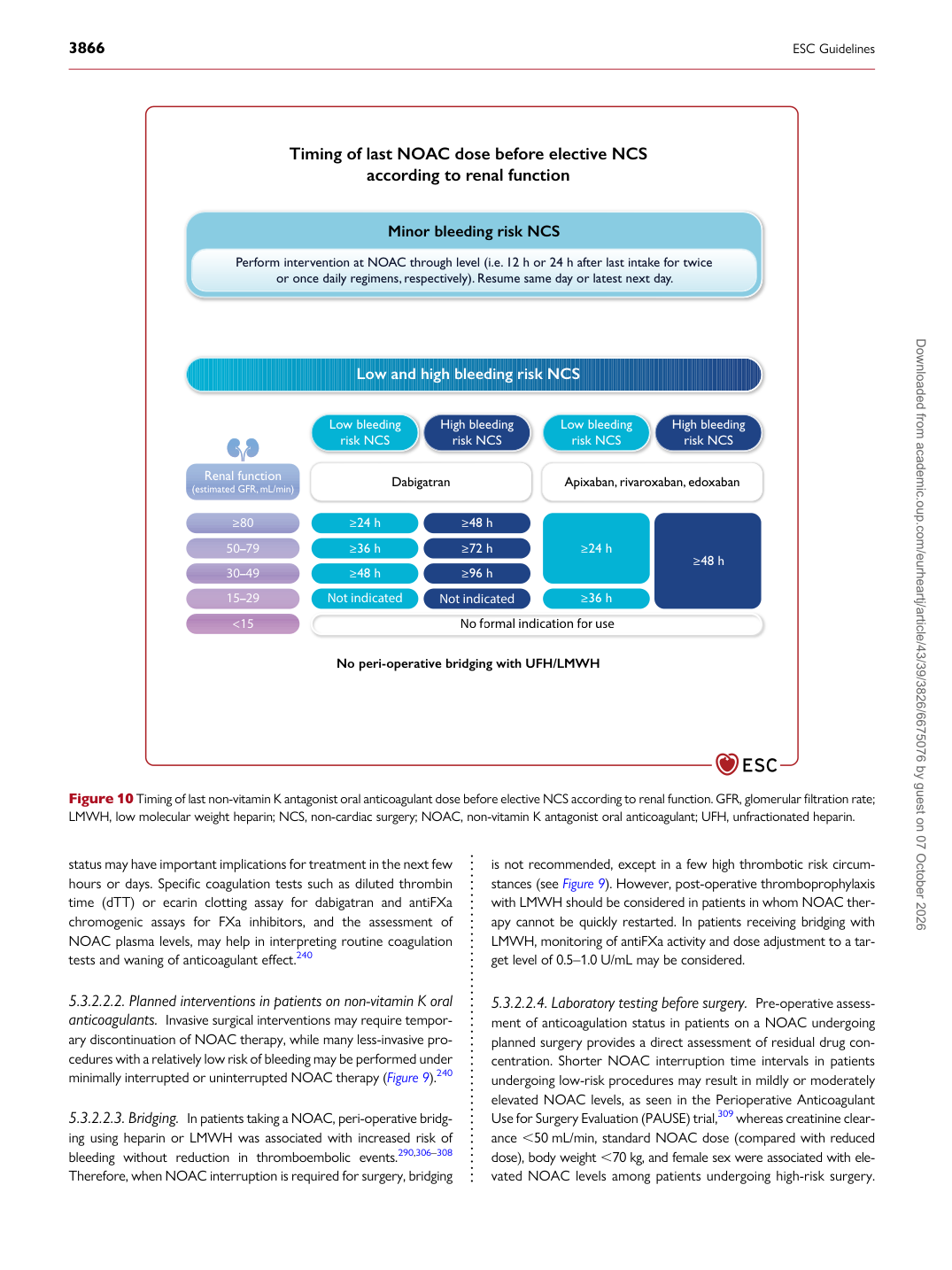
anticoagulants. Invasive surgical interventions may require temporary discontinuation of NOAC therapy, while many less-invasive procedures with a relatively low risk of bleeding may be performed under minimally interrupted or uninterrupted NOAC therapy (Figure 9).240

5.3.2.2.3 Bridging. In patients taking a NOAC, peri-operative bridg-

ing using heparin or LMWH was associated with increased risk of bleeding without reduction in thromboembolic events.290,306–308 Therefore, when NOAC interruption is required for surgery, bridging is not recommended, except in a few high thrombotic risk circumstances (see Figure 9). However, post-operative thromboprophylaxis with LMWH should be considered in patients in whom NOAC therapy cannot be quickly restarted. In patients receiving bridging with LMWH, monitoring of antiFXa activity and dose adjustment to a target level of 0.5–1.0 U/mL may be considered.

5.3.2.2.4 Laboratory testing before surgery. Pre-operative assess-

ment of anticoagulation status in patients on a NOAC undergoing planned surgery provides a direct assessment of residual drug concentration. Shorter NOAC interruption time intervals in patients undergoing low-risk procedures may result in mildly or moderately elevated NOAC levels, as seen in the Perioperative Anticoagulant Use for Surgery Evaluation (PAUSE) trial,309 whereas creatinine clearance ,50 mL/min, standard NOAC dose (compared with reduced dose), body weight ,70 kg, and female sex were associated with elevated NOAC levels among patients undergoing high-risk surgery.

Apixaban, rivaroxaban, edoxaban

Low bleeding

risk NCS High bleeding

risk NCS

Dabigatran

Low bleeding

risk NCS

Renal function High bleeding

risk NCS

≥24 h ≥80 ≥48 h ≥36 h 50–79 ≥72 h ≥24 h ≥48 h 30–49 ≥96 h Not indicated 15–29 Not indicated ≥36 h <15 No formal indication for use ≥48 h

Timing of last NOAC dose before elective NCS

according to renal function

Minor bleeding risk NCS

No peri-operative bridging with UFH/LMWH

(estimated GFR, mL/min)

No f o

f f r mal indic a tion f or use

f f

Low and high bleeding risk NCS

Perform intervention at NOAC through level (i.e. 12 h or 24 h after last intake for twice

or once daily regimens, respectively). Resume same day or latest next day.

Figure 10 Timing of last non-vitamin K antagonist oral anticoagulant dose before elective NCS according to renal function. GFR, glomerular filtration rate; LMWH, low molecular weight heparin; NCS, non-cardiac surgery; NOAC, non-vitamin K antagonist oral anticoagulant; UFH, unfractionated heparin. Downloaded from academic.oup.com/eurheartj/article/43/39/3826/6675076 by guest on 07 October 2026